
News
Army crackdown on oil thieves, arrests 39, destroy 18 sites

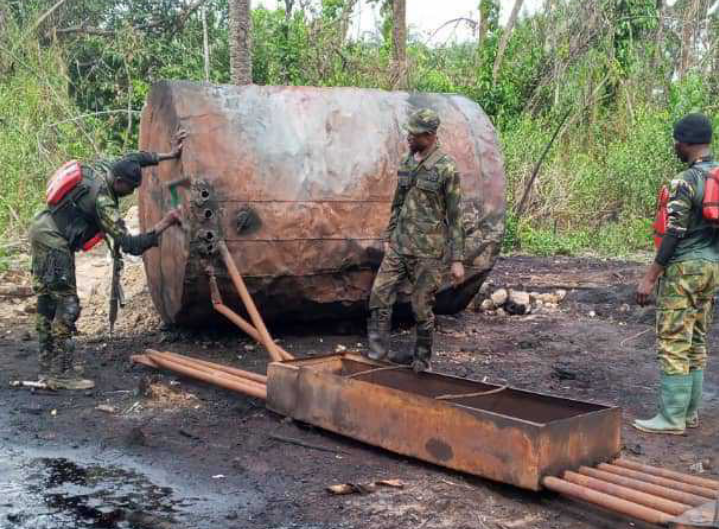
In a major blow to oil thieves in the Niger Delta Region, troops of 6 Division, Nigerian Army, have arrested 39 suspected oil thieves and dismantled 18 illegal refining sites in a series of operations conducted across the region.
The operations, which took place from March 24 to 30, 2025, were part of an ongoing crackdown against Crude Oil Theft (COT) and associated crimes.
The troops collaborated with sister agencies to confiscate over 60,000 liters of stolen products and other items.
In a statement, the Acting Deputy Director of 6 Division Army Public Relations, Lieutenant Colonel Danjuma Jonah Danjuma, noted that the operations were carried out across the Joint Operations Area (JOA) in Rivers, Bayelsa, Delta, and Akwa Ibom states.
He revealed that troops intercepted an inbuilt fabricated twin tank stocked with 18,000 liters of stolen products along Ochokocho Road in Etche Local Government Area of Rivers State.
A MAN Diesel container body truck conveying stolen items was also intercepted, but the suspects fled on sighting troops.
He added that several illegal refining sites, drum pots, and receivers were dismantled, while over 15,000 liters of stolen products were recovered along the Imo River.
He also stated that other seizures were made around Ebocha, Omoku in Ogba/Egbema/Ndoni Local Government Area.
In a similar operation, troops closed up on oil thieves at Jelikri Creek in Degema Local Government Area, dismantling several illegal refining sites.
Danjuma further noted that troops discovered two illegal refining sites containing drums and cooking ovens with over 8,000 liters of stolen crude in Bayelsa State.
He said, “In Bayelsa State, operations conducted yielded the desired outcome. This was evident around Adibawa in Yenagoa LGA, where two illegal refining sites, containing drums and cooking ovens with over 8,000 litres of stolen crude in drums and sacks. At Okighene in Southern Ijaw LGA, one illegal refining site with over 1,500 litres of crude oil and 300 litres of illegally refined Automotive Gasoline Oil (AGO) recovered.”
In Delta State, the operations yielded visible results, with troops confiscating several jerricans filled with illegally refined Automotive Gasoline Oil (AGO) and destroying several cellophane bags used for the criminal activity.
The General Officer Commanding (GOC) 6 Division, Nigerian Army, Major General Emmanuel Eric Emekah, commended the troops for their efforts and charged them to upscale the crackdown against oil thieves.
Major General Emekah warned oil thieves to turn a new leaf and engage in legitimate means of livelihood or be prepared to face the wrath of the law.
He also assured Nigerians that the Nigerian Army would continue to work tirelessly to protect the nation’s critical infrastructure and resources.
-The Guardian

Liquidity conditions in the money market remained tight last week, as deposit money banks placed about N30.64 trillion with the Central Bank of Nigeria through the Standing Deposit Facility (SDF) window over the five trading sessions.
Data from the market showed that the huge deposits at the apex bank came amid persistent liquidity pressure in the financial system, with the average liquidity deficit settling at N5.7 trillion, slightly wider than the N5.1 trillion recorded in the previous week.
The breakdown of SDF placements showed that banks deposited N5.20 trillion on Monday, N5.27 trillion on Tuesday, N6.96 trillion on Wednesday, N6.69 trillion on Thursday, and N6.51 trillion on Friday, bringing the five-day total to N30.639 trillion, higher than the N26.161 trillion recorded in the preceding week.
According to analysts, the large deposits reflect banks’ cautious liquidity management amid elevated short-term interest rates. Despite the tight liquidity environment, the overnight rate (OPR) remained unchanged at 22.0 per cent, while the overnight lending rate climbed by 12 basis points week on week to 22.3 per cent.
At the treasury bills primary market, the apex offered N850 billion across the 91-day, 182-day and 364-day instruments. Market data showed that the 91-day bill recorded an offer of N100 billion but attracted N130.7 billion in allotments, while the 182-day instrument had an offer of N150 billion and attracted N71.4 billion in allotments. The 364-day paper dominated the auction with N600 billion on offer and N731.8 billion allotted.
Overall demand stood at N2.8 trillion, translating to a 3.3 times bid-to-offer ratio, with investor appetite largely concentrated on the 364-day instrument, which recorded a 4.3 times subscription rate. Stop rates settled at 16.0 per cent for the short tenor and 16.7 per cent for both the mid and long dated instruments, while total allotment came to N933.9 billion, about 9.9 per cent above the initial offer.
-Leadership
Education
NFVCB Boss Urges Stronger Distribution Channels As Coal City Film Festival 2026 Opens In Enugu
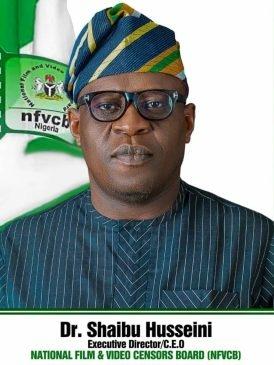
The Executive Director/Chief Executive Officer of the National Film and Video Censors Board (NFVCB), Dr Shaibu Husseini, has called for stronger distribution frameworks within Nigeria’s film industry to ensure that locally produced content achieves global visibility.
Dr Husseini made this call while delivering the keynote address at the opening ceremony of the 2026 edition of the Coal City Film Festival, held in Enugu.
Welcoming participants to the festival, Dr Husseini expressed his personal delight at hosting the event in Enugu, his birth state, noting the city’s rich cultural heritage and longstanding contributions to Nigeria’s creative landscape.
He commended the festival organisers, particularly the Festival Director, Uche Agbo, for their resilience and commitment in sustaining the initiative.
According to him, the Coal City Film Festival has grown into a significant cultural platform and a must-attend cinematic event in South East Nigeria.
Speaking on the festival’s theme, “Local Stories, Global Screens,” Dr Husseini emphasised the importance of authenticity in storytelling. He noted that films rooted in local realities, languages, and cultural truths often resonate more strongly with global audiences.
He cited notable Nigerian productions such as “King of Boys” by Kemi Adetiba, “The Wedding Party” by Mo Abudu, “Anikulapo” by Kunle Afolayan, “Black Book” by Editi Effiong, and “Lionheart” by Genevieve Nnaji as examples of culturally grounded stories that have gained international recognition on platforms such as Netflix and at global film festivals.
While acknowledging the growth in film production across Nigeria, the NFVCB boss identified distribution as a major bottleneck in the industry. He observed that many high-quality films struggle to reach audiences both locally and internationally due to limited distribution channels.
Dr. Husseini therefore urged film festivals across the country to evolve beyond networking platforms into active marketplaces where filmmakers can secure distribution deals. He stressed that festivals must attract distributors, exhibitors, streaming platforms, and marketers to create tangible opportunities for filmmakers.
“Film festivals must become gateways to distribution where filmmakers leave not just with applause, but with real opportunities,” he said.
Reaffirming the Board’s commitment to industry development, Dr. Husseini stated that the NFVCB has continued to reposition itself as a partner in progress by engaging stakeholders, improving classification processes, and promoting a balance between creative freedom and social responsibility.
However, he raised concerns over increasing non-compliance with regulatory requirements, noting that some filmmakers bypass the Board by releasing unclassified films or operating without proper licensing.
He reiterated that all films and video works must be submitted to the NFVCB for classification and registration before being released on any platform, including digital platforms such as YouTube.
“This is a legal obligation, and the Board will not hesitate to take decisive action against defaulters,” he warned, adding that regulation is essential for protecting the industry, audiences, and national values.
Looking ahead, Dr. Husseini assured stakeholders of the Board’s continued collaboration with filmmakers and festival organisers to build a structured, sustainable, and globally competitive Nigerian film industry.
He concluded by commending the organisers of the Coal City Film Festival for their vision and contribution to Nigeria’s cultural economy, urging filmmakers to continue telling authentic stories that can resonate across global screens.
-Leadership
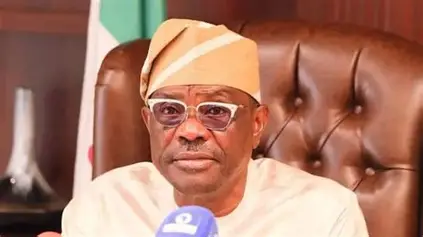
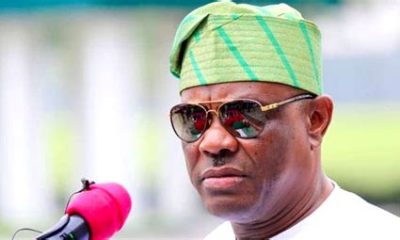
The Minister of the Federal Capital Territory, Nyesom Wike, has reiterated Nigeria’s commitment to strengthening its relationship with the European Union, while announcing steps to recover diplomatic lands in Abuja allegedly taken over by land grabbers.
Wike made this known on Thursday during a courtesy visit by the EU Ambassador to Nigeria and ECOWAS, Gautier Mignot, in Abuja.
“We will continue to engage EU member countries to further strengthen bilateral relations,” the minister said.
Addressing concerns over diplomatic land allocations, Wike disclosed that several plots originally designated for EU countries had been unlawfully occupied over the years. He noted that the FCT Administration has begun reclaiming such lands.
He added that the government would formally communicate with the affected countries to determine their continued interest in the properties and ensure rightful ownership is restored.
“We are writing to those countries. If they still intend to retain the lands, we are willing to return them. We will not allow land grabbers to take advantage,” Wike said.
The minister also commended the EU for its contributions to governance and justice sector reforms in the FCT, particularly in court digitalisation and improved justice delivery.
“I am aware of your support, especially in strengthening the administration and dispensation of justice. We will continue to partner with you to deepen these initiatives,” he added.
On requests for land allocation for local EU staff, Wike assured that applications would be considered based on due process, stressing that such processes must ultimately benefit the public.
He further addressed infrastructure concerns at the IBB Golf Club, confirming that a caretaker committee has been constituted, with rehabilitation works expected to commence soon.
In his remarks, Mignot described Nigeria as a key strategic partner for the EU, noting that both parties are entering a new phase of deeper engagement.
“The European Union remains one of Nigeria’s foremost trade and development partners. Our relationship is strong, mutually beneficial, and evolving into a more significant phase,” he said.
He highlighted ongoing EU-supported programmes in the FCT, including judicial reforms, court digitalisation, human rights initiatives, and support for victims of gender-based violence.
Mignot also invited the FCT minister to engage further with EU ambassadors to explore collaboration in areas such as waste management, urban planning, and water infrastructure.
Meanwhile, Wike recently ordered the demolition of buildings illegally constructed on land designated for foreign embassies in the diplomatic zone of Katampe Extension, Abuja.
He explained that the land, originally allocated on March 18, 2008, for residential use by diplomatic missions, was later encroached upon by an unauthorised developer who commenced construction without approval from the Federal Capital Development Authority.
The affected diplomatic missions include Thailand, Bulgaria, Syria, Somalia, Serbia and Montenegro, Japan, Austria, Switzerland, Senegal, and the Palestine Liberation Organisation.
-Leadership

Liquidity Pressure Persists As Banks Dump N30.6tr with CBN Over 5 Days

NFVCB Boss Urges Stronger Distribution Channels As Coal City Film Festival 2026 Opens In Enugu

Wike Reaffirms Nigeria–EU Ties, Moves To Reclaim Encroached Diplomatic Lands

5 Life Lessons from Manchester City EPL Current woes

Liverpool Announce Jürgen Klopp Return To The Club

MTN Teams Up With Meta To Boost WhatsApp Call Quality


-
 Health12 months ago
5 Life Lessons from Manchester City EPL Current woes
-
 Sports12 months ago
Liverpool Announce Jürgen Klopp Return To The Club
-
 Business12 months ago
MTN Teams Up With Meta To Boost WhatsApp Call Quality
-
 News12 months ago
Commonwealth Observers Prepare For Gabon Presidential Election
-

 Health12 months ago
Ponzi Scheme CEO Francis Uju Udoms of Addfx Case still Unresolved Despite SEC certification
-

 News12 months ago
Chibok Girls: 11 Years Of Anguish, Broken Promises
-
 News12 months ago
Wike’s Enviable Road Construction Method along Nyanya- Maraba Highway
-
 News10 months ago
NASRE Promises Support To Daily Times Group Business Editor, Oseni, Over Serious Road Accident