
Education
Real reason mum chose our course, got into heavy debt – UI first-class twin graduates

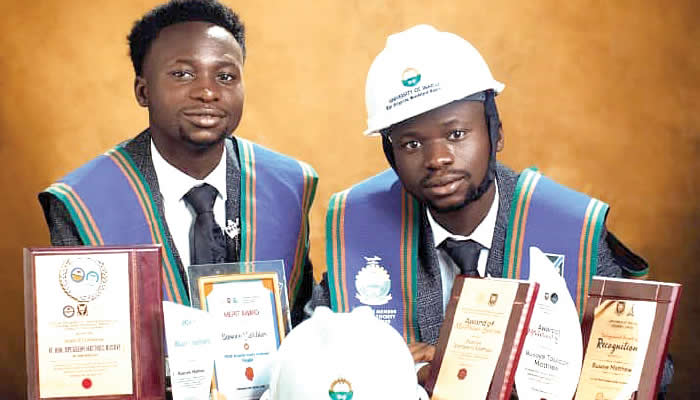
Twin brothers — Matthew Busoye and Matthias Busoye — share their stories with BIODUN BUSARI after emerging as the best-graduating students of the Faculty of Technology, University of Ibadan.
Why did you choose to study Electrical and Electronic Engineering?
I sat the UTME in 2017 after leaving secondary school. I got admitted that same year. It was my first UTME, and I passed, but I was not admitted to UI that year because of the age restriction of 16. So, I had to defer admission to the next session. I resumed a year later. However, choosing Elect/Elect was a funny story. My mother chose it for me.
There were many options, but my family knew I was going to be an engineer. It was just which engineering? So, we settled for electrical/electronic. The major reason was that my mum told us (me and my brother) that we needed to do something that in the worst-case scenario, we would have a backup plan. So, electrical-electronics seemed like the fit that we could open a shop and be self-employed.
Didn’t you object to the idea?
We did not. It wasn’t like she just decided. It was based on a conversation. In secondary school, we were good in Maths, Physics, and Chemistry. We knew it was going to be science or engineering for us. Engineering was the strong option. My elder brother did Mechanical Engineering from Ladoke Akintola University of Technology in Ogbomoso. My twin brother and I opted for our course because we didn’t want to study Mechanical Engineering.
What was your mum’s connection with science or engineering?
She’s a trader; but she is educated. According to her, she was a science student in her senior secondary school days but she changed to commercial class. I think she did business.
Growing up, we wanted to go to UI but we knew it was tough in terms of scoring high and knowing people. So, while we were younger, my father always talked about LAUTECH instead. His discussion of engineering pushed us.
Did you plan to graduate with a first class?
Everyone knew that getting a first class was a tough task but I didn’t believe the popular opinion. I just understood my lessons and read for exams. I didn’t nurse any fear of getting a first class. The goal was 4.0. We were optimistic. But in terms of the first class, I didn’t think about it.
Were there special formulas for your reading?
The main thing that I tried to do was prioritise understanding the concepts when I had much time. I tried to understand because it helped in the long run. Well, in terms of till-day-break (TDB) or morning-till-night reading in UI, I didn’t have those formulas.
But I did a few TDBs in my final year. Formulas didn’t work for me. I’m a flexible reader. So, I read based on vibes and timing. I studied the time when I was in the mood to read. I did not have a fixed schedule. I tried to manage my time as much as possible to balance my activities.
This helped me to multitask and read. So, those TDBs helped me in terms of balancing extra things and academics. I remember there were times that I would be on the road and possibly watching YouTube videos to try to understand something to save time. So, I did not really have a fixed pattern or a trick.
What’s your final CGPA?
I had a CGPA of 3.94 of 4.0.
You talked about multitasking; what other things did you do apart from your studies?
UI was a lot for me. I was the speaker of the student union. So, that was a lot in my final year.
What was your campus politics experience?
The goal was to finish with a 4.0. We also wanted to have fun and play around. But politics was not in it at all; maybe just football and some extra collaboration.
But, when my GPA was not perfect, I decided to do other things. I told myself, ‘If 4.0 is not working, let me just try to do other things.’
Then, I joined Junior Chamber International in 200-level. Then the COVID came in 2020. Later, the faculty association elections came up. Then, people were not really interested. So, I saw the opportunity to go into it, and I went for the finance secretary of my Faculty Association. So, I went for that. That was in 200 level. I was also into the Institute of Electrical and Electronics Engineers while doing some academic tutorials.
Then, during the COVID pandemic as well, I did a bit of programming. I started doing embedded systems and AI. Around that time, I also started doing a remote internship for AI ML. So, it was research, and I was able to get a paper published. I think that was 300 level. In 400-level, I did not do much. What I did was I joined the Student Representative Council; then, I started loving the experience of the SRC.
It was non-political. Then I left the house. I decided to go. The campaign was stressful, because I was doing it in Lagos. I had to campaign, coming to Ibadan most weekends. I tried to balance it, and I thank God I won. Then in 500 level, I became the speaker. I think the experience was a whole lot, and I enjoyed it. I was doing my tech skills, embedded systems, and AI.
Were there times challenges made you feel like giving up?
I think my 400 and 500 levels were like that. I was a bit losing interest in academics. The economic situation affected me. This caused my major drop in 500-level. I went from 3.95 to 3.92 or something. So, I was not serious, and I tried to cover up in exams. My thesis project was burdensome. One of the major problems was in terms of giving as much time, not just in terms of work. I think I kept doing as much work as needed.
Also, there were three protests early in the semester. That took a mental toll on me. I was down. I was sent home three times. I was sad about how the protest went. I could not read in that period. I just came back to school. I had to start. However, my major reason for not giving up was my motivation — my mother. She did a lot for us as a single parent.
How many are you in your family, and did you all study engineering courses?
We are four children; my elder brother, my elder sister, and then my twin brother and me. My sister studied Mass Communication.
How do you feel after having this first class?
I feel very excited, not just for me, but for my mother especially. It seemed like her effort was crowned.
How did you share the news of your result with her?
We told her via a WhatsApp message. It was much easier to tell her because initially, we were not sure if it was going to be two of us because the results dropped individually, not together. I had a B; so, I was not really joyful until I saw the result. When we saw it, Matthew just told me that he was a bit higher than me. She was thankful to God when she heard that we made it.
Were there times you both read or discussed academics together?
We didn’t study together. We helped each other with questions, but we didn’t read together. I mean, we were roommates, at least neighbours, for most of our five years in UI. But in terms of assignments and classwork, we discussed solutions to them.
How do people differentiate between you and your twin brother?
We didn’t like confusing people with our identities. Before, we liked wearing the same clothes but we just changed all of a sudden. Those who were very close to us would distinctly know the difference. I have a scar on my head, but it is not visible to anyone except when they come closer. It’s not really a distinguishing feature until you come close.
What are your aspirations?
My plan right now is to build, keep building, and keep learning. Right now, we are looking at doing an internship to try to build our embedded system. I’m interested in embedded AI engineering, the intersection between embedded systems, artificial intelligence, and machine learning.
I’m also looking at possibly getting postgraduate study, research, and mainly focus on a PhD. In the future, after money is made, politics is something I will consider.
How does it feel making a first class?
A time when she faced financial hardship on how to pay our school fees. The wisest thing would have been for uncles to take us, but she said no.
She made a particular statement that if it was for her to suffer and eat garri for us to succeed, she would do it. She did everything in her capacity to fund our education. We stayed together through thick and thin. She was a constant loan collector to make ends meet. She tried for us to succeed, she would do it. She did everything in her capacity to fund our education. We stayed together through thick and thin. She was a constant loan collector to make ends meet. She tried for us.
Did you plan it?
I was not the most serious person. I just did what I had to do in terms of reading. But making my mother proud was not something I focused on in terms of making a first class. I knew that my mother did not care about the results I came out with.
I remember I only told her my results once. She has never asked us about our results. So, that was not a criterion to make her proud or not.
Meanwhile, the first-class thing was quite bad at first. We just did our best, and it turned out that our best was good for the first class. It was not like we were trying to achieve something in particular. It was just what we did best.
What are the secrets of your success?
I was an open-minded person in school. But my major strength was the fact that I knew myself. I knew what could work for me. I was involved in some things apart from academics. My course — Electrical Engineering — is built on foundation and understanding. I leveraged that. Every new concept is built on parallel knowledge.
So, one thing I tried to do when I read was to understand the concept as much as I could. In my 300 level, most of the things I understood were the things I was taught. Another thing was self-motivation. I could clearly remember in my first year, I was trying to balance my departmental students’ association presidency with academics. I wanted to give up.
What sessions did you consider toughest and easiest?
Let’s start with the easiest. The easiest by far would be 100-level. Though it was like my worst because it had my lowest GPA, the reason why it was my lowest was not because I didn’t know what I was doing. It was mostly not my fault because courses that I did not have more points were just advanced secondary school knowledge of the courses.
I was grounded in the science subjects like Physics, Chemistry, and Mathematics. Going to my toughest; that would be 500-level. It was because I needed time to balance my academics and school politics. I was going for the position of the president of my department, and I faced a lot of opposition. The only way I would not win the presidency was if I could not contest.
So, they tried to put the stakeholders of the department to make sure I did not go for the post of the president. I was mentally drained, which made me lose interest. That was the level I had a lot of courses to take, campus assembly. Also, for non-technical, I was the hardware lead for Globally Distributed Software Engineering, UI. Eventually, when I ran for the departmental presidency; I won over 80 per cent of the votes.
Were you and your brother roommates?
Luckily for us, we stayed together in the same hall of residence — Nnamdi Azikwe Hall — which I felt was a little bit of a coincidence. We were Zikites. We heard stories that most twins were usually separated on purpose. But for us, in 100-level, I stayed in his room throughout.
We were given separate rooms but in the same hostel. However, I don’t think I ever slept in my room at all. I slept in his room throughout. In 200-level, I stayed with him throughout. That was during COVID-19. It was in the third year that we decided to stay separately, even though we were close to each other.
Did you have reading formulas?
I could read in uncomfortable places. So, I knew I could balance. I could be in a meeting and be reading. There was no reading formula for me to adhere to.
What did you finish with?
I had a CGPA of 3.94 out of 4.0. My brother and I were the best in our department and faculty.
Did people have difficulty identifying both of you?
There were a million times people mistook us for each other. Meanwhile, it can be said that there were people who were close to us and identified us. Numerous people were very close to us, but still couldn’t differentiate us. I know some of my classmates who never differentiated us. I’m not even sure if any of my lecturers differentiated us at all.
What are your plans?
My goals are summarised into two: I hope to continue my academics and maybe have a direct PhD in an embedded-related course. Hopefully, I will start working on that soon.
-PUNCH

Education
NFVCB Boss Urges Stronger Distribution Channels As Coal City Film Festival 2026 Opens In Enugu
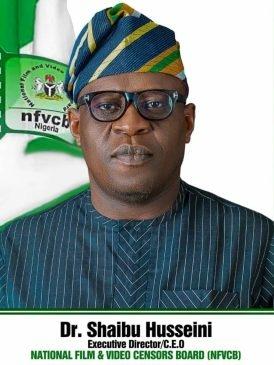
The Executive Director/Chief Executive Officer of the National Film and Video Censors Board (NFVCB), Dr Shaibu Husseini, has called for stronger distribution frameworks within Nigeria’s film industry to ensure that locally produced content achieves global visibility.
Dr Husseini made this call while delivering the keynote address at the opening ceremony of the 2026 edition of the Coal City Film Festival, held in Enugu.
Welcoming participants to the festival, Dr Husseini expressed his personal delight at hosting the event in Enugu, his birth state, noting the city’s rich cultural heritage and longstanding contributions to Nigeria’s creative landscape.
He commended the festival organisers, particularly the Festival Director, Uche Agbo, for their resilience and commitment in sustaining the initiative.
According to him, the Coal City Film Festival has grown into a significant cultural platform and a must-attend cinematic event in South East Nigeria.
Speaking on the festival’s theme, “Local Stories, Global Screens,” Dr Husseini emphasised the importance of authenticity in storytelling. He noted that films rooted in local realities, languages, and cultural truths often resonate more strongly with global audiences.
He cited notable Nigerian productions such as “King of Boys” by Kemi Adetiba, “The Wedding Party” by Mo Abudu, “Anikulapo” by Kunle Afolayan, “Black Book” by Editi Effiong, and “Lionheart” by Genevieve Nnaji as examples of culturally grounded stories that have gained international recognition on platforms such as Netflix and at global film festivals.
While acknowledging the growth in film production across Nigeria, the NFVCB boss identified distribution as a major bottleneck in the industry. He observed that many high-quality films struggle to reach audiences both locally and internationally due to limited distribution channels.
Dr. Husseini therefore urged film festivals across the country to evolve beyond networking platforms into active marketplaces where filmmakers can secure distribution deals. He stressed that festivals must attract distributors, exhibitors, streaming platforms, and marketers to create tangible opportunities for filmmakers.
“Film festivals must become gateways to distribution where filmmakers leave not just with applause, but with real opportunities,” he said.
Reaffirming the Board’s commitment to industry development, Dr. Husseini stated that the NFVCB has continued to reposition itself as a partner in progress by engaging stakeholders, improving classification processes, and promoting a balance between creative freedom and social responsibility.
However, he raised concerns over increasing non-compliance with regulatory requirements, noting that some filmmakers bypass the Board by releasing unclassified films or operating without proper licensing.
He reiterated that all films and video works must be submitted to the NFVCB for classification and registration before being released on any platform, including digital platforms such as YouTube.
“This is a legal obligation, and the Board will not hesitate to take decisive action against defaulters,” he warned, adding that regulation is essential for protecting the industry, audiences, and national values.
Looking ahead, Dr. Husseini assured stakeholders of the Board’s continued collaboration with filmmakers and festival organisers to build a structured, sustainable, and globally competitive Nigerian film industry.
He concluded by commending the organisers of the Coal City Film Festival for their vision and contribution to Nigeria’s cultural economy, urging filmmakers to continue telling authentic stories that can resonate across global screens.
-Leadership
The Academic Staff Union of Universities (ASUU) has issued a four-day ultimatum to the Federal Government, demanding the immediate implementation of a newly approved salary structure for university lecturers nationwide.
ASUU President, Christopher Piwuna, made this known on Thursday while delivering a speech at a public lecture held at Sa’adu Zungur University, Yuli Campus, in Bauchi.
“We have issued a four-day ultimatum from today to the Federal Government to begin the payment of the newly approved salary structure. Failure to comply will attract a strong response from the union,” he said.
The ASUU president noted that the demand forms part of broader efforts to improve the welfare of university lecturers and address long-standing concerns about poor remuneration, which he said has contributed to brain drain and declining standards in Nigeria’s higher education sector.
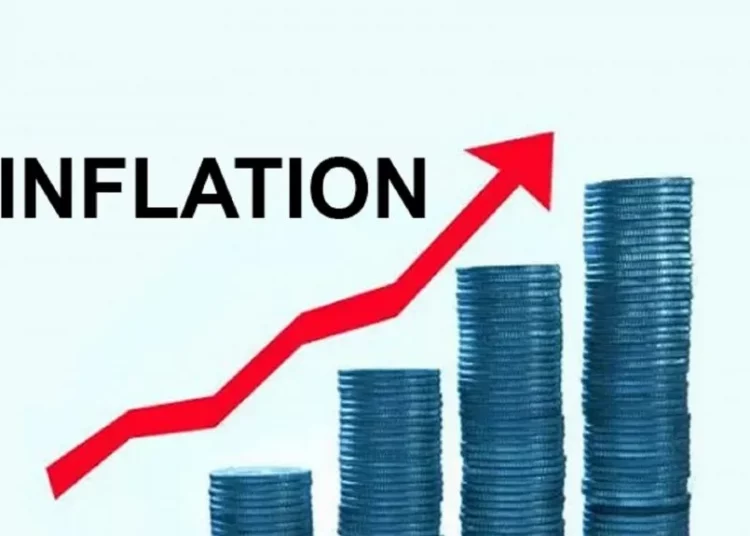
Analysts at Afrinvest West Africa have warned that Nigeria’s inflation trajectory may reverse its recent disinflation trend, with headline inflation projected to climb to about 16 per cent in the near term, driven by the ripple effects of the escalating Middle East crisis on energy and domestic prices.
This is as they stressed that without swift policy responses, rising energy costs could deepen cost-of-living pressures and erode recent gains in price stability.
However, the analysts noted that the decline was weaker than expected, largely due to a resurgence in food inflation, which rose by 3.2 percentage points year-on-year to 12.1 per cent, offsetting gains in core inflation, which declined by 1.8 percentage points to 15.9 per cent.
On a month-on-month basis, inflationary pressures showed renewed volatility, with headline inflation rising by 2.0 per cent in February, a sharp reversal from the deflationary reading of negative 2.9 per cent recorded in January.
Despite this, analysts cautioned that underlying price pressures remain elevated, particularly from persistently high food costs and structural bottlenecks across the economy.
Looking ahead, Afrinvest highlighted that developments in the Middle East pose significant upside risks to inflation. According to the firm, crude oil prices have surged to about $105 per barrel from $72.69 at the end of February, triggering a sharp increase in domestic energy costs.
The report noted that the spike has already translated into higher retail prices of petroleum products, with petrol rising to about N1,350 per litre, diesel to N1,650 per litre, and cooking gas to N1,400 per kilogram in several states.
“These increases are expected to cascade across transportation, logistics, healthcare and food prices,” the analysts said, adding that existing structural challenges such as inadequate power supply, poor road infrastructure and insecurity could further amplify inflationary pressures.
In its baseline scenario, Afrinvest projected that the pass-through effect of the energy shock could drive headline inflation up by about 150 basis points to 16.6 per cent year-on-year, while month-on-month inflation could spike to 5.2 per cent.
The firm warned that a prolonged crisis could derail the Federal Government’s target of reducing average inflation to 16.5 per cent in 2026 from 23.3 per cent recorded in 2025.
To mitigate the impact on households, Afrinvest urged the government to implement targeted interventions, including the rollout of affordable mass transit systems, healthcare subsidies for low-income earners, and the temporary suspension of tariffs and related charges on food imports and other essential commodities.
-Leadership

NFVCB Boss Urges Stronger Distribution Channels As Coal City Film Festival 2026 Opens In Enugu

Wike Reaffirms Nigeria–EU Ties, Moves To Reclaim Encroached Diplomatic Lands

Inspector-General Disu Submits 75-Page Framework On ‘State Police’ To Senate As Push Gains Momentum

5 Life Lessons from Manchester City EPL Current woes

Liverpool Announce Jürgen Klopp Return To The Club

MTN Teams Up With Meta To Boost WhatsApp Call Quality

-
 Health12 months ago
5 Life Lessons from Manchester City EPL Current woes
-
 Sports12 months ago
Liverpool Announce Jürgen Klopp Return To The Club
-
 Business12 months ago
MTN Teams Up With Meta To Boost WhatsApp Call Quality
-
 News12 months ago
Commonwealth Observers Prepare For Gabon Presidential Election
-

 Health12 months ago
Ponzi Scheme CEO Francis Uju Udoms of Addfx Case still Unresolved Despite SEC certification
-
 News12 months ago
Chibok Girls: 11 Years Of Anguish, Broken Promises
-
 News12 months ago
Wike’s Enviable Road Construction Method along Nyanya- Maraba Highway
-

 News9 months ago
NASRE Promises Support To Daily Times Group Business Editor, Oseni, Over Serious Road Accident