
Politics
I Joined APC Because Tinubu Promised Me Anioma State – Ned Nwoko

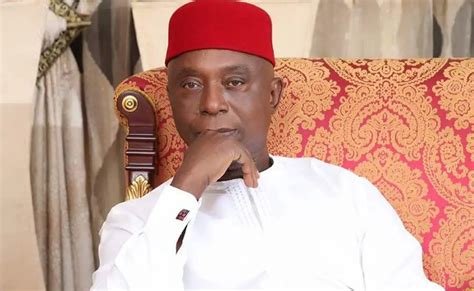
There was a large turnout of people at your political party event in Agbor last weekend which had the APC national chairman, Alhaji Abdullahi Ganduje, in attendance. How significant was that gathering for your party and your people?
The most important thing is the boost the APC under the national chairman, Alh Abdullahi Ganduje, received in Agbor where thousands of PDP members decamped under what they called DUD. DUD is a social group in Delta operating within the PDP. They all decamped into the APC. So, APC is growing in strength. The national chairman was there to receive them, I was there and so was the Edo state governor.
And at that event, when the national chairman said President Bola Tinubu, himself and the APC leadership are supporting the creation of Anioma State as the sixth state for Ndigbo. So, Ndigbo have a duty to make sure that this happens. And for this to happen, they must support the APC across the board.
Look, the most important part of the story is that when the state is created, Ndigbo generally will begin to feel a sense of belonging – something they have been asking for since the Civil War ended.
Why do you think that many of our people since after the war began to deny their ‘Igboness’? Maybe you are not aware (that) many people here were massacred in Asaba, Ishiagu and other communities by the Nigerian troops. Thousands were killed in their cold blood. What was their offence? Because they were Igbos, because the Col. Nwawos, Achuzias and Nzeogwus were from this side (Anioma).
So, they easily understood that we are Igbos. But, of course, for many people to avoid being killed, they began to say, “Don’t kill us, we are not Igbo (anyi aburo Ndigbo). We are people from….’ And that has continued to date. So, let me commend Ohanaeze Ndigbo. Ohanaeze has done wonderfully well in trying to integrate the Igbos in Delta and Rivers.
As a matter of fact, as far as Ohanaeze is concerned, there are seven Igbo states. They treat Anioma as a state; they treat Ikwerre as a state. And now we have a chance to make one of those states a real state. And God knows that once Anioma becomes a state, the next attention is Ikwerre.
I hate when I remember what former President (Buhari) said when he was describing ESN (Eastern States Network) and our youths. He was angry talking about them. He said they are a ‘dot’ in a circle. You remember he said that.
But Ndigbo generally – Igbo governors, Senators and other National Assembly members – have a duty to support their brethren; their lost brothers as it were. We need that support; we need that love. We are the same – the same language, culture, food, music, attire and the same virtually everything.
Anioma is in Delta State in the South-South geopolitical zone. How would its creation redress the agitation for an additional state in the Southeast zone to enable the zone have an equal number of states with other zones including the South-South?
It (Anioma State) will be the sixth state of the Southeast. Then, there will be another state to be called “Delta” – new Delta – with the capital in Warri that will become the sixth state in the South-South.
We already have five states in the Southeast. Why do you divide the five states? Why don’t you come here and acquire another state because you will have more land. Do you understand the difference? Because if you divide any of the five states to get another state, you are wasting your time because you are not increasing in population, you are not increasing in land mass, you are not increasing in natural resources, you are not increasing in anything.
Senator Chris Adighije told me a story last year when he came to see me. He told me that after the war, he had a cook from Ogoni. One day he was hungry and told the cook to give him food. He said the cook brought the food with only one meat in the soup. He was angry. He asked the cook why he would give him food with just one piece of meat. “When did you start giving me one meat in the soup?” Senator Adighije had queried. He told me that the cook didn’t say anything but rather carried the food back to the kitchen. Five minutes later, the cook came back with the food with five pieces of meat in the soup.
He (Chris) asked the cook again, “Why did you give me one piece of meat before?” The cook replied, “Oga, you wanted five pieces of meat. So, that one piece of meat is what I cut into five pieces.” That one piece of meat that Senator Adighije rejected was what the cook cut into five pieces. So, now you have five but in real terms, it is only one meat that he ate. Do you understand Senator Adighije’s story?
So, any Igbo man or woman who is asking for any of the five states that you already have to be divided is as bad as that cook in Senator Adighije’s story.
Anioma will give you more historical justice because we have suffered; we have been denied, deprived, denigrated and for too long our people have been more like in the wilderness.
And this is a chance for restitution; a chance to support. Do you know that when the Anioma State is created, no Anioma person in the next generation will say “I’m not an Igbo man?” They would have reversed the killings done in Asaba and other neighbouring villages during the Civil War.
Will you want the Igbanke people in Delta State to join you in Anioma State?
Yes, they are part of us.
But they said that Ogbemudia sold them to….
(Cuts in): No, no, no. They came to me. And I have told them ‘Let’s face the nine local government areas first; that by the time we achieve that through boundary adjustment, I will bring them in.
You said President Tinubu and the APC national leadership support the quest for Anioma State creation, which is why you probably decamped from the PDP that gave you the platform on which you won the election to the Senate to the APC. However, this administration has only two years to go. How would you feel if at the end of this tenure, Anioma State is not created?
It will be created. If it is not created this time, it will be created in the next government. Tinubu will still be president in the next government, I’m sure. It will be created.
Does Anioma have what it takes to survive as a state?
We have oil and gas. Six of the nine local government areas that make up Anioma are rich in oil and gas and other minerals. We have 10 major oil platforms, small refineries, gas refineries and companies operating in Anioma land.
The president promised me something before I joined the APC and he has done it. He said he would help to fund two dams in our area for pipe-borne water for home-use and irrigation. In the current budget, we have almost N30 billion for the two dams – to complete the Ogwuashi Ukwu Dam and to build another one behind there not far from here (points at an area in his community).
This wouldn’t have been possible if I had remained in the PDP. That’s why I said every Igbo man should support the APC because we can get a lot more from the federal government.
-Leadership






Education
NFVCB Boss Urges Stronger Distribution Channels As Coal City Film Festival 2026 Opens In Enugu
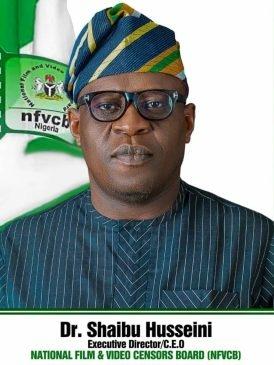
The Executive Director/Chief Executive Officer of the National Film and Video Censors Board (NFVCB), Dr Shaibu Husseini, has called for stronger distribution frameworks within Nigeria’s film industry to ensure that locally produced content achieves global visibility.
Dr Husseini made this call while delivering the keynote address at the opening ceremony of the 2026 edition of the Coal City Film Festival, held in Enugu.
Welcoming participants to the festival, Dr Husseini expressed his personal delight at hosting the event in Enugu, his birth state, noting the city’s rich cultural heritage and longstanding contributions to Nigeria’s creative landscape.
He commended the festival organisers, particularly the Festival Director, Uche Agbo, for their resilience and commitment in sustaining the initiative.
According to him, the Coal City Film Festival has grown into a significant cultural platform and a must-attend cinematic event in South East Nigeria.
Speaking on the festival’s theme, “Local Stories, Global Screens,” Dr Husseini emphasised the importance of authenticity in storytelling. He noted that films rooted in local realities, languages, and cultural truths often resonate more strongly with global audiences.
He cited notable Nigerian productions such as “King of Boys” by Kemi Adetiba, “The Wedding Party” by Mo Abudu, “Anikulapo” by Kunle Afolayan, “Black Book” by Editi Effiong, and “Lionheart” by Genevieve Nnaji as examples of culturally grounded stories that have gained international recognition on platforms such as Netflix and at global film festivals.
While acknowledging the growth in film production across Nigeria, the NFVCB boss identified distribution as a major bottleneck in the industry. He observed that many high-quality films struggle to reach audiences both locally and internationally due to limited distribution channels.
Dr. Husseini therefore urged film festivals across the country to evolve beyond networking platforms into active marketplaces where filmmakers can secure distribution deals. He stressed that festivals must attract distributors, exhibitors, streaming platforms, and marketers to create tangible opportunities for filmmakers.
“Film festivals must become gateways to distribution where filmmakers leave not just with applause, but with real opportunities,” he said.
Reaffirming the Board’s commitment to industry development, Dr. Husseini stated that the NFVCB has continued to reposition itself as a partner in progress by engaging stakeholders, improving classification processes, and promoting a balance between creative freedom and social responsibility.
However, he raised concerns over increasing non-compliance with regulatory requirements, noting that some filmmakers bypass the Board by releasing unclassified films or operating without proper licensing.
He reiterated that all films and video works must be submitted to the NFVCB for classification and registration before being released on any platform, including digital platforms such as YouTube.
“This is a legal obligation, and the Board will not hesitate to take decisive action against defaulters,” he warned, adding that regulation is essential for protecting the industry, audiences, and national values.
Looking ahead, Dr. Husseini assured stakeholders of the Board’s continued collaboration with filmmakers and festival organisers to build a structured, sustainable, and globally competitive Nigerian film industry.
He concluded by commending the organisers of the Coal City Film Festival for their vision and contribution to Nigeria’s cultural economy, urging filmmakers to continue telling authentic stories that can resonate across global screens.
-Leadership
News
Inspector-General Disu Submits 75-Page Framework On ‘State Police’ To Senate As Push Gains Momentum
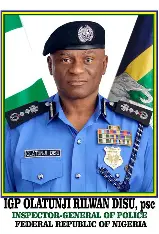
According to a statement issued on Thursday by Ismail Mudashir, Special Adviser on Media and Publicity to the Deputy Senate President, the document titled “A Comprehensive Framework for the Establishment, Governance and Coordination of Federal and State Police” was presented at Jibrin’s office within the National Assembly complex.
The Inspector-General of Police, Olatunji Disu, has submitted a 75-page framework on the establishment of State Police to the Deputy President of the Senate, Barau Jibrin, in a fresh move to advance decentralised policing in Nigeria.
According to a statement issued on Thursday by Ismail Mudashir, Special Adviser on Media and Publicity to the Deputy Senate President, the document titled “A Comprehensive Framework for the Establishment, Governance and Coordination of Federal and State Police” was presented at Jibrin’s office within the National Assembly complex.
The report was delivered on behalf of the IGP by Prof Olu Ogunsakin, who chairs the Nigeria Police Force committee set up to develop modalities for instituting State Police.
Disu said the document encapsulates the Force’s professional input following extensive consultations and a thorough evaluation of the legal, operational and administrative implications of decentralised policing.
“The report covers the considered views, professional insights and strategic recommendations of the Force, derived from extensive consultations and a careful assessment of the operational, legal and administrative implications of instituting State Police in Nigeria,” Disu said.
“It is our expectation that the contents of this report will meaningfully contribute to ongoing deliberations and assist in shaping informed, balanced, and pragmatic decisions on this critical aspect of national security architecture.”
The police chief noted that the framework has been formally submitted to the Senate Committee on the Review of the 1999 Constitution as the Nigeria Police Force’s official contribution to the ongoing constitutional amendment process.
Responding, Senator Jibrin commended the IGP for what he described as a proactive step aligned with the security agenda of Bola Ahmed Tinubu.
“The Deputy President of the Senate commended the IGP for his proactiveness on the establishment of State Police in line with President Bola Ahmed Tinubu’s agenda to fully secure the country,” the statement read.
He assured that the Senate Committee reviewing the Constitution would carefully examine the framework alongside other submissions as part of efforts to strengthen Nigeria’s legal foundation.
The proposed framework is expected to outline the operational structure, governance model, and coordination mechanisms between federal and state policing systems— marking a significant step in ongoing efforts to overhaul Nigeria’s security architecture.
SaharaReporters had earlier reported that Disu inaugurated an eight-member committee in March to drive the implementation of State Police, declaring that the reform was irreversible.
At the inauguration in Abuja, the IGP insisted that decentralised policing “has come to stay,” dismissing concerns that it could threaten the roles of existing police personnel.
“State Police has come to stay, and the police should be able to contribute their part in making it succeed. The police are not afraid, our jobs are not being taken,” he said.
He described the committee’s assignment as urgent and critical, giving members one month to submit their report amid rising security challenges across the country.
Disu stressed that the move towards State Police is aimed at strengthening internal security by bringing law enforcement closer to communities and enabling faster, more targeted responses to threats.
“Across the nation, we continue to confront evolving security challenges. These require innovative thinking, strategic collaboration, and the willingness to explore reforms,” he added.
The push for State Police has gained renewed momentum following President Tinubu’s assurance that the plan would not be shelved, urging stakeholders to support the initiative.
-Sahara
News
N1.54billion Settlement: Court Frees Ex-Minister Stella Oduah, Strikes Out Case Months After She Joined APC
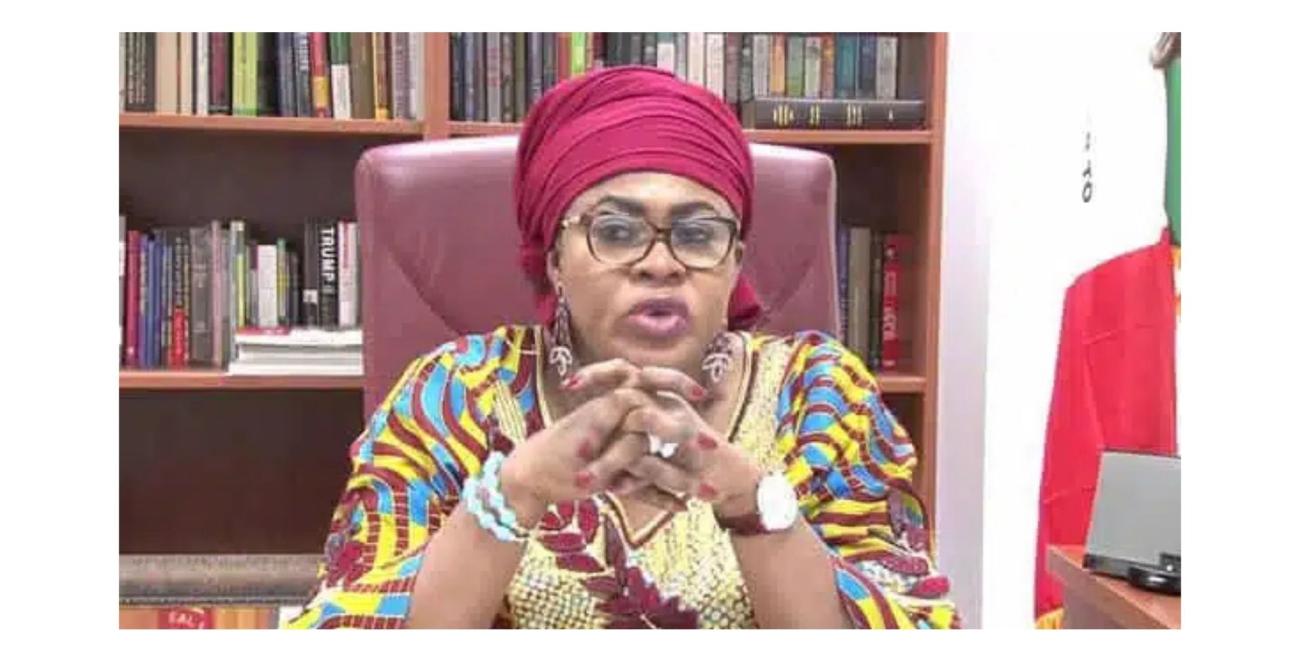
Justice Hamza Muazu struck out the case on Thursday after the prosecution informed the court that the value of the disputed funds had been returned.
Aformer Minister of Aviation, Stella Oduah, has been discharged by a Federal Capital Territory High Court in Abuja after the Nigerian government confirmed the recovery of funds linked to the fraud allegations against her, bringing an abrupt end to her prosecution.
Justice Hamza Muazu struck out the case on Thursday after the prosecution informed the court that the value of the disputed funds had been returned.
Oduah, who was standing trial alongside her former aide, Gloria Odita, had faced allegations tied to multi-billion naira transactions involving companies connected to the aviation ministry.
In his ruling, Justice Muazu declared, “The charge dated October 13, 2025, is hereby struck out, and the defendants are accordingly discharged.”
Earlier, the Director of Public Prosecution of the Federation, Rotimi Oyedepo (SAN), told the court he was acting on the directive of the Attorney-General of the Federation to confirm that the government had received restitution.
“I have the instruction of the Attorney-General of the Federation to inform your Lordship that the state confirms receipt of the value of the subject matter of this charge,” Oyedepo said.
Following the announcement, the prosecution amended the charge to retain only two companies, Sobora International Limited and Global Offshore Marine Limited, effectively removing Oduah and Odita as defendants.
The development comes amid earlier revelations by SaharaReporters that the resolution of the case may have been influenced by political considerations.
On March 8, 2026, SaharaReporters reported that the Tinubu Presidency allegedly “rewarded” Oduah’s defection to the ruling All Progressives Congress (APC) with a N1.54billion settlement arrangement in a broader N5billion fraud case, according to sources.
Oduah had entered into discussions with the Office of the Attorney-General of the Federation (AGF) over allegations involving the misappropriation of approximately N5billion in public funds.
She and Odita were initially arraigned on December 10, 2025, on a five-count charge filed by the AGF’s office over transactions that allegedly took place between January and February 2014 during her tenure as aviation minister under former President, Goodluck Jonathan.
The prosecution alleged that both defendants conspired to obtain about N2.46billion from the Federal Ministry of Aviation through companies, including Broad Waters Resource Nigeria Limited and Global Offshore Marine Limited, under the guise of providing technical supervision and security logistics services.
Specifically, prosecutors claimed that N839.7million was obtained through Broad Waters Resource Nigeria Limited, while N1.62billion was channelled through Global Offshore Marine Limited.
The funds were said to have been authorised under Oduah’s supervision, constituting offences punishable under the Advance Fee Fraud and Other Fraud-Related Offences Act 2006 and the Penal Code.
Sources had told SaharaReporters that the AGF, Lateef Fagbemi (SAN), proposed that Oduah pay N1.54 billion to resolve the matter—an arrangement described by insiders as politically motivated rather than a conventional plea bargain.
It was further alleged that the case was withdrawn from the Economic and Financial Crimes Commission (EFCC) to facilitate the process.
“In order to facilitate the fraudulent process, the AGF office took away the case from the EFCC,” a source privy to the matter said.
“The Tinubu Presidency decided to reward Stella Oduah for joining the APC. Contrary to reports in the media, the process is not a plea bargain, but a newly ready-made legal process designed to free politically connected individuals who are favoured by the President.”
Oduah had reportedly filed an application under Section 270 of the Administration of Criminal Justice Act (ACJA) 2015 to initiate plea discussions, prompting Justice Muazu to adjourn the matter to March 26, 2026, for a report on negotiations.
During earlier proceedings, Oyedepo had disclosed that the defendants were making efforts to refund the alleged proceeds.
“They have made moves to refund a certain amount of money into the government coffers,” Oyedepo told journalists. “What is left is the confirmation of receipt of the bank draft by the government.”
Her counsel, Onyechi Ikpeazu (SAN), and Odita’s lawyer had both confirmed that negotiations were ongoing at the time.
In June 2025, sources told SaharaReporters that the AGF had stalled the N5 billion case initially filed by the EFCC, allegedly due to Oduah’s political alignment with the ruling APC.
Oduah had defected from the Peoples Democratic Party (PDP) to the APC in August 2021 while representing Anambra North in the Senate.
Her tenure as aviation minister also drew criticism in 2013 after revelations that the Nigeria Civil Aviation Authority (NCAA) purchased two armoured BMW 760 Li vehicles for her at a cost exceeding N255million, despite funding constraints within the agency.
Officials had at the time raised concerns that critical aviation infrastructure and staff development were being neglected while funds were diverted for luxury acquisitions.
During the Thursday proceedings, Counsel to Oduah, Onyechi Ikpeazu (SAN), and Odita’s lawyer, Wale Balogun (SAN), urged the court to formally drop the charges against their clients, while the prosecution maintained they could still appear as representatives of the companies.
Justice Muazu clarified that no conviction would be recorded against the two women, noting that their roles were limited to representing the firms.
After a brief stand-down to resolve disagreements, both parties agreed that only the companies would remain as defendants.
The Nigerian government subsequently arraigned the firms on amended fraud charges.
According to the charge, Sobora International Limited allegedly held N838 million in 2015, funds suspected to have been illegally obtained from the Ministry of Aviation through ISEC Security Maintenance Limited.
Global Offshore Marine Limited was also accused of receiving N1.629 billion from the same source.
Oduah, appearing as a representative of the companies, pleaded guilty to the amended charges.
The court thereafter convicted the companies and ordered the restitution of N1.2 billion to the Nigerian Government, alongside the forfeiture of N780 million earlier recovered during investigations.
-Sahara

NFVCB Boss Urges Stronger Distribution Channels As Coal City Film Festival 2026 Opens In Enugu

Wike Reaffirms Nigeria–EU Ties, Moves To Reclaim Encroached Diplomatic Lands

Inspector-General Disu Submits 75-Page Framework On ‘State Police’ To Senate As Push Gains Momentum

5 Life Lessons from Manchester City EPL Current woes

Liverpool Announce Jürgen Klopp Return To The Club

MTN Teams Up With Meta To Boost WhatsApp Call Quality


-
 Health12 months ago
5 Life Lessons from Manchester City EPL Current woes
-
 Sports12 months ago
Liverpool Announce Jürgen Klopp Return To The Club
-
 Business12 months ago
MTN Teams Up With Meta To Boost WhatsApp Call Quality
-
 News12 months ago
Commonwealth Observers Prepare For Gabon Presidential Election
-

 Health12 months ago
Ponzi Scheme CEO Francis Uju Udoms of Addfx Case still Unresolved Despite SEC certification
-
 News12 months ago
Chibok Girls: 11 Years Of Anguish, Broken Promises
-
 News12 months ago
Wike’s Enviable Road Construction Method along Nyanya- Maraba Highway
-
 News9 months ago
NASRE Promises Support To Daily Times Group Business Editor, Oseni, Over Serious Road Accident