
News
Seven days to act: Google warns Gmail users of major password hack


Google has issued an urgent warning to its 1.8 billion Gmail users, warning that anyone with hacked account has just seven days to recover it or risk being locked out permanently.
In a recent development, users of Gmail around the world has experienced Google password hack.
To regain access, users must have a recovery phone number or email set up.
These backups allow Google to verify your identity through security questions, even after a breach.
The alert follows what Google described as a “sophisticated” phishing attack that exploited trust in its systems to trick users into surrendering their login credentials.
The threat was first reported by Nick Johnson, a developer for the Ethereum cryptocurrency platform.
He shared a screenshot of a deceptive email that appeared to come from a legitimate Google address, falsely claiming he had been served a subpoena and needed to give up access to his account.
Clicking the link took him to a “very convincing ‘support portal’ page,” Johnson said.
Both “Upload additional documents” and “View case” redirected to “exact duplicates” of Google’s real login pages.
“From there, presumably, they harvest your login credentials and use them to compromise your account; I haven’t gone further to check,” he explained.
The fake message was especially dangerous because it passed Gmail’s DKIM (DomainKeys Identified Mail) signature check, which confirms that parts of an email haven’t been tampered with.
“It even puts it in the same conversation as other, legitimate security alerts,” Johnson added.
Responding, a Google spokesperson, said the company is aware of the targeted attacks.
“We’re aware of this class of targeted attack from this threat actor and have rolled out protections to shut down this avenue for abuse,” Google spokesperson said.
To better protect against future phishing attempts, Google urges users to enable two-factor authentication (2FA) and passkeys.
“We encourage users to adopt two-factor authentication and passkeys, which provide strong protection against these kinds of phishing campaigns,” the company said.
Google emphasized that it will never ask for your password, one-time codes, or confirm push notifications — nor will it call you to verify account information.
According to the company, hackers used Google Sites to create scam pages, tricking users by leveraging the trusted google.com domain.
“Because they know people will see the domain is http://google.com and assume it’s legit,” Johnson explained.
Phishing scams typically use generic greetings, create urgency, and prompt users to click suspicious links.
Even though companies like Google do send emails, they won’t ask you to update login or payment details via clickable links, Google warns Gmail users.
Johnson’s case highlights how convincing and dangerous these scams have become — and why acting quickly is critical.
For stronger protection, Google recommends switching from a regular password to a passkey, a secure login that works only on your physical device.
This makes it virtually impossible for hackers to log in from another device, even if they steal your credentials, the company said.
As phishing techniques grow more sophisticated, Google’s message is clear: check your recovery settings, enable strong security measures, and don’t wait. The company continues to warn against Google password hack.
-Tribune
Education
NFVCB Boss Urges Stronger Distribution Channels As Coal City Film Festival 2026 Opens In Enugu
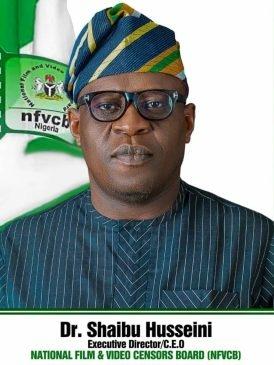
The Executive Director/Chief Executive Officer of the National Film and Video Censors Board (NFVCB), Dr Shaibu Husseini, has called for stronger distribution frameworks within Nigeria’s film industry to ensure that locally produced content achieves global visibility.
Dr Husseini made this call while delivering the keynote address at the opening ceremony of the 2026 edition of the Coal City Film Festival, held in Enugu.
Welcoming participants to the festival, Dr Husseini expressed his personal delight at hosting the event in Enugu, his birth state, noting the city’s rich cultural heritage and longstanding contributions to Nigeria’s creative landscape.
He commended the festival organisers, particularly the Festival Director, Uche Agbo, for their resilience and commitment in sustaining the initiative.
According to him, the Coal City Film Festival has grown into a significant cultural platform and a must-attend cinematic event in South East Nigeria.
Speaking on the festival’s theme, “Local Stories, Global Screens,” Dr Husseini emphasised the importance of authenticity in storytelling. He noted that films rooted in local realities, languages, and cultural truths often resonate more strongly with global audiences.
He cited notable Nigerian productions such as “King of Boys” by Kemi Adetiba, “The Wedding Party” by Mo Abudu, “Anikulapo” by Kunle Afolayan, “Black Book” by Editi Effiong, and “Lionheart” by Genevieve Nnaji as examples of culturally grounded stories that have gained international recognition on platforms such as Netflix and at global film festivals.
While acknowledging the growth in film production across Nigeria, the NFVCB boss identified distribution as a major bottleneck in the industry. He observed that many high-quality films struggle to reach audiences both locally and internationally due to limited distribution channels.
Dr. Husseini therefore urged film festivals across the country to evolve beyond networking platforms into active marketplaces where filmmakers can secure distribution deals. He stressed that festivals must attract distributors, exhibitors, streaming platforms, and marketers to create tangible opportunities for filmmakers.
“Film festivals must become gateways to distribution where filmmakers leave not just with applause, but with real opportunities,” he said.
Reaffirming the Board’s commitment to industry development, Dr. Husseini stated that the NFVCB has continued to reposition itself as a partner in progress by engaging stakeholders, improving classification processes, and promoting a balance between creative freedom and social responsibility.
However, he raised concerns over increasing non-compliance with regulatory requirements, noting that some filmmakers bypass the Board by releasing unclassified films or operating without proper licensing.
He reiterated that all films and video works must be submitted to the NFVCB for classification and registration before being released on any platform, including digital platforms such as YouTube.
“This is a legal obligation, and the Board will not hesitate to take decisive action against defaulters,” he warned, adding that regulation is essential for protecting the industry, audiences, and national values.
Looking ahead, Dr. Husseini assured stakeholders of the Board’s continued collaboration with filmmakers and festival organisers to build a structured, sustainable, and globally competitive Nigerian film industry.
He concluded by commending the organisers of the Coal City Film Festival for their vision and contribution to Nigeria’s cultural economy, urging filmmakers to continue telling authentic stories that can resonate across global screens.
-Leadership
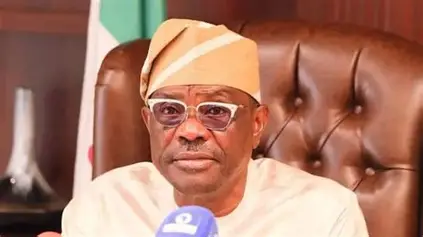
The Minister of the Federal Capital Territory, Nyesom Wike, has reiterated Nigeria’s commitment to strengthening its relationship with the European Union, while announcing steps to recover diplomatic lands in Abuja allegedly taken over by land grabbers.
Wike made this known on Thursday during a courtesy visit by the EU Ambassador to Nigeria and ECOWAS, Gautier Mignot, in Abuja.
“We will continue to engage EU member countries to further strengthen bilateral relations,” the minister said.
Addressing concerns over diplomatic land allocations, Wike disclosed that several plots originally designated for EU countries had been unlawfully occupied over the years. He noted that the FCT Administration has begun reclaiming such lands.
He added that the government would formally communicate with the affected countries to determine their continued interest in the properties and ensure rightful ownership is restored.
“We are writing to those countries. If they still intend to retain the lands, we are willing to return them. We will not allow land grabbers to take advantage,” Wike said.
The minister also commended the EU for its contributions to governance and justice sector reforms in the FCT, particularly in court digitalisation and improved justice delivery.
“I am aware of your support, especially in strengthening the administration and dispensation of justice. We will continue to partner with you to deepen these initiatives,” he added.
On requests for land allocation for local EU staff, Wike assured that applications would be considered based on due process, stressing that such processes must ultimately benefit the public.
He further addressed infrastructure concerns at the IBB Golf Club, confirming that a caretaker committee has been constituted, with rehabilitation works expected to commence soon.
In his remarks, Mignot described Nigeria as a key strategic partner for the EU, noting that both parties are entering a new phase of deeper engagement.
“The European Union remains one of Nigeria’s foremost trade and development partners. Our relationship is strong, mutually beneficial, and evolving into a more significant phase,” he said.
He highlighted ongoing EU-supported programmes in the FCT, including judicial reforms, court digitalisation, human rights initiatives, and support for victims of gender-based violence.
Mignot also invited the FCT minister to engage further with EU ambassadors to explore collaboration in areas such as waste management, urban planning, and water infrastructure.
Meanwhile, Wike recently ordered the demolition of buildings illegally constructed on land designated for foreign embassies in the diplomatic zone of Katampe Extension, Abuja.
He explained that the land, originally allocated on March 18, 2008, for residential use by diplomatic missions, was later encroached upon by an unauthorised developer who commenced construction without approval from the Federal Capital Development Authority.
The affected diplomatic missions include Thailand, Bulgaria, Syria, Somalia, Serbia and Montenegro, Japan, Austria, Switzerland, Senegal, and the Palestine Liberation Organisation.
-Leadership
News
Inspector-General Disu Submits 75-Page Framework On ‘State Police’ To Senate As Push Gains Momentum
According to a statement issued on Thursday by Ismail Mudashir, Special Adviser on Media and Publicity to the Deputy Senate President, the document titled “A Comprehensive Framework for the Establishment, Governance and Coordination of Federal and State Police” was presented at Jibrin’s office within the National Assembly complex.
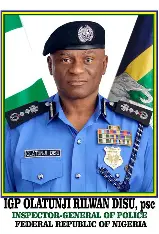
The Inspector-General of Police, Olatunji Disu, has submitted a 75-page framework on the establishment of State Police to the Deputy President of the Senate, Barau Jibrin, in a fresh move to advance decentralised policing in Nigeria.
According to a statement issued on Thursday by Ismail Mudashir, Special Adviser on Media and Publicity to the Deputy Senate President, the document titled “A Comprehensive Framework for the Establishment, Governance and Coordination of Federal and State Police” was presented at Jibrin’s office within the National Assembly complex.
The report was delivered on behalf of the IGP by Prof Olu Ogunsakin, who chairs the Nigeria Police Force committee set up to develop modalities for instituting State Police.
Disu said the document encapsulates the Force’s professional input following extensive consultations and a thorough evaluation of the legal, operational and administrative implications of decentralised policing.
“The report covers the considered views, professional insights and strategic recommendations of the Force, derived from extensive consultations and a careful assessment of the operational, legal and administrative implications of instituting State Police in Nigeria,” Disu said.
“It is our expectation that the contents of this report will meaningfully contribute to ongoing deliberations and assist in shaping informed, balanced, and pragmatic decisions on this critical aspect of national security architecture.”
The police chief noted that the framework has been formally submitted to the Senate Committee on the Review of the 1999 Constitution as the Nigeria Police Force’s official contribution to the ongoing constitutional amendment process.
Responding, Senator Jibrin commended the IGP for what he described as a proactive step aligned with the security agenda of Bola Ahmed Tinubu.
“The Deputy President of the Senate commended the IGP for his proactiveness on the establishment of State Police in line with President Bola Ahmed Tinubu’s agenda to fully secure the country,” the statement read.
He assured that the Senate Committee reviewing the Constitution would carefully examine the framework alongside other submissions as part of efforts to strengthen Nigeria’s legal foundation.
The proposed framework is expected to outline the operational structure, governance model, and coordination mechanisms between federal and state policing systems— marking a significant step in ongoing efforts to overhaul Nigeria’s security architecture.
SaharaReporters had earlier reported that Disu inaugurated an eight-member committee in March to drive the implementation of State Police, declaring that the reform was irreversible.
At the inauguration in Abuja, the IGP insisted that decentralised policing “has come to stay,” dismissing concerns that it could threaten the roles of existing police personnel.
“State Police has come to stay, and the police should be able to contribute their part in making it succeed. The police are not afraid, our jobs are not being taken,” he said.
He described the committee’s assignment as urgent and critical, giving members one month to submit their report amid rising security challenges across the country.
Disu stressed that the move towards State Police is aimed at strengthening internal security by bringing law enforcement closer to communities and enabling faster, more targeted responses to threats.
“Across the nation, we continue to confront evolving security challenges. These require innovative thinking, strategic collaboration, and the willingness to explore reforms,” he added.
The push for State Police has gained renewed momentum following President Tinubu’s assurance that the plan would not be shelved, urging stakeholders to support the initiative.
-Sahara

NFVCB Boss Urges Stronger Distribution Channels As Coal City Film Festival 2026 Opens In Enugu

Wike Reaffirms Nigeria–EU Ties, Moves To Reclaim Encroached Diplomatic Lands

Inspector-General Disu Submits 75-Page Framework On ‘State Police’ To Senate As Push Gains Momentum

5 Life Lessons from Manchester City EPL Current woes

Liverpool Announce Jürgen Klopp Return To The Club

MTN Teams Up With Meta To Boost WhatsApp Call Quality


-
 Health12 months ago
5 Life Lessons from Manchester City EPL Current woes
-
 Sports12 months ago
Liverpool Announce Jürgen Klopp Return To The Club
-
 Business12 months ago
MTN Teams Up With Meta To Boost WhatsApp Call Quality
-
 News12 months ago
Commonwealth Observers Prepare For Gabon Presidential Election
-

 Health12 months ago
Ponzi Scheme CEO Francis Uju Udoms of Addfx Case still Unresolved Despite SEC certification
-

 News12 months ago
Chibok Girls: 11 Years Of Anguish, Broken Promises
-

 News12 months ago
Wike’s Enviable Road Construction Method along Nyanya- Maraba Highway
-

 News9 months ago
NASRE Promises Support To Daily Times Group Business Editor, Oseni, Over Serious Road Accident