Connect with us

Education

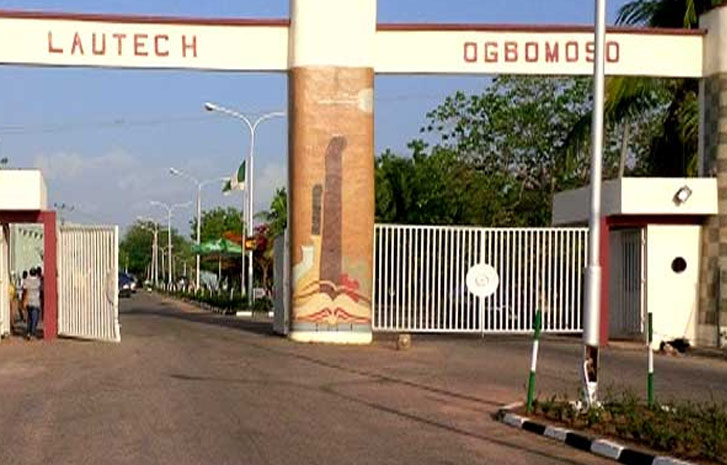
Oyo Has Paid N5bn For LAUTECH Sole Ownership – Commissioner By Adebayo Waheed

Published

on

In full compliance with the agreement of sole ownership of the Ladoke Akintola University of Technology, LAUTECH, Ogbomoso, the Oyo State government has paid a total of ₦5 billion to the Osun State government.


The commissioner for Information, Prince Dotun Oyelade, said on Monday that the total takeover amount is ₦8 billion. With this payment, the Oyo State government has been paying ₦1 billion per year, and the full payment should be settled before the end of the Seyi Makinde administration in 2027.


He said both states struck a deal on November 20, 2020, to cede LAUTECH to Oyo State.


Oyelade said that the joint ownership of LAUTECH was acrimonious between the Governments of the two States from 2007 to 2019, when Makinde took over and, surprisingly, reached an agreement with his Osun counterpart to make Oyo the sole owner of the Institution.


“Ever since, the Institution has grown in leaps and bounds, reclaiming its position as the Best State University in Nigeria.


“The academic excellence in the wake of this development notwithstanding, LAUTECH has also expanded physically and in scope with the establishment of the LAUTECH Faculty of Agriculture and Natural Resources, Iseyin campus.’’


The commissioner revealed that last Thursday, Makinde approved the release of ₦1 billion to the Osun State government, adding that the governor also released ₦650 million as a take-off grant for the Teaching and Research Farm at the Iseyin Campus.


“The government has also commenced simultaneously, the construction of health centres and road networks at LAUTECH Iseyin campus, the Abiola Ajimobi Technical University, Ibadan and the Emmanuel Alayande University of Education, Oyo”, he said.


-Leadership

Continue Reading
Click to comment

Leave a Reply

Your email address will not be published. Required fields are marked *

Education

Education Loan Fund Extends Application Deadline For Students

Published

on

The Nigerian Education Loan Fund (NELFUND) has extended the application deadline for the 2025/2026 academic session from 31st January, 2026 to 27th February, 2026.


The extension, according to a press statement issued yesterday by Mrs Oseyemi Oluwatuyi, director of Strategic Communications at NELFUND, is aimed at giving prospective applicants more time to complete and submit their applications, ensuring that no eligible student is excluded due to timing constraints.

She quoted the managing director of NELFUND, Mr Akintunde Sawyerr, as saying that the extension reflects the Fund’s commitment to inclusivity and access.


“We understand that some applicants may require additional time to complete their submissions, and this decision ensures that every eligible Nigerian student has a fair opportunity to benefit from the Fund,” she said.


NELFUND encouraged all prospective applicants who have yet to apply or complete their applications to take advantage of the extended deadline and ensure that all required information is submitted on or before 27th February, 2026.


-Leadership

Continue Reading

Education

How varsities mass produce research without ‘solutions’ to societal ills

Published

on

With more than half a million graduates and about the same number of research projects emerging each year from Nigerian universities, low rates of knowledge commercialisation mean that most of this potential remains unrealised, intensifying national vulnerabilities. IYABO LAWAL reports that if universities could achieve modest levels of commercialisation, even with an academic patent rate below one per cent, the positive fiscal and societal effects could be substantial while also addressing funding shortfalls.

Charles Ayoade can still feel the heat of the soldering iron on his fingertips and smell the faint ozone from the charging circuit. His final-year project, a highly efficient, low-cost, decentralised solar power system designed specifically for the unbanked rural community near his state university, was his masterpiece.

His project supervisor called it “commercially viable”. Ayoade envisioned it providing clean energy to hundreds of people, creating jobs, and chipping away at Nigeria’s crippling energy deficit.

He defended the thesis with distinction just as he graduated with a first-class honours degree.

Today, Ayoade works as a logistics coordinator for an import firm, and his solar system prototype sits under a thick layer of dust in a locked, forgotten cupboard in the Electrical Engineering Department of the University of Benin.

It is one among hundreds of thousands of meticulously researched papers and prototypes, the yearly intellectual harvest of the country’s universities that are quietly relegated to the “project graveyard”. This small cupboard, replicated across every Nigerian university campus, holds the “dead capital” that represents Nigeria’s greatest failure.

While Ayoade and his half-million fellow graduates enter a stagnant job market, his country grapples with a public debt exceeding N140 trillion. Interestingly, this is happening while likely solutions to Nigeria’s core challenges – energy, infrastructure, productivity – lie prostrate, gathering dust on academic shelves.

On the other hand, the Nigerian University System (NUS), which should be generating billions in commercial revenue and cutting-edge solutions like its counterparts in the United States (U.S.) and the United Kingdom (UK), is instead defined by a mass production of research, coupled with a near-total inability to transform the inherent knowledge into national wealth and development.

Like Ayodae, Comfort Inyang is an engineering student at the University of Nigeria, Nsukka (UNN). She encapsulates the struggle. Her thesis on affordable solar panels for rural areas, inspired by power shortages in her village, was submitted with aspirations of real-world impact. Three years later, the thesis is yoked by dust, the prototype discarded; the power grid remains weak, while national debt mounts.

Ayoadee’s experience is emblematic of the broader issue: prolific research output in Nigeria fails to address persistent societal challenges.

‘Research, research’ everywhere, but no solutions
WHILE Nigeria possesses thousands of research projects and millions of graduates, it has not overcome economic hardship, unemployment, or poverty.

University research, often described as “dead capital”, fails to drive revenue or address urgent national challenges. With roughly 500,000 to 600,000 graduates and untapped research stockpiled each year, the country incurs measurable costs.

Neglecting the commercialisation of these research endeavours deepens economic vulnerabilities and undermines public well-being. Indeed, if Nigerian universities captured even a tiny fraction of the commercial revenue as seen abroad, the financial boost would be transformative.

Currently, the commercialisation rate of academic patents remains below one per cent. This zero-sum approach forces institutions to rely almost entirely on increasingly scarce and insufficient government budget allocations (the 7.07 per cent allocated to education in 2025 falls far below the United Nations Educational, Scientific, and Cultural Organisation’s (UNESCO) recommended 15 to 20 per cent.)

A successful Technology Transfer Office (TTO) could generate dedicated funding for infrastructure, staff salaries, and laboratory upgrades, thus reducing the dependency that fuels perpetual industrial disputes.

While the country’s tertiary institutions churn out thousands of research outputs and graduates each year, it continues to struggle with profound economic challenges, including a daunting public debt of N149.39 trillion as of early 2025, despite being Africa’s third-largest economy.

This raises questions about the real-world impact of academic research and the integration of universities with society, economy, and industry. Millions of Nigerians have continued to bemoan a power sector that generates less than 4,000MW for a population of over 200 million, an agricultural sector plagued by post-harvest losses exceeding 40 per cent for some produce, and a manufacturing industry struggling with energy costs and imported raw materials.

Yet, according to the AD Scientific Index 2025, Nigeria ranks 58th globally and third in Africa in scientific research output. Leading universities such as the University of Nigeria, Nsukka (UNN), and the University of Ilorin (UNILORIN) produce significant research outputs, especially in the medical sciences, social sciences, and engineering.

How quantity trumps quality
ACCORDING to studies, Nigerian universities are increasingly versatile in producing research driven by academic promotion requirements rather than societal needs.

Graduates frequently submit academic projects that lack further development or practical application, leaving research archives underutilised and disconnected from the country’s pressing challenges.

Mass-produced research rarely translates into innovations that significantly impact local industries or communities. This divide extends beyond research into curriculum and institutional linkages, as companies seldom engage Nigerian universities for research and development or marketing innovations, as is commonly seen internationally.

Without robust industry partnerships, the country’s universities struggle to adapt curricula to labour market demands, and graduates often enter the workforce without relevant skills or experience.

According to the National Universities Commission (NUC), Nigeria’s over 300 universities and other degree-awarding institutions churn out thousands of graduates yearly.

Over the last decade, millions of research works have been produced as each final-year student completes a research project or thesis, but this has not alleviated structural problems such as unemployment and infrastructure deficits, many noted.

Economic limitations, including Nigeria’s ballooning public debt and chronic underinvestment in research funding, hinder the translation of academic work into tangible solutions.

Additionally, thousands of lecturers publish in both local and international journals just to meet promotion benchmarks.

A conservative estimate suggests that universities in the country produce no fewer than half a million discrete research documents every year.

The NUC’s Nigerian Research and Education Network (NgREN) and platforms like the African Journal Online (AJOL) host thousands of these publications.

Some stakeholders have cited “publish or perish” as a survival strategy.

According to them, the NUC and university senates set targets requiring two journal articles for a lecturer I, three for a senior lecturer, and three for an associate professor, with the focus appearing to be on the number and ranking of the journals rather than the potential application of the research.

A 2022 study published in the Journal of Academic Ethics, titled: ‘Research Output and Socio-economic Development in Nigeria’, found that over 80 per cent of academic research in Nigeria ends at the publication stage, with no pathway to commercialisation or policy influence.

The problem seems to kick off at the undergraduate level, where final year projects, often the first major research endeavour for students, are treated as a graduation hoop to jump over.

Research: A means to an end
UNITED States universities and affiliated research institutions are globally recognised for their successful commercialisation pipelines, demonstrating the massive wealth potential of integrated “town and gown” relationships.

In the U.S., universities like Massachusetts Institute of Technology (MIT) and Stanford have dedicated technology licensing offices that actively patent inventions and broker deals with industry.

In 2022 alone, MIT reported $1.8 billion in research expenditures, resulting in 850 inventions and 125 new licenses, supported by a system designed to move ideas from lab to market.

In developed economies, the symbiosis between industry and academia is considered a given. For example, Nike collaborates with university sports science departments to conduct biomechanical analysis to design better footwear.

Automotive companies fund engineering research; media houses run competitions with mass communication departments for marketing campaigns.

In leading global economies, major universities serve as powerful economic hubs, generating substantial revenue streams from intellectual property through technology transfer.

These figures stand in stark contrast to the estimated sub-one per cent commercialisation rate observed in Nigeria, and the billions of dollars and pounds generated by U.S. and UK universities highlight the immense untapped economic potential in Nigeria’s higher education sector.

The total value of products and services sold by companies based on university-licensed technologies, the gross product value, has exceeded $2.8 trillion cumulatively since 1996.

Every year, these institutions generate between $3 billion and $4 billion in direct licensing income, which is payments received from companies for the right to use academic patents and IP.

Furthermore, this activity has created over 15,000 start-ups since 2000 through spin-offs, generating jobs and tax revenue.

The U.S. system is characterised by strong Technology Transfer Offices, significant venture capital investment, and robust legal frameworks (such as the Bayh-Dole Act) that encourage universities to patent and license their discoveries. This entire process transforms public research funding into private sector wealth.

The UK higher education sector is also a major economic contributor, successfully leveraging government and private funding to generate commercial returns.

The total IP commercialisation, which combines income from licensing, royalties, IP sales, and investment in spin-offs, amounts to approximately £2.5 billion ($3.2 billion) per year.   Specifically, the revenue generated by university spin-out companies in the reporting year, the spin-out value, is over £1.3 billion yearly.

In total, the economic impact of this commercialisation activity is estimated at over £20 billion per year, contributing to the UK economy.

UK institutions, particularly those in the “Golden Triangle” (Oxford, Cambridge, and London), have become experts at taking equity stakes in start-ups based on their research, turning successful academic breakthroughs into multi-billion-dollar companies that return significant investment to the universities.

Finding a fix for a broken link
THIS model of the “entrepreneurial university” is virtually non-existent in Nigeria. The National Office for Technology Acquisition and Promotion (NOTAP) registers technology transfer agreements, but has limited experience in commercialising domestic university research.

In Nigeria, this link is broken. What is evident is a mass production of graduates whose research has no tangible connection to the “town,” that is, the real-world economy.

These graduates enter a workforce that often finds their skills misaligned with industry needs, perpetuating a cycle of unemployment and under-development.

NOTAP’s former Director-General, Dr DanAzumi Ibrahim, stated that less than five per cent of research outputs from Nigerian universities are translated into marketable products or services.

“Until we treat knowledge as a tradable commodity and research as an investment, not an expense, we will continue to celebrate academic papers, while our economy bleeds,” Ibrahim said.

According to the World Intellectual Property Organisation (WIPO), Nigeria filed only 238 patents in 2021. In contrast, South Africa filed 4,065, and a non-academic company like Huawei filed 6,952 Patent Cooperation Treaty (PCT) applications globally. This indicates a severe deficit in generating protectable, commercially viable ideas.
Nigeria’s investment in research and development is among the lowest in the world. UNESCO data shows that Nigeria invests a mere 0.22 per cent of its Gross Domestic Product (GDP) in research and development.
This pales in comparison to the African Union’s recommended target of one per cent and is dwarfed by global leaders such as South Korea (4.81per cent) and Israel (5.44 per cent).

“Our focus is to make the NITTOs more functional and result-oriented,” said the current NOTAP boss, Dr Obiageli Edith Amadiobi.

“We are pushing for more memoranda of understanding that are not just signed and filed away, but are actively managed to produce commercial prototypes.”

A former executive secretary of the National Universities Commission (NUC), Prof. Peter Okebukola, decried the poor state of research and innovation in Africa, citing inadequate infrastructure and lack of investment as major obstacles.

Speaking on the challenges facing the continent, Okebukola lamented that brilliant minds are being stifled by a harsh environment characterised by poor electricity supply, inadequate water supply, and poor roads.

“Our research and innovation capacities are stifled by inadequacies in research infrastructure and inclemency of the environment that can spawn innovation,” Okebukola said, pointing out that African governments, particularly Nigeria, have failed to invest reasonably in research and development over the years, leading to the continent’s poor global ranking in this area.

“When global comparisons are made, Africa invests about the least in research and development in the world,” he said, adding that the situation has relegated the continent to the lowest rung of the innovation ladder.

“Our universities and research institutes are working at less than 30 per cent installed capacity in terms of outputs of research and innovation owing to severe limitations in facilities and human capacity.”

The ex-NUC chief identified three key reasons Nigeria’s research and development efforts are struggling. Firstly, he noted that governments are hesitant to invest in local research due to concerns about its quality.

“Governments, having not invested in what you have called local research, are doubtful of the quality of such research, and what you are doubtful of, you are inclined not to support,” Okebukola said.

“There is the lingering mentality that whatever is foreign is best for us, so whatever findings the ‘oyinbo’ man provides as a product of research is ‘the end of discussion’,” he stated.

Thirdly, “The low priority accorded to research in the funding scheme of the nation is influenced by the complacency of having oil as the mainstay of our economy,” he said, adding that this has led to a lack of compelling reasons to explore alternative revenue streams through research and development.

Ending proliferation of ‘empty’ research projects
TO realise the full potential of Nigerian research, economists and academic experts have recommended aligning research incentives with societal needs, fostering university-industry collaboration, increasing government and private funding, and developing frameworks for commercialisation.

Without this, they warned that Nigeria risks perpetuating the cycle of producing academic research in isolation, valuable in quantity but limited in real-world benefit.

That said, despite the bleak landscape, pockets of progress are welling up. Institutions like the Federal University of Technology, Akure (FUTA), with its Centre for Renewable Energy Technology, and the University of Nigeria, Nsukka (UNN), with its Bioresources Development Centre (BIODEC), have achieved success in developing marketable products such as biofuels and herbal medicines.

Similarly, to foster economic growth and industrial competitiveness, the Federal Government has established a steering committee and a policy drafting committee for the National Research to Commercialisation Policy.

According to the government, the inauguration was aimed at translating research outputs into tangible economic and social value, from which the nation will benefit in the years to come.

The government also announced additional support for research commercialisation, including N3 billion operational budget for the Research, Innovation and Commercialisation Committee (RICC) in the 2026 financial year, and the harmonisation of existing research funding lines to ensure synergy and measurable impact.

The Minister of Education, Dr Tunji Alausa, said the initiative would reposition research and innovation,

Experts highlighted that Nigeria’s failure to capture a fraction of this potential revenue means universities remain perpetually reliant on government budget allocations that are insufficient.

If Nigerian Higher Education Institutes (HEIs) could generate just $300 million yearly from commercialising their IP, this sum could be ring-fenced to upgrade infrastructure, fund laboratories, and provide competitive salaries, directly addressing the root cause of the academic brain drain.

Since local universities are not developing homegrown solutions for industry, Nigerian companies and government agencies are compelled to import specialised technology, medical equipment, and consulting expertise, stakeholders further noted.

They warned that this sustained reliance on foreign solutions results in massive capital flight, with billions of dollars leaving the Nigerian economy each year. This financial drain intensifies pressure on the naira and represents a substantial loss of capital that could otherwise be invested domestically.

For the Research Director, National Space Research and Development Agency, Abuja, Prof. Babatunde Rabiu, the committee can make a positive difference if it leverages existing federal government establishments targeted towards the commercialisation of research products and established executive orders, such as Executive Order 5, among others.

He identified existing federal government ministries and agencies that could serve as the National Office for Technology Acquisition and Promotion (NOTAP), the Ministries of Information, Innovation, Science and Technology, among others.

Rabiu, who is also a Professor at the Institute of Space Science and Engineering at the African University of Science and Technology, Abuja, emphasised that for research outcomes to address society’s needs, there must be effective communication between the town and the gown.

He added that the media house’s role is pivotal in communicating STI products.

While urging the government to develop appropriate legislation to ensure that companies sponsor research relevant to their operations, Rabiu noted that a certain proportion of the tax these companies pay is appropriated by the government for R&D.

He added that efforts are underway to patent the research findings. For instance, Rabiu disclosed that NOTAP is responsible for patenting research findings and commercialising R&D products.

“Sometimes, NOTAP worked with the universities in Nigeria to set up intellectual property and technology transfer offices within the universities to grant easy access to university researchers to patent their intellectual and research products. Such units are also found in science and technology-related MDAs in Nigeria.

On his part, a Professor of History, Ayodeji Olukoju, said that there is a need to distinguish between policy-based research and research-based policy.

“While the former is the type of research that is funder-driven, which is narrowly focused on the funder’s agenda, the latter is the ideal that we should be pursuing – policy driven by the output of research supported by any funding body (public or private).

“Against this background, the committee has a lot of work assigned to it, but it requires everyone’s support to deliver. There are many research results buried in academic journals at home and abroad. Some might even have reached the stage of filing for a patent, but the process was not completed because of failure to get a funder willing or able to convert the research into policy or a product.

“The point is that each institution should have an inventory of what has been done. They should indicate which research findings could be patented or harnessed to inform policy. The committee could request information on any path-breaking, policy-oriented research conducted in our tertiary institutions in the last 10-15 years at least. Those who conducted such research could also interface with the committee directly to shed light on their accomplishments. The best 10 or so could be incentivised for their efforts. There should be a review of the suitable research output to determine which should be further developed.”

To ensure that research outcomes speak to society’s needs, Olukoju, who is also the Pro-Chancellor and Chairman of Council, Chrisland University, Owode, Ogun State, said the first step is to identify and prioritise societal challenges and needs, and the institutions best suited to address them.

Beyond fabricating or remodelling physical objects, such as machines and tools, the former vice-chancellor said we could also enrich national policy on education, industrial development, transport, agriculture, and energy, among others, by interfacing with departments and faculties in the relevant and cognate disciplines in universities of science and technology or STEM faculties in conventional tertiary institutions for a joint response to any identified issue.

Regarding patenting research and findings, the seasoned Historian stated that patenting should be part of, or an extension of, the research grants awarded by funding bodies.

“It is not enough to win big grants and celebrate them without also showcasing the patents, inventions or policy interventions emanating from grants and fellowships. However, some disciplines, especially in the natural and physical sciences, are better placed than others to win grants and deliver patents and products,” he submitted.

A lecturer at the University of Ilesa, Dr Adebukola Ayoola, said the committee must interact with universities to identify disciplines whose research can be patented.

Besides, he said the government must give incentives in the form of research grants tied to a specific area of need in society. This, he noted, will encourage academics in disciplines relating to such areas of need to engage in research for the purpose of addressing such issues.


-Guardian

Continue Reading

Business

Fidelity Bank Supports Quality Education Delivery in Makoko

Published

on

Press releTier-one lender, Fidelity Bank Plc, has reaffirmed its commitment to community development and educational empowerment with the donation of essential learning materials to schoolchildren in Makoko Community, Yaba, Lagos under its Fidelity Helping Hands Program (FHHP).


The outreach, which was facilitated by the bank’s Legal Services Division, saw the presentation of school bags, notebooks, mathematical sets, writing materials, and other learning materials to pupils of Makoko Anglican Nursery and Primary School; Aiyetoro Nursery and Primary School, and Adekunle Anglican Nursery and Primary School in Lagos.


Speaking during the presentation, Divisional Head of Legal Services, Fidelity Bank Plc, Kingsley Ohiri, explained that the gesture forms part of Fidelity Bank’s broader CSR initiatives centered on empowering young people, supporting education, and enhancing social welfare in vulnerable communities.


“The Fidelity Helping Hands Program is our staff volunteer program that enables employees to identify and execute impactful CSR projects,” he said. “Through this program, staff volunteers from the Legal Services Division are here today in Makoko to distribute back-to-school materials such as school bags, notebooks, pencils and other essential learning tools. This aligns strongly with one of our CSR pillars: education.”


Ohiri further emphasized the bank’s focus on improving access to quality education for children in public schools, especially those from indigent backgrounds.


“Over 500 school bags, more than 2,000 exercise books and several other learning items were distributed today. We at Fidelity Bank are proud to give back to Makoko community. We believe that by supporting these pupils with the tools they need to learn, we are helping to build a stronger future for the pupils, the community and Nigeria,” Ohiri added.


Aimed at enhancing the learning experience of children in one of Lagos’ most underserved riverine communities, the gesture received warm appreciation from school leaders, teachers, and parents who

expressed gratitude for the bank’s support.


“We sincerely appreciate Fidelity Bank for selecting our school as one of the beneficiaries. This gesture will go a long way in helping our pupils improve academically. Recognizing students who placed 1st to 10th in their classes is also a great motivation for our children”, stated the Head Teacher of Adekunle Nursery and Primary School, Mrs. Tinubu Abimbola.


Similarly, the School Manager of Makoko Anglican Nursery and Primary School, Mr. Laoye Joseph, described the donation as a profound act of compassion and responsibility, saying, “We truly appreciate Fidelity Bank and the continuous support for the educational development of our children. Many families here struggle to provide basic learning materials due to economic hardship, so this intervention is highly impactful. We pray that God continues to uplift the bank.”


Teachers present at the event also noted that many pupils often attend classes without basic supplies, a challenge that affects participation and performance. They commended Fidelity Bank for easing the financial burden on parents, especially amid rising household expenses.


Through FHHP, Fidelity Bank Plc’s staff identify impactful projects in their communities and raise funds to support them. The bank’s management matches these contributions, amplifying their reach and impact.


Ranked among the best banks in Nigeria, Fidelity Bank Plc is a full-fledged Commercial Deposit Money Bank serving over 9.1 million customers through digital banking channels, its 255 business offices in Nigeria and United Kingdom subsidiary, FidBank UK Limited.


The Bank is a recipient of multiple local and international Awards, including the 2024 Excellence in Digital Transformation & MSME Banking Award by BusinessDay Banks and Financial Institutions (BAFI) Awards; the 2024 Most Innovative Mobile Banking Application award for its Fidelity Mobile App by Global Business Outlook, and the 2024 Most Innovative Investment Banking Service Provider award by Global Brands Magazine. Additionally, the Bank was recognized as the Best Bank for SMEs in Nigeria by the Euromoney Awards for Excellence and as the Export Financing Bank of the Year by the BusinessDay Banks and Financial Institutions (BAFI) Awards.


L–R: Head Teacher/School Manager, Aiyetoro African Church Primary School, Okoro Chineye Patricia; School Manager, Adekunle Anglican Nursery & Primary School, Tinubu Abimbola; Head, Legal Services Division, Fidelity Bank Plc, Kingsley Ohiri; School Manager, Makoko Anglican Nursery & Primary School, Olaoye Joseph; and Team Lead, Corporate Social Responsibility, Fidelity Bank Plc, Victoria Abuka; during the presentation of educational kits to pupils of Adekunle, Makoko, and Aiyetoro Nursery and Primary Schools in the Makoko area of Yaba, Lagos.

Continue Reading

Trending