
Health
Why Nigeria Should Prioritise Breastfeeding - UNICEF


As the world marks World Breastfeeding Week from August 1–7, a renewed spotlight is being placed on one of the most natural and essential acts for a child’s survival; breastfeeding.
With this year’s theme, “Prioritise Breastfeeding: Create Sustainable Support Systems,” UNICEF has expressed concern over Nigeria’s stagnating breastfeeding rates and urging collective action to reverse the trend.
Despite widespread awareness campaigns and decades of health advocacy, many Nigerian mothers still face barriers to exclusive and sustained breastfeeding.
The National Demographic and Health Survey (NDHS 2023-24) revealed that early initiation of breastfeeding within the first hour after birth has declined from 42 per cent in 2018 to 36 per cent in 2023. Even more concerning, the rate of exclusive breastfeeding (feeding babies only breast milk for the first six months) has stalled at 29 per cent. Only 23 per cent of Nigerian babies are breastfed up to the recommended two years.
These numbers represent missed opportunities for children to get the best possible start in life and for mothers to experience the full health benefits of breastfeeding.
According to UNICEF, breast milk is a powerhouse of nutrition. It contains all the nutrients an infant needs in the first six months of life, along with vital antibodies that help babies fight infections.
Research shows that breastfed children perform better on intelligence tests and are less likely to become overweight or obese later in life. For mothers, breastfeeding reduces the risk of breast and ovarian cancers, and Type II diabetes.
UNICEF Nigeria country representative, Wafaa Saeed Abdelatef, said “Breast milk is central to child survival and development. We all have a role to play in supporting mothers to breastfeed effectively.
“This World Breastfeeding Week, we urge every level of government, every workplace, and every community to build lasting support systems so that no mother lacks the encouragement or resources she needs. Let us mark this week not just with words, but with action.”
According to nutritionists, the benefits of breastfeeding go beyond health. Breastfeeding is a climate-smart solution. It’s sustainable, cost-effective, and zero-waste. In a world grappling with environmental degradation and rising food insecurity, breast milk stands out as a free, readily available, and eco-friendly source of nutrition, yet one that is still not fully supported.
One of the most glaring barriers is the lack of paid maternity leave. Out of Nigeria’s 36 states and the Federal Capital Territory, only 12 provide up to six months of paid leave, a period critical for establishing exclusive breastfeeding.
For women in the informal sector or low-income households, the challenge is even steeper. With no job security, minimal workplace support, and limited access to health facilities that offer breastfeeding counseling, many mothers simply cannot afford to breastfeed exclusively.
In healthcare settings, not all providers are trained to support or counsel mothers effectively, while cultural myths and misinformation continue to influence decisions around infant feeding.
To change this narrative, UNICEF said it is crucial that mothers receive support, whether at home, in healthcare settings, or workplaces, to initiate breastfeeding within the first hour of birth, breastfeed exclusively for six months, and continue alongside nutritious complementary foods up to breastfeed their babies for at least for 24 months.
To tackle the problem head-on, UNICEF and the federal government, through the Nutrition 774 Initiative, are calling for concrete action. This includes six months paid maternity leave across all states, training of health workers to provide better breastfeeding counseling and support.
Others are workplace breastfeeding-friendly policies, including nursing rooms and flexible hours, community sensitisation to dispel myths and normalise breastfeeding in public and increased investment in nutrition programmes that prioritise early childhood health.
The push for sustainable breastfeeding support is not just a health issue, it’s a development strategy. Countries that invest in early nutrition see returns in better educational outcomes, reduced healthcare costs, and a stronger, more productive workforce.
World Breastfeeding Week is more than a celebration, it’s a wake-up call. While over 90 per cent of Nigerian mothers start breastfeeding, far fewer are able to sustain it in the way their babies need most.
As the week unfolds, stakeholders from government ministries to local communities are urged to take real steps to protect the right of every child to adequate nutrition. The question is no longer why breastfeeding matters, but how Nigeria will rise to the challenge of making it work for every mother and every child.
-Leadership

Indomie has said it is backing a cross-country cycling journey by 15-year-old autism advocate Kanyeyachukwu Tagbo, who is embarking on a Guinness World Record-bound ride from Enugu to Lagos to raise awareness about autism and promote inclusion.
Tagged ‘Journey of Possibility, #RideWithKanye’, the expedition will see the young cyclist travel across several Nigerian cities as he advocates for greater understanding and support for individuals living with Autism Spectrum Disorder and their families.
The initiative represents an official attempt to set a Guinness World Records milestone as the youngest autistic individual to complete a cross-country cycling journey. The ride is scheduled to conclude in Lagos on World Autism Awareness Day, reinforcing the global call for empathy, acceptance, and opportunity for people on the autism spectrum.
Speaking on the brand’s involvement, Group corporate communications and events manager of Dufil Prima Foods, Temitope Ashiwaju, said the initiative reflects Indomie’s enduring commitment to celebrating courageous Nigerian children and amplifying stories that inspire hope.
“At Indomie, we believe every child deserves the opportunity to dream boldly and achieve extraordinary things. Kanyeyachukwu’s journey is a powerful reminder that determination and talent can transcend limitations. We are proud to support his mission to inspire understanding, acceptance, and hope for individuals living with autism,” he said.
Indomie stated that “Kanyeyachukwu first captured national attention when he was recognised at the Indomie Heroes Awards, an initiative by Indomie that celebrates courageous Nigerian children who have demonstrated exceptional bravery, resilience, and impact in their communities.
“Since receiving the recognition, he has continued to use advocacy, creativity, and public engagement to reshape perceptions about autism and inspire conversations around inclusion.
“Through the ‘Journey of Possibility’, Kanyeyachukwu hopes to demonstrate that individuals on the autism spectrum possess extraordinary potential when given the opportunity and support to thrive.”
It added that “as a key supporter of the initiative, Indomie will provide branded cycling kits and support materials for cyclists accompanying him throughout the route, alongside financial support and brand activations at designated stops along the journey. These engagements will include community interactions aimed at educating the public, encouraging dialogue, and fostering broader participation in autism advocacy.”
Through initiatives like the Indomie Heroes Awards and its support for the ‘Journey of Possibility, #RideWithKanye’, Indomie continues to champion young Nigerians whose courage, determination, and achievements demonstrate the limitless possibilities that emerge when children are empowered to pursue their dreams.
-Leadership

Two persons suspected to be students of the Federal Polytechnic, Nekede, Owerri, the Imo State capital, have drowned in Otammiri River in Owerri.
The incident, according to a source, occurred last Saturday.
The source said one of the deceased, Chukwudi Okwuchukwu, was a year one National Diploma Computer Science student and Igwilo, a friend of another student, who joined the swimming expedition.
However, the school authorities have denied the allegation, saying they were not aware of the incident.
An eyewitness who pleaded anonymity said four male friends came to swim in the Otammiri River and snap pictures.
According to the source, a local warned the young men not to swim, saying it was getting dark, but they refused and continued swimming.
Further, he said the swimmers who were busy being snapped pictures by their friends swam to the deep side and drowned in the process.
The school’s public relations officer, Dr Ike Ibe, said the school was unaware of the incident.
He said, “No, the school management is not aware of such an incident.”
When contacted, the SUG president of polytechnic, Destiny Nwosu, confirmed that two people drowned in the river but maintained that they had yet to be identified as students of the school.
Nwosu said, “I heard that two people drowned at the Otammiri River, but we have yet to confirm that they are students of our school. I can’t confirm whether they were Nekede Polytechnic students or from the other schools in the state, and if they were even students anywhere else.”
The president of the National Association of Imo State Students (NAISS), Nekede Polytechnic chapter, Daniel Promise, said he saw the video on social media but maintained that they had not been identified as students of Nekede Polytechnic.
He said, “Up till now, no one has confirmed the victim to be their coursemate or anything like that. I can’t confirm that they were our fellow students,” Promise said.
Meanwhile, the two corpses have been deposited at a morgue.
-Leadership
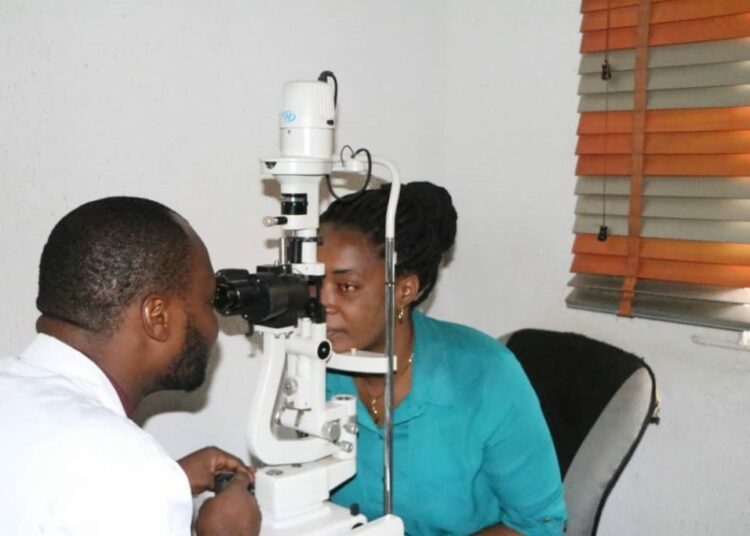
Plateau State commissioner for Health, Dr Nicolas Ba’amlong, has declared that glaucoma is the second leading cause of blindness after cataract in Nigeria.
He, therefore, called for a united push for regular eye checks, early diagnosis and affordable treatment.
The commissioner said Nigeria Blindness and Vision Impairment Survey, Prevalence of Glaucoma affects five percent of the population, adding that it accounts for 16.7 percent of blindness cases, while 5.6 percent of the affected individuals knew they had the disease and one in five persons were already blind at diagnosis.
He maintained that the 2023 Rapid Assessment of Avoidable Blindness (RAAB) survey in Plateau State reported prevalence of blindness to be 2.7 percent which is significantly higher than the national average of 0.7 percent stressing that glaucoma accounted for 17 percent of such blindness.
The theme for this year ” Uniting for Glaucoma Free World” emphasised the power of collective action in tackling one of the leading causes of irreversible blindness. It conveys both urgency and hope highlighting that while glaucoma cannot be cured, blindness from it can often be prevented through awareness, early detection and treatment.
Dr. Ba’amlong further explained that “Glaucoma Week reminds us that protecting visions is a shared responsibility because when we unite to promote awareness, early testing and accessible treatment, we move closer to the future where no one loses his sight to glaucoma.”
-Leadership

NFVCB Boss Urges Stronger Distribution Channels As Coal City Film Festival 2026 Opens In Enugu

Wike Reaffirms Nigeria–EU Ties, Moves To Reclaim Encroached Diplomatic Lands

Inspector-General Disu Submits 75-Page Framework On ‘State Police’ To Senate As Push Gains Momentum

5 Life Lessons from Manchester City EPL Current woes

Liverpool Announce Jürgen Klopp Return To The Club

MTN Teams Up With Meta To Boost WhatsApp Call Quality

-
 Health12 months ago
5 Life Lessons from Manchester City EPL Current woes
-
 Sports12 months ago
Liverpool Announce Jürgen Klopp Return To The Club
-
 Business12 months ago
MTN Teams Up With Meta To Boost WhatsApp Call Quality
-
 News12 months ago
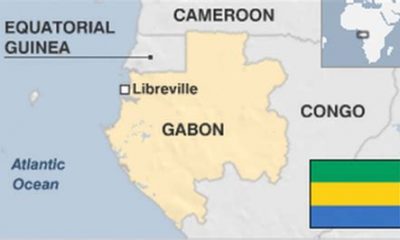
Commonwealth Observers Prepare For Gabon Presidential Election
-

 Health12 months ago
Ponzi Scheme CEO Francis Uju Udoms of Addfx Case still Unresolved Despite SEC certification
-

 News12 months ago
Chibok Girls: 11 Years Of Anguish, Broken Promises
-

 News12 months ago
Wike’s Enviable Road Construction Method along Nyanya- Maraba Highway
-
 News9 months ago
NASRE Promises Support To Daily Times Group Business Editor, Oseni, Over Serious Road Accident