
Health
Time To Buckle Up That Child


Eighteen years ago, I was privileged to travel to Cape Town, South Africa. It wasn’t my first trip, but my second, having earlier visited Pretoria. Both trips were sponsored—in Naija parlance, we call it awoof (gift). The trip to Cape Town, South Africa, was an eye-opener regarding concrete and enduring interventions to protect lives, especially those of children.
The trip to Cape Town was for a training program that included a tour of some neighborhoods to assess the effectiveness of specific interventions. During one such tour, I witnessed volunteers providing traffic-calming measures to protect black kids in a black neighborhood in Gordon’s Bay. These volunteers took a stand to protect the group we all call the leaders of tomorrow, rather than sitting on the fence.
Back home, the reverse is the case. We often leave everything to God instead of taking a stand to protect children, whose birth we gladly celebrate with much fanfare. As a parent or guardian, are you aware of the provisions of Section 58(4) of the National Road Traffic Regulations, 2004, which mandate that all occupants of a vehicle use a seatbelt for their safety? Do you know that this provision also covers children?
Whenever I focus on the dangerous trend of transporting children incorrectly, I reflect on what obtains in developed countries, where a newborn child must be transported in an appropriate car seat from the first day. I rhetorically ask readers who are parents or guardians: given the increasing number of unsafe practices by parents and guardians, especially women or mothers, which is ironic and strange to me.
Daily, I see mothers, especially during school runs, carrying children under twelve years in the front passenger seat, and sometimes two children of that age are seated in the front. To further complicate this risky driving behavior, the mother also uses her phone, which distracts and impairs her.
Whenever I stress these questions, I merely seek to challenge your consciousness regarding the dangers we expose our children to, despite our claim that we love and cherish them so much. Most of us who have heeded the Federal Road Safety Corps’ call to use seatbelts, unfortunately, do not see the sense in protecting our children while driving by strapping them in. Some lap them, while others leave them unattended in moving vehicles. Some claim that strapping children in a car seat is an alien practice.
This group maintains that strapping children in a car is meant for the white man, not the black man. Others say it is meant for the wealthy, while for some, it is a status symbol habit for those striving to flaunt their class. For others, the cost of a car seat is high, even though the cheapest cars they drive cost at least five million naira, and other cars go for as high as sixty or hundreds of millions of naira, compared to car seats whose cost can’t even buy the tires for these cars.
Even if car seats were as expensive as tires, would that be too much for the protection of the life of God’s precious gift? Yet, these same parents would not mind spending thousands on drinks, pepper soup, and other extras with friends and business partners. The female ones would prefer spending thousands or millions of naira on designer shoes and bags but not on the safety of their children.
These self-centered choices that parents make are, to me, absurd, to say the least. I believe that child safety should remain the passion of every parent, including would-be parents. It has been over fifteen years since the Federal Road Safety Corps introduced the seatbelt driving culture novelty. Yet, a greater percentage of parents and guardians don’t care about child safety.
Daily, these children, whether in school buses or family vehicles, are transported without any regard for their safety. Over the years, child passenger safety campaign themes, such as “Don’t kill the Child, Kill the Bad habit,” have been developed to raise safety awareness about children’s safety. This is because road safety crises are the leading cause of preventable death, the third-largest cause of disabilities, and the second-largest cause of death after AIDS/HIV in Africa.
A study has shown that 10% of global road deaths occurred in Africa, although only 4% of the world’s registered vehicles are on the continent. This study posits that if reporting of road crashes were to improve, the road crash index on the continent would likely show more deaths. According to this study, South Africa and Nigeria account for most of the reported deaths.
These deaths, according to the study, are caused mostly by human error and vehicle factors, including overspeeding, dangerous overtaking, alcohol and drug abuse, negligence of drivers, poor driving standards, and overloaded people or goods vehicles. Other factors include poor tire maintenance, burst tires, bad roads and hilly terrain, negligence of pedestrians, distraction of drivers by passengers, as well as cell phone use, among others.
For emphasis, road traffic injuries alone are the leading cause of death among children aged 15-19 years and the second leading cause among 10-14-year-olds. These injuries are not inevitable; they are preventable. Ironically, most parents are not concerned, judging by their actions behind the wheel. Signs of these concerns are numerous.
Sometimes, I wonder if most parents are familiar with the 1989 United Nations Convention on the Rights of the Child, ratified by our government, or the Child’s Rights Act (CRA) of 2003, designed to protect children’s rights in Nigeria, which aligns with the UN Convention on the Rights of the Child. These Acts state that children have the right to a safe environment and protection from injury and violence, stressing the responsibilities of society to protect children from birth up to the age of 18 years.
The 2000 United Nations Millennium Development Goals resolution sets as its fourth goal the need to reduce by two-thirds the mortality rates of children under the age of 5 years. Additionally, the United Nations General Assembly’s 2002 “A World Fit for Children” document outlines health goals for children, including one specific to injuries, which calls on all member states to “reduce child injuries due to accidents or other causes through the development and implementation of appropriate measures.”
Annually, the WHO and UNICEF call for greatly expanded global efforts to prevent child injury. The WHO/UNICEF World Report on Child Injury Prevention reminds us every year that hundreds of families around the world are torn apart daily by the loss of a child to unintentional injuries or so-called “accidents” that could have been prevented. The report laments that children’s injuries have been neglected for many years and notes that children’s maturity and interests differ from those of adults.
Therefore, simply reproducing injury prevention strategies relevant to adults does not adequately protect children. The report affirms that there are proven interventions, such as child seats, which are the focus of this piece. Other interventions include cycling helmets, child-resistant packaging for medications, fencing around swimming pools, hot water tap temperature regulations, and window guards, to name a few.
Leadership Newspapers
Time To Buckle Up That Child
By Leadership News 3 seconds ago
Eighteen years ago, I was privileged to travel to Cape Town, South Africa. It wasn’t my first trip, but my second, having earlier visited Pretoria. Both trips were sponsored—in Naija parlance, we call it awoof (gift). The trip to Cape Town, South Africa, was an eye-opener regarding concrete and enduring interventions to protect lives, especially those of children.
Advertisement
The trip to Cape Town was for a training program that included a tour of some neighborhoods to assess the effectiveness of specific interventions. During one such tour, I witnessed volunteers providing traffic-calming measures to protect black kids in a black neighborhood in Gordon’s Bay. These volunteers took a stand to protect the group we all call the leaders of tomorrow, rather than sitting on the fence.
Back home, the reverse is the case. We often leave everything to God instead of taking a stand to protect children, whose birth we gladly celebrate with much fanfare. As a parent or guardian, are you aware of the provisions of Section 58(4) of the National Road Traffic Regulations, 2004, which mandate that all occupants of a vehicle use a seatbelt for their safety? Do you know that this provision also covers children?
Whenever I focus on the dangerous trend of transporting children incorrectly, I reflect on what obtains in developed countries, where a newborn child must be transported in an appropriate car seat from the first day. I rhetorically ask readers who are parents or guardians: given the increasing number of unsafe practices by parents and guardians, especially women or mothers, which is ironic and strange to me.
Daily, I see mothers, especially during school runs, carrying children under twelve years in the front passenger seat, and sometimes two children of that age are seated in the front. To further complicate this risky driving behavior, the mother also uses her phone, which distracts and impairs her.
RELATED
Of Taribo’s Entitlement And Our Collapsing Infrastructure
Of Taribo’s Entitlement And Our Collapsing Infrastructure
1 minute ago
Rogo: Between Misinformation and Facts
Rogo: Between Misinformation and Facts
2 hours ago
ADVERTISEMENT
Whenever I stress these questions, I merely seek to challenge your consciousness regarding the dangers we expose our children to, despite our claim that we love and cherish them so much. Most of us who have heeded the Federal Road Safety Corps’ call to use seatbelts, unfortunately, do not see the sense in protecting our children while driving by strapping them in. Some lap them, while others leave them unattended in moving vehicles. Some claim that strapping children in a car seat is an alien practice.
This group maintains that strapping children in a car is meant for the white man, not the black man. Others say it is meant for the wealthy, while for some, it is a status symbol habit for those striving to flaunt their class. For others, the cost of a car seat is high, even though the cheapest cars they drive cost at least five million naira, and other cars go for as high as sixty or hundreds of millions of naira, compared to car seats whose cost can’t even buy the tires for these cars.
Even if car seats were as expensive as tires, would that be too much for the protection of the life of God’s precious gift? Yet, these same parents would not mind spending thousands on drinks, pepper soup, and other extras with friends and business partners. The female ones would prefer spending thousands or millions of naira on designer shoes and bags but not on the safety of their children.
ADVERTISEMENT
These self-centered choices that parents make are, to me, absurd, to say the least. I believe that child safety should remain the passion of every parent, including would-be parents. It has been over fifteen years since the Federal Road Safety Corps introduced the seatbelt driving culture novelty. Yet, a greater percentage of parents and guardians don’t care about child safety.
Daily, these children, whether in school buses or family vehicles, are transported without any regard for their safety. Over the years, child passenger safety campaign themes, such as “Don’t kill the Child, Kill the Bad habit,” have been developed to raise safety awareness about children’s safety. This is because road safety crises are the leading cause of preventable death, the third-largest cause of disabilities, and the second-largest cause of death after AIDS/HIV in Africa.
A study has shown that 10% of global road deaths occurred in Africa, although only 4% of the world’s registered vehicles are on the continent. This study posits that if reporting of road crashes were to improve, the road crash index on the continent would likely show more deaths. According to this study, South Africa and Nigeria account for most of the reported deaths.
These deaths, according to the study, are caused mostly by human error and vehicle factors, including overspeeding, dangerous overtaking, alcohol and drug abuse, negligence of drivers, poor driving standards, and overloaded people or goods vehicles. Other factors include poor tire maintenance, burst tires, bad roads and hilly terrain, negligence of pedestrians, distraction of drivers by passengers, as well as cell phone use, among others.
For emphasis, road traffic injuries alone are the leading cause of death among children aged 15-19 years and the second leading cause among 10-14-year-olds. These injuries are not inevitable; they are preventable. Ironically, most parents are not concerned, judging by their actions behind the wheel. Signs of these concerns are numerous.
Sometimes, I wonder if most parents are familiar with the 1989 United Nations Convention on the Rights of the Child, ratified by our government, or the Child’s Rights Act (CRA) of 2003, designed to protect children’s rights in Nigeria, which aligns with the UN Convention on the Rights of the Child. These Acts state that children have the right to a safe environment and protection from injury and violence, stressing the responsibilities of society to protect children from birth up to the age of 18 years.
The 2000 United Nations Millennium Development Goals resolution sets as its fourth goal the need to reduce by two-thirds the mortality rates of children under the age of 5 years. Additionally, the United Nations General Assembly’s 2002 “A World Fit for Children” document outlines health goals for children, including one specific to injuries, which calls on all member states to “reduce child injuries due to accidents or other causes through the development and implementation of appropriate measures.”
Annually, the WHO and UNICEF call for greatly expanded global efforts to prevent child injury. The WHO/UNICEF World Report on Child Injury Prevention reminds us every year that hundreds of families around the world are torn apart daily by the loss of a child to unintentional injuries or so-called “accidents” that could have been prevented. The report laments that children’s injuries have been neglected for many years and notes that children’s maturity and interests differ from those of adults.
Therefore, simply reproducing injury prevention strategies relevant to adults does not adequately protect children. The report affirms that there are proven interventions, such as child seats, which are the focus of this piece. Other interventions include cycling helmets, child-resistant packaging for medications, fencing around swimming pools, hot water tap temperature regulations, and window guards, to name a few.
The above is proof that children rank high in the vulnerable user graph. In countries such as the United Kingdom and the United States of America, authorities are concerned about protecting vulnerable road users, particularly children. Parents, especially mothers, should show greater restraint in the unsafe practices they engage in while caring for children.
Motor crashes remain the leading cause of unintentional injury-related deaths among children aged 14 and under. However, wearing seatbelts could prevent many of these deaths and serious injuries. Over the last 25 years, it is conservatively estimated that in highly motorized countries, about 310,000 fatalities and more than a million moderate to critical injuries have been prevented through the wearing of seatbelts (car restraints), especially for children.
-Leadership
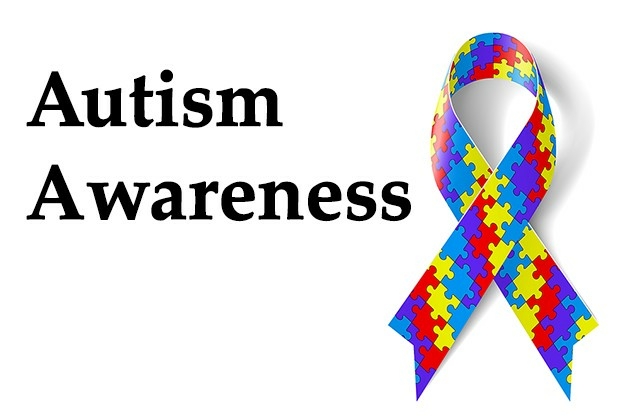
Indomie has said it is backing a cross-country cycling journey by 15-year-old autism advocate Kanyeyachukwu Tagbo, who is embarking on a Guinness World Record-bound ride from Enugu to Lagos to raise awareness about autism and promote inclusion.
Tagged ‘Journey of Possibility, #RideWithKanye’, the expedition will see the young cyclist travel across several Nigerian cities as he advocates for greater understanding and support for individuals living with Autism Spectrum Disorder and their families.
The initiative represents an official attempt to set a Guinness World Records milestone as the youngest autistic individual to complete a cross-country cycling journey. The ride is scheduled to conclude in Lagos on World Autism Awareness Day, reinforcing the global call for empathy, acceptance, and opportunity for people on the autism spectrum.
Speaking on the brand’s involvement, Group corporate communications and events manager of Dufil Prima Foods, Temitope Ashiwaju, said the initiative reflects Indomie’s enduring commitment to celebrating courageous Nigerian children and amplifying stories that inspire hope.
“At Indomie, we believe every child deserves the opportunity to dream boldly and achieve extraordinary things. Kanyeyachukwu’s journey is a powerful reminder that determination and talent can transcend limitations. We are proud to support his mission to inspire understanding, acceptance, and hope for individuals living with autism,” he said.
Indomie stated that “Kanyeyachukwu first captured national attention when he was recognised at the Indomie Heroes Awards, an initiative by Indomie that celebrates courageous Nigerian children who have demonstrated exceptional bravery, resilience, and impact in their communities.
“Since receiving the recognition, he has continued to use advocacy, creativity, and public engagement to reshape perceptions about autism and inspire conversations around inclusion.
“Through the ‘Journey of Possibility’, Kanyeyachukwu hopes to demonstrate that individuals on the autism spectrum possess extraordinary potential when given the opportunity and support to thrive.”
It added that “as a key supporter of the initiative, Indomie will provide branded cycling kits and support materials for cyclists accompanying him throughout the route, alongside financial support and brand activations at designated stops along the journey. These engagements will include community interactions aimed at educating the public, encouraging dialogue, and fostering broader participation in autism advocacy.”
Through initiatives like the Indomie Heroes Awards and its support for the ‘Journey of Possibility, #RideWithKanye’, Indomie continues to champion young Nigerians whose courage, determination, and achievements demonstrate the limitless possibilities that emerge when children are empowered to pursue their dreams.
-Leadership

Two persons suspected to be students of the Federal Polytechnic, Nekede, Owerri, the Imo State capital, have drowned in Otammiri River in Owerri.
The incident, according to a source, occurred last Saturday.
The source said one of the deceased, Chukwudi Okwuchukwu, was a year one National Diploma Computer Science student and Igwilo, a friend of another student, who joined the swimming expedition.
However, the school authorities have denied the allegation, saying they were not aware of the incident.
An eyewitness who pleaded anonymity said four male friends came to swim in the Otammiri River and snap pictures.
According to the source, a local warned the young men not to swim, saying it was getting dark, but they refused and continued swimming.
Further, he said the swimmers who were busy being snapped pictures by their friends swam to the deep side and drowned in the process.
The school’s public relations officer, Dr Ike Ibe, said the school was unaware of the incident.
He said, “No, the school management is not aware of such an incident.”
When contacted, the SUG president of polytechnic, Destiny Nwosu, confirmed that two people drowned in the river but maintained that they had yet to be identified as students of the school.
Nwosu said, “I heard that two people drowned at the Otammiri River, but we have yet to confirm that they are students of our school. I can’t confirm whether they were Nekede Polytechnic students or from the other schools in the state, and if they were even students anywhere else.”
The president of the National Association of Imo State Students (NAISS), Nekede Polytechnic chapter, Daniel Promise, said he saw the video on social media but maintained that they had not been identified as students of Nekede Polytechnic.
He said, “Up till now, no one has confirmed the victim to be their coursemate or anything like that. I can’t confirm that they were our fellow students,” Promise said.
Meanwhile, the two corpses have been deposited at a morgue.
-Leadership
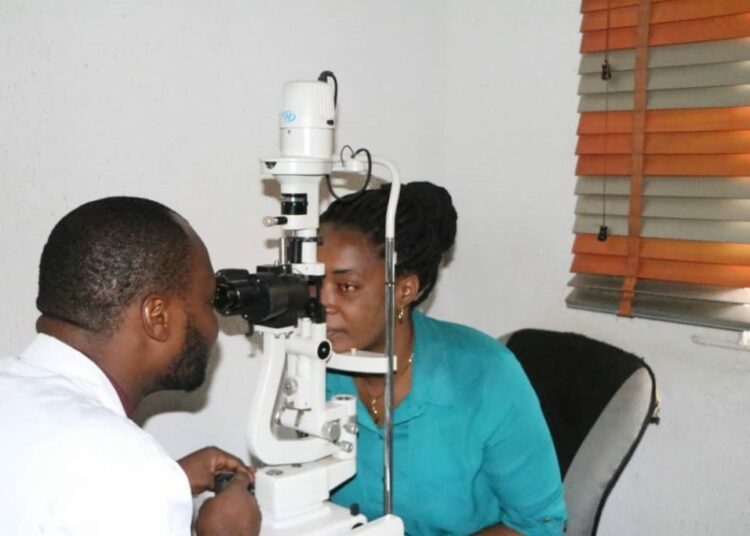
Plateau State commissioner for Health, Dr Nicolas Ba’amlong, has declared that glaucoma is the second leading cause of blindness after cataract in Nigeria.
He, therefore, called for a united push for regular eye checks, early diagnosis and affordable treatment.
The commissioner said Nigeria Blindness and Vision Impairment Survey, Prevalence of Glaucoma affects five percent of the population, adding that it accounts for 16.7 percent of blindness cases, while 5.6 percent of the affected individuals knew they had the disease and one in five persons were already blind at diagnosis.
He maintained that the 2023 Rapid Assessment of Avoidable Blindness (RAAB) survey in Plateau State reported prevalence of blindness to be 2.7 percent which is significantly higher than the national average of 0.7 percent stressing that glaucoma accounted for 17 percent of such blindness.
The theme for this year ” Uniting for Glaucoma Free World” emphasised the power of collective action in tackling one of the leading causes of irreversible blindness. It conveys both urgency and hope highlighting that while glaucoma cannot be cured, blindness from it can often be prevented through awareness, early detection and treatment.
Dr. Ba’amlong further explained that “Glaucoma Week reminds us that protecting visions is a shared responsibility because when we unite to promote awareness, early testing and accessible treatment, we move closer to the future where no one loses his sight to glaucoma.”
-Leadership

Wike Reaffirms Nigeria–EU Ties, Moves To Reclaim Encroached Diplomatic Lands

Inspector-General Disu Submits 75-Page Framework On ‘State Police’ To Senate As Push Gains Momentum

N1.54billion Settlement: Court Frees Ex-Minister Stella Oduah, Strikes Out Case Months After She Joined APC

5 Life Lessons from Manchester City EPL Current woes

Liverpool Announce Jürgen Klopp Return To The Club

MTN Teams Up With Meta To Boost WhatsApp Call Quality

-
 Health12 months ago
5 Life Lessons from Manchester City EPL Current woes
-
 Sports12 months ago
Liverpool Announce Jürgen Klopp Return To The Club
-
 Business12 months ago
MTN Teams Up With Meta To Boost WhatsApp Call Quality
-

 News12 months ago
Commonwealth Observers Prepare For Gabon Presidential Election
-

 Health12 months ago
Ponzi Scheme CEO Francis Uju Udoms of Addfx Case still Unresolved Despite SEC certification
-

 News12 months ago
Chibok Girls: 11 Years Of Anguish, Broken Promises
-

 News12 months ago
Wike’s Enviable Road Construction Method along Nyanya- Maraba Highway
-
 News9 months ago
NASRE Promises Support To Daily Times Group Business Editor, Oseni, Over Serious Road Accident