
Health
WHAT MORE DOES MALAMI WANT FROM NIGERIA?

Mallam Abubakar Malami is not a happy man, he has never been happy. He is always moody, and irritating. He lacks a senile moment.
The reasons are not farfetched, they are certainly not from anything external, but basically from his internal self inflicted self-centered conflicts, a self-induced intention malady, which comes with very irritating symptoms.
Most time those suffering from this incurable affliction are always against himself.
For a man who came into office with nothing and as nothing but rose, not by any ding of personal positive efforts, but became powerful through deceit and satanic mechanization during the Buhari government,Mallam Malami has long overstayed as a freeman, he should be under lock and key by now.
This is so because at that time, Mallam Malami carried out the supervision of so many poor, illfated reforms which not only further impoverished the residents of the country, but ended off making nothing good, but only enough to make history as not just the worst AGF but the most undignified after Michael Aondoakaa.
A crafty and self delusional person, who has been serially caught in his own pit and guile, and obviously in the net of his personal mischief, he ran head on into a stronger, more formidable force, in his last attempt, the peoples’ force.
His last outing to Kebbi was not too good, he failed, a self distraught.
His strategic intention was to overwhelm the people in a show of arbitrary force and unwarranted violence, through the use of bandits and criminal elements, he wanted to physically torment the peace of the people, and compromise their safety, and that of their properties. He wanted to tell his co-travelers in ADC that he controls a stronger and more formidable warchest, he misled himself into thinking that he is in charge.
If his scheme had succeeded, he would, like a chimpanzee, beat his chest in self approval, and tell the world that he is prepared to deploy the cannon of death at any opposition during the 2027 election.
Alas! He lost out to the superior force of the people of Kebbi State. He has tried to decorate and coverup what has happened with lies; his usual character, playing the victim, in an attempted damage assessment but the rest is history. The truth is already in public domain.
He thought he has the monopoly of physical and political violence and hate, he was mistaken, the people and the law are always ahead.
So, he could not believe what confronted him, and his mischievous, poorly mobilized miscreants and urchins. The people were resolute against him.
They spoke unanimously and strongly. They felt that, that was one violence too many. They were agreed that no single person, not even a Mallam Abubakar Malami, has the monopoly of vices and violence.
They came out in their numbers to tell him that never again should Mallam Malami attempt to ride on the sensibilities and goodwill of the people of Kebbi State. It was a clear message that, ‘Enough is Enough.’
The language was his but the singer was different, a more dynamic, sagacious, people-oriented crowd of patriotic and passionate nation builders, determined and willing to make the needful sacrifice to entrench good governance and ensure the delivery of the dividends of democracy as against the manipulation of a self seeking individual, whom Mallam Malami represents.
Indeed, Malami has had it up to the peoples’ throat, the have lost confidence in him and his corrupt selfish leadership.
This, to them is a Renaissance, a people come together under shared value and new narratives. They recalled that it was Mallam Malami that was a voice of imbalance in previous years, when instead of attracting developments and the dividends of democracy in his hay days to his people consistently embarked on divisive politics and only embroiled himself in endless controversies, which obviously did not align with the greater good, but was always ingratiating his personal interest, and ego.
The question has always been, ‘ What are the intentions of Mallam Abubakar Malami? Is he and will he ever be genuinely interested in serving Nigeria or is he driven by his primordial selfish ambition?
This posers are important considering Mallam Malami’s antecedents.
For one, Mallam Malami throughout his romance with power never prioritized the welfare of even his immediate constituency; the people of Kebbi State, neither did he ever pretend to address their pressing challenges.
Malami has never demonstrated leadership, statesmanship, nor the desire to see a stable, and prosperous future for the country. So what is new now?
Mallam Malami diverted the loot that was recovered, and also stopped those cases that are against his allies, including individuals such as, a former Senate President Bukola Saraki, and his contemporary the ex-Aviation Minister Stella Oduah.
A highly unprofessional and biased individual, Mallam Malami is presently encumbered about with several corruption and abuse of office cases, which are before the Independent Corrupt Practices and other Related Offence Commission (ICPC).
Malami was involved in the questionable deal of $496 million settlement with Global Steel Company Limited and National Iron Ore Mining Company Commission.
It is this same sudden redeemer, that made an illegitimate payment of $418 million to consultants who claimed to have facilitated Paris Club Refunds to States.
Malami it was that also unpatriotically and selfishly misled the Federal Government of Nigeria into paying a compensation of $200 million to Sunrise Power over the Mambilla Power Project, despite lacking Presidential clearance.
A questionable character, who is unfit for any public office, Mallam Malami stock in trade is to consistently abuse his office, as it was with the undue interference into several corrupt cases, and various attempts in many cases to enter a nolle prosqui case for many of them.
He was involved in several underhand dealings and clear cases of favouritism.
A man without qualms, he lacks respect for state institutions, law and order and any form of rules, blatantly breaching Covid-19 Protocols by vicariously and tacitly sponsoring and allowing the wedding of his son during the Covid-19 era, because he believe in the misuse of power.
A highly confused and corrupt mind, he played leading role in the attempted reinstatement of Abdulrasheed Maina, the former disgraced and dismissed Chairman of the Pension Reform Task Team.
It is unfortunate that this is the character that is on this new voyage of misguided self discovery.
Again we are compelled to ask, what does he want from Nigeria again?
Mallam Abubakar Malami should allow the people of Kebbi, and indeed all Nigerians, to have their peace. He lacks the moral integrity, transparency, and accountability, especially considering his various involvement in corruption and misuse and abuse of office, to the extent that even the NJC passed a lack of confidence on his performance as a public officer.
There is nothing in Government House for him to find.
Isah wrote this piece from Birnin Kebbi, Kebbi State.
Indomie has said it is backing a cross-country cycling journey by 15-year-old autism advocate Kanyeyachukwu Tagbo, who is embarking on a Guinness World Record-bound ride from Enugu to Lagos to raise awareness about autism and promote inclusion.
Tagged ‘Journey of Possibility, #RideWithKanye’, the expedition will see the young cyclist travel across several Nigerian cities as he advocates for greater understanding and support for individuals living with Autism Spectrum Disorder and their families.
The initiative represents an official attempt to set a Guinness World Records milestone as the youngest autistic individual to complete a cross-country cycling journey. The ride is scheduled to conclude in Lagos on World Autism Awareness Day, reinforcing the global call for empathy, acceptance, and opportunity for people on the autism spectrum.
Speaking on the brand’s involvement, Group corporate communications and events manager of Dufil Prima Foods, Temitope Ashiwaju, said the initiative reflects Indomie’s enduring commitment to celebrating courageous Nigerian children and amplifying stories that inspire hope.
“At Indomie, we believe every child deserves the opportunity to dream boldly and achieve extraordinary things. Kanyeyachukwu’s journey is a powerful reminder that determination and talent can transcend limitations. We are proud to support his mission to inspire understanding, acceptance, and hope for individuals living with autism,” he said.
Indomie stated that “Kanyeyachukwu first captured national attention when he was recognised at the Indomie Heroes Awards, an initiative by Indomie that celebrates courageous Nigerian children who have demonstrated exceptional bravery, resilience, and impact in their communities.
“Since receiving the recognition, he has continued to use advocacy, creativity, and public engagement to reshape perceptions about autism and inspire conversations around inclusion.
“Through the ‘Journey of Possibility’, Kanyeyachukwu hopes to demonstrate that individuals on the autism spectrum possess extraordinary potential when given the opportunity and support to thrive.”
It added that “as a key supporter of the initiative, Indomie will provide branded cycling kits and support materials for cyclists accompanying him throughout the route, alongside financial support and brand activations at designated stops along the journey. These engagements will include community interactions aimed at educating the public, encouraging dialogue, and fostering broader participation in autism advocacy.”
Through initiatives like the Indomie Heroes Awards and its support for the ‘Journey of Possibility, #RideWithKanye’, Indomie continues to champion young Nigerians whose courage, determination, and achievements demonstrate the limitless possibilities that emerge when children are empowered to pursue their dreams.
-Leadership
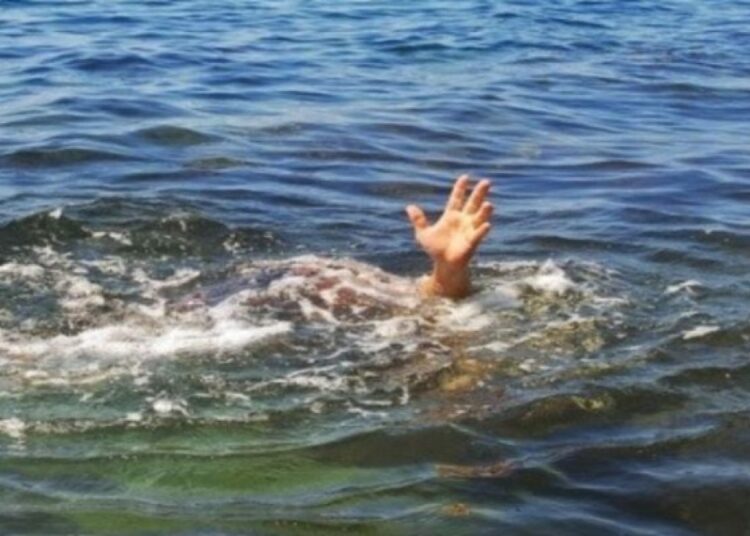
Two persons suspected to be students of the Federal Polytechnic, Nekede, Owerri, the Imo State capital, have drowned in Otammiri River in Owerri.
The incident, according to a source, occurred last Saturday.
The source said one of the deceased, Chukwudi Okwuchukwu, was a year one National Diploma Computer Science student and Igwilo, a friend of another student, who joined the swimming expedition.
However, the school authorities have denied the allegation, saying they were not aware of the incident.
An eyewitness who pleaded anonymity said four male friends came to swim in the Otammiri River and snap pictures.
According to the source, a local warned the young men not to swim, saying it was getting dark, but they refused and continued swimming.
Further, he said the swimmers who were busy being snapped pictures by their friends swam to the deep side and drowned in the process.
The school’s public relations officer, Dr Ike Ibe, said the school was unaware of the incident.
He said, “No, the school management is not aware of such an incident.”
When contacted, the SUG president of polytechnic, Destiny Nwosu, confirmed that two people drowned in the river but maintained that they had yet to be identified as students of the school.
Nwosu said, “I heard that two people drowned at the Otammiri River, but we have yet to confirm that they are students of our school. I can’t confirm whether they were Nekede Polytechnic students or from the other schools in the state, and if they were even students anywhere else.”
The president of the National Association of Imo State Students (NAISS), Nekede Polytechnic chapter, Daniel Promise, said he saw the video on social media but maintained that they had not been identified as students of Nekede Polytechnic.
He said, “Up till now, no one has confirmed the victim to be their coursemate or anything like that. I can’t confirm that they were our fellow students,” Promise said.
Meanwhile, the two corpses have been deposited at a morgue.
-Leadership
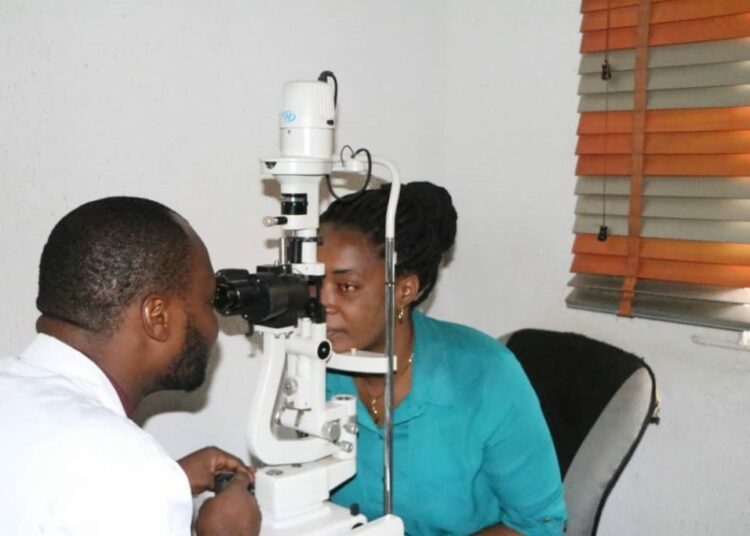
Plateau State commissioner for Health, Dr Nicolas Ba’amlong, has declared that glaucoma is the second leading cause of blindness after cataract in Nigeria.
He, therefore, called for a united push for regular eye checks, early diagnosis and affordable treatment.
The commissioner said Nigeria Blindness and Vision Impairment Survey, Prevalence of Glaucoma affects five percent of the population, adding that it accounts for 16.7 percent of blindness cases, while 5.6 percent of the affected individuals knew they had the disease and one in five persons were already blind at diagnosis.
He maintained that the 2023 Rapid Assessment of Avoidable Blindness (RAAB) survey in Plateau State reported prevalence of blindness to be 2.7 percent which is significantly higher than the national average of 0.7 percent stressing that glaucoma accounted for 17 percent of such blindness.
The theme for this year ” Uniting for Glaucoma Free World” emphasised the power of collective action in tackling one of the leading causes of irreversible blindness. It conveys both urgency and hope highlighting that while glaucoma cannot be cured, blindness from it can often be prevented through awareness, early detection and treatment.
Dr. Ba’amlong further explained that “Glaucoma Week reminds us that protecting visions is a shared responsibility because when we unite to promote awareness, early testing and accessible treatment, we move closer to the future where no one loses his sight to glaucoma.”
-Leadership

Wike Reaffirms Nigeria–EU Ties, Moves To Reclaim Encroached Diplomatic Lands

Inspector-General Disu Submits 75-Page Framework On ‘State Police’ To Senate As Push Gains Momentum

N1.54billion Settlement: Court Frees Ex-Minister Stella Oduah, Strikes Out Case Months After She Joined APC

5 Life Lessons from Manchester City EPL Current woes

Liverpool Announce Jürgen Klopp Return To The Club

MTN Teams Up With Meta To Boost WhatsApp Call Quality


-
 Health12 months ago
5 Life Lessons from Manchester City EPL Current woes
-
 Sports12 months ago
Liverpool Announce Jürgen Klopp Return To The Club
-
 Business12 months ago
MTN Teams Up With Meta To Boost WhatsApp Call Quality
-
 News12 months ago
Commonwealth Observers Prepare For Gabon Presidential Election
-

 Health12 months ago
Ponzi Scheme CEO Francis Uju Udoms of Addfx Case still Unresolved Despite SEC certification
-

 News12 months ago
Chibok Girls: 11 Years Of Anguish, Broken Promises
-
 News12 months ago
Wike’s Enviable Road Construction Method along Nyanya- Maraba Highway
-
 News9 months ago
NASRE Promises Support To Daily Times Group Business Editor, Oseni, Over Serious Road Accident
Abdulkarim Muh'd Bello
September 8, 2025 at 10:26 pm
X Anthony General federal Republic of Nigeria his always want to see downfall of this blessed administration undar the able leadership of His excellency Dr Nasir Idris Kauran Gwandu becourse he has desperation to become a kebbi state governor while the good people’s of kebbi state is always thankful for the choice of Allah that is Dr Nasir Idris Kauran Gwandu. Allah will always stay with ƙauran gwandu 2027 kebbi is belongs to ƙauran Abdullahin gwandu in Sha Allah ✌️💯✅