
Health
Why NUPENG and PENGASSAN Must Stop Terrorising Nigerians

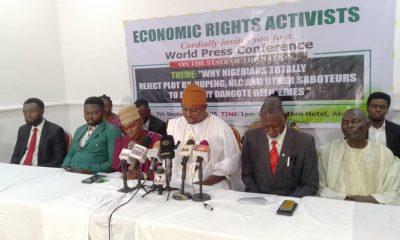
Recent actions by the Nigeria Union of Petroleum and Natural Gas Workers (NUPENG) and the Petroleum and Natural Gas Senior Staff Association of Nigeria (PENGASSAN) in the oil and gas sector reveal a desperate attempt by certain actors to exploit Nigerians’ sensibilities, perpetuating lawlessness, economic sabotage, and threats to national security for the benefit of a few at the expense of the broader population.
It is an affront to Nigerians’ intelligence that NUPENG and PENGASSAN, historically complicit in the deliberate and egregious degeneration of the oil and gas sector, have long acted as enablers of self-interest. These unions have been directly implicated in decades of inflicting untold hardship on ordinary Nigerians through their neglect, complicity, and collaboration with enemies of the state. Their sudden posturing as defenders of workers’ rights—when their actions have contributed to the suffering of millions—is both hypocritical and insulting.
The recent decision by NUPENG and PENGASSAN to embark on strike action aligns with their persistent assault on the foundation of Nigeria’s economy, which President Tinubu’s administration is working tirelessly to revive. This calculated move seeks to drag the nation back to the dark days of fuel scarcity, economic instability, and national embarrassment, orchestrated by a handful of Nigerians and their foreign collaborators, with NUPENG and PENGASSAN as willing participants.
To call their actions detrimental to Nigeria’s social and economic progress is an understatement. The negative impact on social services is immense, as their strikes have led to the shutdown of thermal power plants, threatening to plunge the nation into physical and economic darkness. This cripples economic and social activities, placing millions of households and small businesses at a severe disadvantage.
NUPENG and PENGASSAN have made no secret of their self-serving intentions, prioritizing a culture of impunity, primitive wealth accumulation, monopoly, and destructive behavior over patriotism.
Their actions consistently place personal gain above the needs of the nation and its citizens, undermining Nigeria’s corporate existence, independence, and economic growth.
Under the guise of unionism and workers’ rights, NUPENG and PENGASSAN have chosen to inflict undue hardship on Nigerians, rejecting platforms for constructive dialogue. Their concerns are not genuine but rather mischievous, selfish, and treasonable, opting for self-help tactics that bring untold suffering to citizens and residents instead of pursuing collaborative solutions.
The federal government’s efforts to facilitate peaceful resolutions to these disputes have been rebuffed by NUPENG and PENGASSAN, who instead escalate their campaign to promote economic instability. Blinded by self-interest, they have failed to grasp the broader implications of their actions and refused to work toward solutions that benefit Nigerians.
Nigerians are neither fools nor gullible enough to fall for their deceptive tactics. The unions’ attempt to sell a false narrative about mass layoffs at Dangote Refinery is a fraud, mirroring their own duplicity. Their efforts to mislead Nigerians for selfish ends have failed. These misguided actors, driven by corrupt motives, remain insensitive to the decades of suffering caused by oil subsidy profiteers.
For years, NUPENG and PENGASSAN remained silent during fuel scarcity crises, ignoring the plight of Nigerians who were reduced to economic servitude in one of the world’s richest oil-producing nations. Yet, they now claim to champion workers’ rights at a time when fuel prices are stabilizing, the forex market is steady, the naira is strengthening against the dollar, and inflation is declining. They suddenly find fault when fuel is widely available, governors can pay salaries and pensions, and viable competition thrives in Nigeria’s upstream petroleum sector, attracting foreign investment due to economic stability.
How can any sincere labour union, concerned with the welfare of its members and the nation’s economic viability, remain silent when massive fraud is perpetrated by a few citizens in collaboration with foreign actors? Billions of dollars in Nigerian funds have been laundered under fictitious pretexts by union officials, and the fraudulent fuel subsidy scheme, orchestrated through a corrupt Nigerian National Petroleum Company Limited (NNPCL), has caused immense harm.
Yet, NUPENG and PENGASSAN now claim to fight for workers’ rights with a fabricated narrative.
NUPENG and PENGASSAN should be well aware of labor laws and their applications. They cannot claim ignorance that the Academic Staff Union of Universities (ASUU) does not compel staff of private universities to unionize, nor does the National Union of Road Transport Workers (NURTW) force workers at private transport companies like GUO or God is Good Motors to join its union.
Similarly, the Nigeria Union of Teachers (NUT) does not mandate teachers in private schools to become members. Union membership is an individual’s private and exclusive right, not a mandatory or national obligation. How many times have NUPENG and PENGASSAN gone on strike to address the failures of Nigeria’s refineries despite billions spent, or to end the fuel subsidy scam?
NUPENG and PENGASSAN have no right to interfere in the internal administration of Dangote Refinery or any other private corporate entity. Their consistent role as saboteurs, aimed at derailing national progress, reveals them as stooges of sedition and terrorism. In a foolish attempt to serve their paymasters, they have declared war on the common man, making a mockery of themselves.
How does halting crude oil and gas supplies serve justice if workers are laid off?
Can self-help and blackmail assist affected staff or benefit ordinary Nigerians? Dialogue and legal avenues, not reckless actions, are the appropriate means to resolve disputes. Ironically, the processes NUPENG and PENGASSAN oppose are the very ones that have brought relief, alleviated suffering, and restored hope. These processes have stabilized fuel costs, promoted deregulation, reduced foreign interference in the oil and gas sector, and delivered numerous benefits.
We must echo the voice of Hon. Dr. Philip Agbese, Deputy Spokesperson of the Federal House of Representatives, who rightly declared this affront against Dangote Refinery as an attack on national security, the economy, and the common man. NUPENG and PENGASSAN must cease acting as tools of saboteurs to derail Nigeria’s progress. They must stop making a caricature of themselves, as times have changed, and a new era of accountability has begun.
The Dangote Refinery has come to stay, driving Nigeria’s economic independence and progress through its transformative impact on the oil and gas sector. Nigerians stand united in resolute support of this vital enterprise, rejecting the sabotage of self-serving actors posing as trade unionists. With the people’s backing, Dangote Refinery will prevail against these economic adversaries, securing a future of stability and prosperity.
*Ayo writes from Lagos





Indomie has said it is backing a cross-country cycling journey by 15-year-old autism advocate Kanyeyachukwu Tagbo, who is embarking on a Guinness World Record-bound ride from Enugu to Lagos to raise awareness about autism and promote inclusion.
Tagged ‘Journey of Possibility, #RideWithKanye’, the expedition will see the young cyclist travel across several Nigerian cities as he advocates for greater understanding and support for individuals living with Autism Spectrum Disorder and their families.
The initiative represents an official attempt to set a Guinness World Records milestone as the youngest autistic individual to complete a cross-country cycling journey. The ride is scheduled to conclude in Lagos on World Autism Awareness Day, reinforcing the global call for empathy, acceptance, and opportunity for people on the autism spectrum.
Speaking on the brand’s involvement, Group corporate communications and events manager of Dufil Prima Foods, Temitope Ashiwaju, said the initiative reflects Indomie’s enduring commitment to celebrating courageous Nigerian children and amplifying stories that inspire hope.
“At Indomie, we believe every child deserves the opportunity to dream boldly and achieve extraordinary things. Kanyeyachukwu’s journey is a powerful reminder that determination and talent can transcend limitations. We are proud to support his mission to inspire understanding, acceptance, and hope for individuals living with autism,” he said.
Indomie stated that “Kanyeyachukwu first captured national attention when he was recognised at the Indomie Heroes Awards, an initiative by Indomie that celebrates courageous Nigerian children who have demonstrated exceptional bravery, resilience, and impact in their communities.
“Since receiving the recognition, he has continued to use advocacy, creativity, and public engagement to reshape perceptions about autism and inspire conversations around inclusion.
“Through the ‘Journey of Possibility’, Kanyeyachukwu hopes to demonstrate that individuals on the autism spectrum possess extraordinary potential when given the opportunity and support to thrive.”
It added that “as a key supporter of the initiative, Indomie will provide branded cycling kits and support materials for cyclists accompanying him throughout the route, alongside financial support and brand activations at designated stops along the journey. These engagements will include community interactions aimed at educating the public, encouraging dialogue, and fostering broader participation in autism advocacy.”
Through initiatives like the Indomie Heroes Awards and its support for the ‘Journey of Possibility, #RideWithKanye’, Indomie continues to champion young Nigerians whose courage, determination, and achievements demonstrate the limitless possibilities that emerge when children are empowered to pursue their dreams.
-Leadership

Two persons suspected to be students of the Federal Polytechnic, Nekede, Owerri, the Imo State capital, have drowned in Otammiri River in Owerri.
The incident, according to a source, occurred last Saturday.
The source said one of the deceased, Chukwudi Okwuchukwu, was a year one National Diploma Computer Science student and Igwilo, a friend of another student, who joined the swimming expedition.
However, the school authorities have denied the allegation, saying they were not aware of the incident.
An eyewitness who pleaded anonymity said four male friends came to swim in the Otammiri River and snap pictures.
According to the source, a local warned the young men not to swim, saying it was getting dark, but they refused and continued swimming.
Further, he said the swimmers who were busy being snapped pictures by their friends swam to the deep side and drowned in the process.
The school’s public relations officer, Dr Ike Ibe, said the school was unaware of the incident.
He said, “No, the school management is not aware of such an incident.”
When contacted, the SUG president of polytechnic, Destiny Nwosu, confirmed that two people drowned in the river but maintained that they had yet to be identified as students of the school.
Nwosu said, “I heard that two people drowned at the Otammiri River, but we have yet to confirm that they are students of our school. I can’t confirm whether they were Nekede Polytechnic students or from the other schools in the state, and if they were even students anywhere else.”
The president of the National Association of Imo State Students (NAISS), Nekede Polytechnic chapter, Daniel Promise, said he saw the video on social media but maintained that they had not been identified as students of Nekede Polytechnic.
He said, “Up till now, no one has confirmed the victim to be their coursemate or anything like that. I can’t confirm that they were our fellow students,” Promise said.
Meanwhile, the two corpses have been deposited at a morgue.
-Leadership
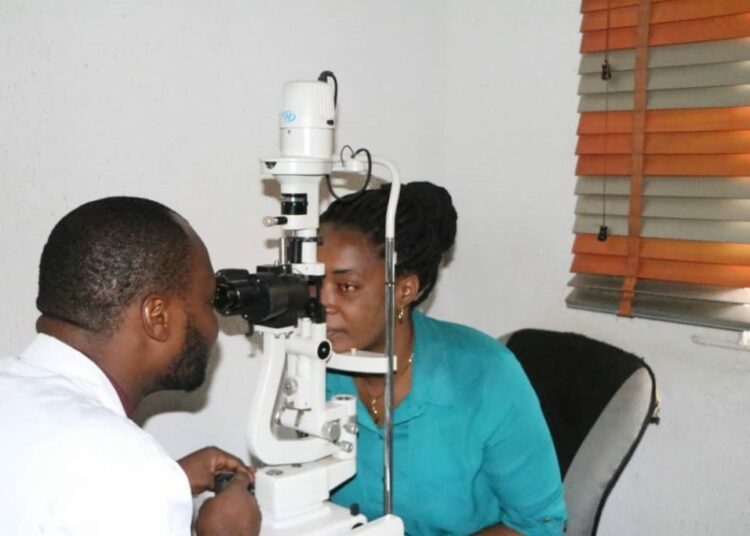
Plateau State commissioner for Health, Dr Nicolas Ba’amlong, has declared that glaucoma is the second leading cause of blindness after cataract in Nigeria.
He, therefore, called for a united push for regular eye checks, early diagnosis and affordable treatment.
The commissioner said Nigeria Blindness and Vision Impairment Survey, Prevalence of Glaucoma affects five percent of the population, adding that it accounts for 16.7 percent of blindness cases, while 5.6 percent of the affected individuals knew they had the disease and one in five persons were already blind at diagnosis.
He maintained that the 2023 Rapid Assessment of Avoidable Blindness (RAAB) survey in Plateau State reported prevalence of blindness to be 2.7 percent which is significantly higher than the national average of 0.7 percent stressing that glaucoma accounted for 17 percent of such blindness.
The theme for this year ” Uniting for Glaucoma Free World” emphasised the power of collective action in tackling one of the leading causes of irreversible blindness. It conveys both urgency and hope highlighting that while glaucoma cannot be cured, blindness from it can often be prevented through awareness, early detection and treatment.
Dr. Ba’amlong further explained that “Glaucoma Week reminds us that protecting visions is a shared responsibility because when we unite to promote awareness, early testing and accessible treatment, we move closer to the future where no one loses his sight to glaucoma.”
-Leadership

NFVCB Boss Urges Stronger Distribution Channels As Coal City Film Festival 2026 Opens In Enugu

Wike Reaffirms Nigeria–EU Ties, Moves To Reclaim Encroached Diplomatic Lands

Inspector-General Disu Submits 75-Page Framework On ‘State Police’ To Senate As Push Gains Momentum

5 Life Lessons from Manchester City EPL Current woes

Liverpool Announce Jürgen Klopp Return To The Club

MTN Teams Up With Meta To Boost WhatsApp Call Quality

-
 Health12 months ago
5 Life Lessons from Manchester City EPL Current woes
-
 Sports12 months ago
Liverpool Announce Jürgen Klopp Return To The Club
-
 Business12 months ago
MTN Teams Up With Meta To Boost WhatsApp Call Quality
-
 News12 months ago
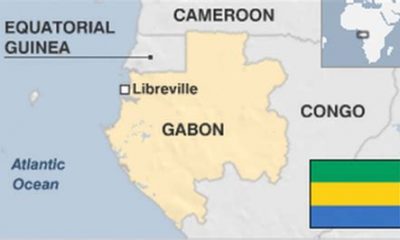
Commonwealth Observers Prepare For Gabon Presidential Election
-

 Health12 months ago
Ponzi Scheme CEO Francis Uju Udoms of Addfx Case still Unresolved Despite SEC certification
-
 News12 months ago
Chibok Girls: 11 Years Of Anguish, Broken Promises
-
 News12 months ago
Wike’s Enviable Road Construction Method along Nyanya- Maraba Highway
-
 News9 months ago
NASRE Promises Support To Daily Times Group Business Editor, Oseni, Over Serious Road Accident