
Health
Matters Arising as Nigeria’s Komolafe Leads AFRIPERF

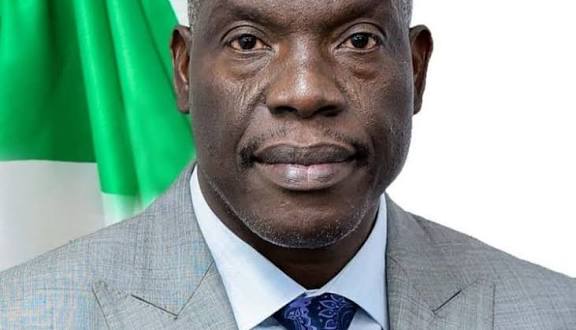
When Gbenga Komolafe, chief executive of the Nigerian Upstream Petroleum Regulatory Commission (NUPRC), assumed the role of interim chairman of the newly launched African Petroleum Regulators Forum (AFRIPERF), many across the continent’s oil and gas sector hailed it as a watershed moment. His elevation was not just a personal milestone but a recognition of Nigeria’s growing influence in shaping the governance of Africa’s energy future. Yet, even as praise pours in, questions linger about capacity, politics, and the sustainability of the project.
The launch and charter-signing of AFRIPERF took place on September 18, 2025, during Africa Oil Week in Accra, Ghana. Sixteen African countries participated, and eight of them — including Nigeria, Ghana, Somalia, Gambia, Madagascar, Sudan, Guinea, and Togo — formally endorsed the AFRIPERF Charter. Seven others pledged to join after domestic consultations. Komolafe was unanimously selected as interim chairman, a role that effectively positions Nigeria at the forefront of continental oil and gas regulation.
The forum’s objective is ambitious but urgent: to harmonise petroleum laws, standards, and regulatory practices across Africa. Over the decades, differences in national legislation, fiscal regimes, and licensing procedures have discouraged cross-border investments and weakened collective bargaining power. AFRIPERF is conceived to bridge those divides by creating a platform for knowledge exchange, peer review, and regional cooperation.
According to its charter, AFRIPERF will operate through an Executive Committee of national regulators, a Technical Committee of industry experts, and a rotating Secretariat to coordinate activities among member states. The framework builds on Nigeria’s earlier leadership in regulatory reform under the Petroleum Industry Act (PIA) of 2021.
Komolafe, who first proposed the idea of a continental regulatory network in 2023, has long argued that Africa must “own its resources with efficiency and integrity” rather than compete in isolation. The Abuja Declaration, introduced during Nigeria Oil and Gas Week in 2024, laid the philosophical foundation for AFRIPERF — emphasising transparency, environmental responsibility, and collaboration. The Accra meeting in 2025 marked the institutional birth of that vision.
The symbolism is significant. Nigeria remains one of Africa’s most experienced hydrocarbon producers, and its reform-driven regulatory commission has been widely seen as a model of post-PIA transformation. Komolafe’s emergence as the forum’s interim head therefore reinforces the view that Nigeria can export regulatory expertise in addition to crude oil.
*Nigeria’s Reformist Reputation Meets Continental Expectations*
Komolafe’s tenure at NUPRC offers clues about what to expect from his new continental assignment. Since assuming office, he has pushed reforms to digitise upstream licensing, streamline approvals, strengthen host community engagement, and curb oil theft through tighter metering systems. Under his leadership, the Commission has prioritised data transparency, community participation, and gas monetisation — themes that resonate with AFRIPERF’s founding principles.
But moving from national regulation to continental coordination is an entirely different challenge. Africa’s oil-producing nations operate under vastly different fiscal models, political pressures, and institutional capacities. Some have mature frameworks with digital monitoring systems; others still rely on paper records and manual audits. Aligning these disparities will test both Komolafe’s diplomatic skill and the credibility of the new forum.
In a statement issued on Monday, the Pan-African Regulatory Excellence Forum (PAREF), an industry think tank, commended Komolafe’s appointment as “a fitting recognition of Nigeria’s reform trajectory and the strength of his leadership.” The statement, signed by its executive director, Dr Aisha Njoroge, described the AFRIPERF chairmanship as “an opportunity to turn the rhetoric of regional cooperation into measurable results”.
According to her, “The success of AFRIPERF will depend not on the size of its membership but on the quality of its deliverables. It must demonstrate practical value by harmonising gas measurement standards, emissions regulations, and digital compliance systems. Otherwise, it risks becoming another talk shop”.
Dr Njoroge urged the interim chair to prioritise inclusivity and transparency in early decisions, ensuring that smaller or less-resourced countries are not marginalised. “Regulatory convergence should not become regulatory domination,” she added.
Beyond institutional design, several issues now dominate the agenda. The first is capacity disparity. Many African regulators lack technical manpower, laboratory infrastructure, and stable funding. Without a plan for shared resources or training exchanges, the forum could reinforce existing inequalities. The second is the question of authority. AFRIPERF’s recommendations are currently advisory, not binding, which may limit their impact unless member states voluntarily adopt harmonised frameworks.
Another pressing challenge is financing. Sustaining the forum will require predictable revenue — either through member dues, donor partnerships, or cost-sharing arrangements. Overreliance on external funding, especially from Western partners with decarbonisation agendas, could tilt priorities away from Africa’s own developmental needs.
There is also the matter of political independence. Regulators in several countries remain vulnerable to executive interference, particularly during licensing rounds and fiscal negotiations. Komolafe’s reputation for professionalism and non-partisanship at NUPRC will be critical in keeping AFRIPERF free from political capture.
*The Road Ahead for Africa’s Energy Governance*
Meanwhile, energy transition pressures loom large. Global investment in fossil fuels is tightening amid climate-related restrictions, yet Africa still relies on hydrocarbons for more than 70 per cent of government revenue in producing countries. AFRIPERF will need to navigate this paradox — promoting efficiency and environmental stewardship while defending the continent’s right to exploit its resources responsibly.
For Komolafe, the ultimate test will be turning vision into execution. The first set of deliverables expected from AFRIPERF include harmonised reporting templates for production data, a regional petroleum data repository, and shared capacity-building programmes for regulatory staff. Progress on these fronts will determine whether the forum becomes a genuine platform for transformation or fades into the background of African bureaucracy.
In his remarks at the Accra signing ceremony, Komolafe was clear about his priorities. “This is not just about creating another institution,” he said. “It is about aligning Africa’s regulatory systems with the demands of a new global energy order — one that rewards transparency, innovation, and sustainability.” He pledged that under his leadership, the forum would set measurable goals and enforce accountability through peer review.
Nigeria’s oil reforms have already strengthened its domestic regulatory identity. If Komolafe can translate that momentum into continental cooperation, AFRIPERF could become a defining institution for Africa’s late-oil era — a forum that speaks with one voice in global energy diplomacy while setting common rules for its own internal market.
But ambition alone will not suffice. The forum’s success depends on political will across capitals, not just the competence of its chairman. Africa has seen many grand alliances fade for lack of sustained follow-through. As one senior industry observer put it, “Komolafe’s leadership gives AFRIPERF credibility; now it must earn legitimacy.”
The months ahead will reveal whether Nigeria’s stewardship can turn this continental experiment into a lasting framework for energy governance. For now, the mood within the sector is one of cautious optimism — and a growing sense that, at least this time, Africa’s regulators might finally be speaking the same language.
Dan is an oil and gas expert writing from Port Harcourt.






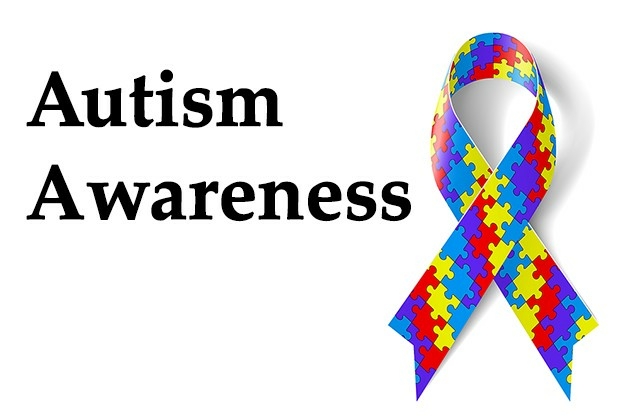
Indomie has said it is backing a cross-country cycling journey by 15-year-old autism advocate Kanyeyachukwu Tagbo, who is embarking on a Guinness World Record-bound ride from Enugu to Lagos to raise awareness about autism and promote inclusion.
Tagged ‘Journey of Possibility, #RideWithKanye’, the expedition will see the young cyclist travel across several Nigerian cities as he advocates for greater understanding and support for individuals living with Autism Spectrum Disorder and their families.
The initiative represents an official attempt to set a Guinness World Records milestone as the youngest autistic individual to complete a cross-country cycling journey. The ride is scheduled to conclude in Lagos on World Autism Awareness Day, reinforcing the global call for empathy, acceptance, and opportunity for people on the autism spectrum.
Speaking on the brand’s involvement, Group corporate communications and events manager of Dufil Prima Foods, Temitope Ashiwaju, said the initiative reflects Indomie’s enduring commitment to celebrating courageous Nigerian children and amplifying stories that inspire hope.
“At Indomie, we believe every child deserves the opportunity to dream boldly and achieve extraordinary things. Kanyeyachukwu’s journey is a powerful reminder that determination and talent can transcend limitations. We are proud to support his mission to inspire understanding, acceptance, and hope for individuals living with autism,” he said.
Indomie stated that “Kanyeyachukwu first captured national attention when he was recognised at the Indomie Heroes Awards, an initiative by Indomie that celebrates courageous Nigerian children who have demonstrated exceptional bravery, resilience, and impact in their communities.
“Since receiving the recognition, he has continued to use advocacy, creativity, and public engagement to reshape perceptions about autism and inspire conversations around inclusion.
“Through the ‘Journey of Possibility’, Kanyeyachukwu hopes to demonstrate that individuals on the autism spectrum possess extraordinary potential when given the opportunity and support to thrive.”
It added that “as a key supporter of the initiative, Indomie will provide branded cycling kits and support materials for cyclists accompanying him throughout the route, alongside financial support and brand activations at designated stops along the journey. These engagements will include community interactions aimed at educating the public, encouraging dialogue, and fostering broader participation in autism advocacy.”
Through initiatives like the Indomie Heroes Awards and its support for the ‘Journey of Possibility, #RideWithKanye’, Indomie continues to champion young Nigerians whose courage, determination, and achievements demonstrate the limitless possibilities that emerge when children are empowered to pursue their dreams.
-Leadership

Two persons suspected to be students of the Federal Polytechnic, Nekede, Owerri, the Imo State capital, have drowned in Otammiri River in Owerri.
The incident, according to a source, occurred last Saturday.
The source said one of the deceased, Chukwudi Okwuchukwu, was a year one National Diploma Computer Science student and Igwilo, a friend of another student, who joined the swimming expedition.
However, the school authorities have denied the allegation, saying they were not aware of the incident.
An eyewitness who pleaded anonymity said four male friends came to swim in the Otammiri River and snap pictures.
According to the source, a local warned the young men not to swim, saying it was getting dark, but they refused and continued swimming.
Further, he said the swimmers who were busy being snapped pictures by their friends swam to the deep side and drowned in the process.
The school’s public relations officer, Dr Ike Ibe, said the school was unaware of the incident.
He said, “No, the school management is not aware of such an incident.”
When contacted, the SUG president of polytechnic, Destiny Nwosu, confirmed that two people drowned in the river but maintained that they had yet to be identified as students of the school.
Nwosu said, “I heard that two people drowned at the Otammiri River, but we have yet to confirm that they are students of our school. I can’t confirm whether they were Nekede Polytechnic students or from the other schools in the state, and if they were even students anywhere else.”
The president of the National Association of Imo State Students (NAISS), Nekede Polytechnic chapter, Daniel Promise, said he saw the video on social media but maintained that they had not been identified as students of Nekede Polytechnic.
He said, “Up till now, no one has confirmed the victim to be their coursemate or anything like that. I can’t confirm that they were our fellow students,” Promise said.
Meanwhile, the two corpses have been deposited at a morgue.
-Leadership
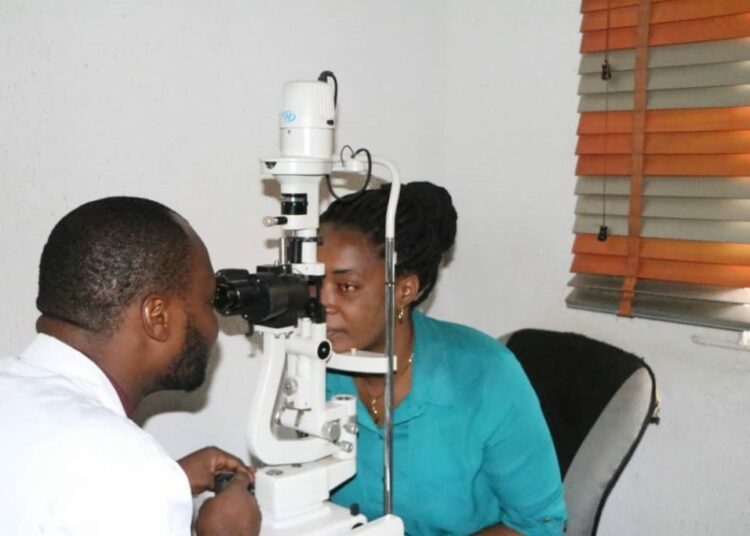
Plateau State commissioner for Health, Dr Nicolas Ba’amlong, has declared that glaucoma is the second leading cause of blindness after cataract in Nigeria.
He, therefore, called for a united push for regular eye checks, early diagnosis and affordable treatment.
The commissioner said Nigeria Blindness and Vision Impairment Survey, Prevalence of Glaucoma affects five percent of the population, adding that it accounts for 16.7 percent of blindness cases, while 5.6 percent of the affected individuals knew they had the disease and one in five persons were already blind at diagnosis.
He maintained that the 2023 Rapid Assessment of Avoidable Blindness (RAAB) survey in Plateau State reported prevalence of blindness to be 2.7 percent which is significantly higher than the national average of 0.7 percent stressing that glaucoma accounted for 17 percent of such blindness.
The theme for this year ” Uniting for Glaucoma Free World” emphasised the power of collective action in tackling one of the leading causes of irreversible blindness. It conveys both urgency and hope highlighting that while glaucoma cannot be cured, blindness from it can often be prevented through awareness, early detection and treatment.
Dr. Ba’amlong further explained that “Glaucoma Week reminds us that protecting visions is a shared responsibility because when we unite to promote awareness, early testing and accessible treatment, we move closer to the future where no one loses his sight to glaucoma.”
-Leadership

NFVCB Boss Urges Stronger Distribution Channels As Coal City Film Festival 2026 Opens In Enugu

Wike Reaffirms Nigeria–EU Ties, Moves To Reclaim Encroached Diplomatic Lands

Inspector-General Disu Submits 75-Page Framework On ‘State Police’ To Senate As Push Gains Momentum

5 Life Lessons from Manchester City EPL Current woes

Liverpool Announce Jürgen Klopp Return To The Club

MTN Teams Up With Meta To Boost WhatsApp Call Quality


-
 Health12 months ago
5 Life Lessons from Manchester City EPL Current woes
-
 Sports12 months ago
Liverpool Announce Jürgen Klopp Return To The Club
-
 Business12 months ago
MTN Teams Up With Meta To Boost WhatsApp Call Quality
-
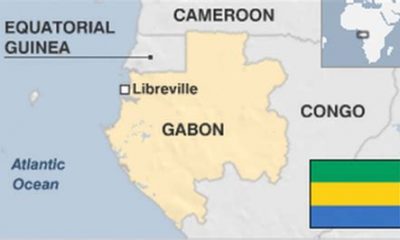
 News12 months ago
Commonwealth Observers Prepare For Gabon Presidential Election
-

 Health12 months ago
Ponzi Scheme CEO Francis Uju Udoms of Addfx Case still Unresolved Despite SEC certification
-
 News12 months ago
Chibok Girls: 11 Years Of Anguish, Broken Promises
-
 News12 months ago
Wike’s Enviable Road Construction Method along Nyanya- Maraba Highway
-
 News9 months ago
NASRE Promises Support To Daily Times Group Business Editor, Oseni, Over Serious Road Accident