
News
Dauda Lawal: Between Leadership Award and Zamfara Reality


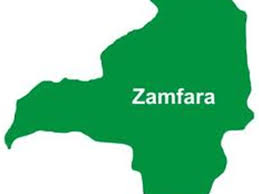
There are moments when public honours become mirrors that doesn’t reflect virtue but to magnify dissonance. Governor Dauda Lawal’s recent acclamation as “Governor of the Year” by Leadership newspapers should, in a sane political economy, invite sober celebration only if the facts on the ground corroborate the plaudits. But in Zamfara, where villages are sacked, whole communities flee in fear, educational system keep declining in the wake of violence, and mass abductions have become grim headlines, the award reads less like recognition than a rhetorical conjuring trick.
The editorial board that printed the accolade owes Nigerians an apology for easily being misled: how did the red ink miss the echoes of wailings and the river of bloods that flow through Zamfara today?
Let us begin with the unassailable facts. Over the past months, and indeed years, Zamfara has been one of the epicentres of Nigeria’s northwestern security catastrophe. Evidently, reports from reputable international media and rights groups have documented catastrophic violence like brutal mass killings in mining towns, the abduction of scores of villagers in single operations, and the sacking of hundreds of communities that have produced waves of internally displaced persons. Amnesty International and Reuters, among others, have catalogued attacks that leave behind corpses, razed homes, and scarred families. These are not the figments of partisan reportage; they are verifiable tragedies with names, dates, and grieving families.
If an award is to have any moral weight, it must answer this simple ledger: have lives been preserved under your watch, or have they been squandered? Has the governor provided a credible roadmap toward safety, or has he delivered platitudes and photo-opportunities while bandits seize towns and terrorize children? The empirical answer, as chronicled by independent observers is damning. Recent attacks in Zamfara have included mass abductions. One reported incident alone saw over 100 people taken, and repeated massacres in villages where citizens were slaughtered as they laboured. An outbreak of cholera in Bukkuyum and the deaths recorded there are not incidental; they are symptomatic of collapsed access to health, water, and security which are the very public goods that should mark competent stewardship of a state. Unfortunately, the massive federal allocation are only seen in the frivolous spending and luxurious purchase made by the governor and his cabinets, but not reflective in the lives of Zamfarans.
And yet, on glossy pages and curated websites, a different narrative is being sold: that a governor whose tenure coincides with such human carnage deserves a laurel. This is not merely a question of taste; it is an ethical indictment of how awards are dispensed and of what our public culture has become. When honour is decoupled from measurable public welfare and instead telescoped into ceremony, we impoverish language itself. Words like “leadership” and “transformational” warp into euphemisms for impunity. If an editorial board is prepared to bless a record marred by abandoned communities, the public is entitled to ask whether the accolade Is commensurate with performance or contaminated by other influences. Indeed, social scepticism is not cynicism; it is a civic alarm that sounds when lived reality diverges dramatically from celebratory headlines.
It Is tempting and rhetorically effective to leap to causation: Yes! awards are being bought; editorial independence is for sale; governors are laundering reputations with chequebooks. But responsible criticism requires discipline. In the absence of a smoking gun that proves pay-for-play in this specific case, the argument must rest on demonstrable incongruity and pattern. Across Nigeria, there have been recurring controversies where awards and honours were criticized for being influenced by patronage, and commentators have warned that some prizes have become transactional. What we can say with confidence is this: where public life is ravaged by banditry and humanitarian collapse, the optics of bestowing “Governor of the Year” warrants interrogation, not because the act of awarding is per se illegitimate, but because the moral calculus of governance demands that survival and dignity must come before plaudits.
The human cost of misgovernance is not an abstraction. Mothers in Zamfara and cradle children who have lost fathers to kidnappers; entire marketplaces lie empty because people fear to travel; mothers with infants cannot reach clinics because roads are controlled by armed men on motorcycles. These daily indignities corrode social trust and exact stealthy, intergenerational harm. When an editorial desk fails to look these mothers in the face and instead crowns their governor, the message sent is corrosive: that rhetoric can substitute for remedy, and that spectacle can displace sorrow. The moral outrage that follows is neither theatrical nor petty; it is a legitimate expression of popular grief and righteous indignation of personal experience.
However, it is important to consider the broader data of how human-rights organizations and investigative outlets have documented thousands killed, villages burnt down, and how hundreds of thousands were displaced across Zamfara State. These can only be a result of structural failures; failures of intelligence, of community protection, of preventive policing, and of governance allocation. If a governor’s tenure coincides with such systemic collapse, editorial boards should, at minimum, scrutinize if the state apparatus has been deployed, how it has been deployed to protect citizens. Obviously, Dauda Lawal’s administration has not strengthened local security architecture, ensured functioning clinics and safe water points, and has not exercised fiscal courage to fund durable counter-insurgency measures.
When the governor and his apologists insist on celebrating awards, they must be asked to explain, with documents and demonstrable outcomes, why the lives of their citizens were not the primary metric considered. What specific policies, funded projects, or security innovations justify a Governor of the Year title? Are there transparent records showing reductions in incidents, successful rescue operations, improved infrastructure, rehabilitated health centres, or secure corridors that allow commerce to resume? Or is the award a prophylactic meant to sanitize a political brand while the rot continues underneath? The difference between governance and marketing is precisely this: the former is accountable to the ledger of life; the latter is answerable only to visibility.
We must also confront the rhetorical posture that seeks to delegitimise popular critique by branding it as mere “political attacks.” When mothers cries for their missing children, when communities cannot till fields for fear of ambush, when clinics close because health workers cannot commute, the critiques that arise are not partisan truculence; they are the anguished responses of citizens demanding protection. To dismiss these legitimate cries as envy or opposition theatre is to perpetrate a moral inversion: those who ask for security are branded as troublemakers while those who preside over their vulnerability are lauded. If the editorial pages are to retain moral authority, they must resist becoming instruments for image laundering.
What, then, should be the civic response? First, Newspapers must demand transparency before publication. Newspapers that confer high honours must publish their criteria, and the evidentiary basis for their choices. If “Governor of the Year” is to mean anything beyond a headline, it must be backed by transparent metrics: measurable improvements in healthcare access, documented reductions in violence, convincingly audited security spending, and demonstrable community rehabilitation. Second, insist on investigative curiosity: it is important for civil society and independent media to probe the governance ledger, which are budgets, procurement processes, and security strategies. Third, let the people of Zamfara judge for themselves: community hearings, testimony from survivors, and on-the-ground reportage should be the sources that shape public memory, not paid-for adverts or celebratory galas.
Finally, there is a moral plea. Awards are supposed to confer encouragement on those who have alleviated suffering, not camouflage those who have presided over it. If Governors wish to be celebrated, let them first clear a simple threshold: make their states safer, make clinics work, make schools open, restore markets, and stop the nightly toll of abductions and killings. Let them invite independent monitors to verify progress. Let their citizens sleep without fear. Only then will a “Governor of the Year” title be more than a headline: it will be a justly earned tribute.
To the editorial board that printed the accolade, and to every Nigerian watching: do not let ceremony smother scrutiny. To the shameless governor who accepted it: Honor must be tethered to the dignity of life. In Zamfara today, that dignity is endangered; mothers weep while trumpets sound. If honour is to mean anything at all, let it begin by answering the children’s cries and the empty chairs at family tables. Let the paychecks of Civil servants bring smiles to their faces. Until then, a paper’s gold foil Is a poor balm for the blood and the silence.
Ajogwu is a security expert writing from Kaduna.










Liquidity conditions in the money market remained tight last week, as deposit money banks placed about N30.64 trillion with the Central Bank of Nigeria through the Standing Deposit Facility (SDF) window over the five trading sessions.
Data from the market showed that the huge deposits at the apex bank came amid persistent liquidity pressure in the financial system, with the average liquidity deficit settling at N5.7 trillion, slightly wider than the N5.1 trillion recorded in the previous week.
The breakdown of SDF placements showed that banks deposited N5.20 trillion on Monday, N5.27 trillion on Tuesday, N6.96 trillion on Wednesday, N6.69 trillion on Thursday, and N6.51 trillion on Friday, bringing the five-day total to N30.639 trillion, higher than the N26.161 trillion recorded in the preceding week.
According to analysts, the large deposits reflect banks’ cautious liquidity management amid elevated short-term interest rates. Despite the tight liquidity environment, the overnight rate (OPR) remained unchanged at 22.0 per cent, while the overnight lending rate climbed by 12 basis points week on week to 22.3 per cent.
At the treasury bills primary market, the apex offered N850 billion across the 91-day, 182-day and 364-day instruments. Market data showed that the 91-day bill recorded an offer of N100 billion but attracted N130.7 billion in allotments, while the 182-day instrument had an offer of N150 billion and attracted N71.4 billion in allotments. The 364-day paper dominated the auction with N600 billion on offer and N731.8 billion allotted.
Overall demand stood at N2.8 trillion, translating to a 3.3 times bid-to-offer ratio, with investor appetite largely concentrated on the 364-day instrument, which recorded a 4.3 times subscription rate. Stop rates settled at 16.0 per cent for the short tenor and 16.7 per cent for both the mid and long dated instruments, while total allotment came to N933.9 billion, about 9.9 per cent above the initial offer.
-Leadership
Education
NFVCB Boss Urges Stronger Distribution Channels As Coal City Film Festival 2026 Opens In Enugu
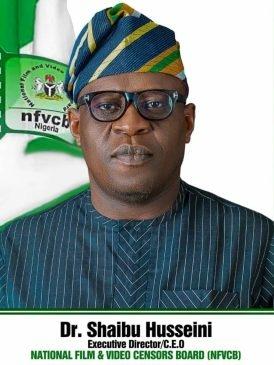
The Executive Director/Chief Executive Officer of the National Film and Video Censors Board (NFVCB), Dr Shaibu Husseini, has called for stronger distribution frameworks within Nigeria’s film industry to ensure that locally produced content achieves global visibility.
Dr Husseini made this call while delivering the keynote address at the opening ceremony of the 2026 edition of the Coal City Film Festival, held in Enugu.
Welcoming participants to the festival, Dr Husseini expressed his personal delight at hosting the event in Enugu, his birth state, noting the city’s rich cultural heritage and longstanding contributions to Nigeria’s creative landscape.
He commended the festival organisers, particularly the Festival Director, Uche Agbo, for their resilience and commitment in sustaining the initiative.
According to him, the Coal City Film Festival has grown into a significant cultural platform and a must-attend cinematic event in South East Nigeria.
Speaking on the festival’s theme, “Local Stories, Global Screens,” Dr Husseini emphasised the importance of authenticity in storytelling. He noted that films rooted in local realities, languages, and cultural truths often resonate more strongly with global audiences.
He cited notable Nigerian productions such as “King of Boys” by Kemi Adetiba, “The Wedding Party” by Mo Abudu, “Anikulapo” by Kunle Afolayan, “Black Book” by Editi Effiong, and “Lionheart” by Genevieve Nnaji as examples of culturally grounded stories that have gained international recognition on platforms such as Netflix and at global film festivals.
While acknowledging the growth in film production across Nigeria, the NFVCB boss identified distribution as a major bottleneck in the industry. He observed that many high-quality films struggle to reach audiences both locally and internationally due to limited distribution channels.
Dr. Husseini therefore urged film festivals across the country to evolve beyond networking platforms into active marketplaces where filmmakers can secure distribution deals. He stressed that festivals must attract distributors, exhibitors, streaming platforms, and marketers to create tangible opportunities for filmmakers.
“Film festivals must become gateways to distribution where filmmakers leave not just with applause, but with real opportunities,” he said.
Reaffirming the Board’s commitment to industry development, Dr. Husseini stated that the NFVCB has continued to reposition itself as a partner in progress by engaging stakeholders, improving classification processes, and promoting a balance between creative freedom and social responsibility.
However, he raised concerns over increasing non-compliance with regulatory requirements, noting that some filmmakers bypass the Board by releasing unclassified films or operating without proper licensing.
He reiterated that all films and video works must be submitted to the NFVCB for classification and registration before being released on any platform, including digital platforms such as YouTube.
“This is a legal obligation, and the Board will not hesitate to take decisive action against defaulters,” he warned, adding that regulation is essential for protecting the industry, audiences, and national values.
Looking ahead, Dr. Husseini assured stakeholders of the Board’s continued collaboration with filmmakers and festival organisers to build a structured, sustainable, and globally competitive Nigerian film industry.
He concluded by commending the organisers of the Coal City Film Festival for their vision and contribution to Nigeria’s cultural economy, urging filmmakers to continue telling authentic stories that can resonate across global screens.
-Leadership
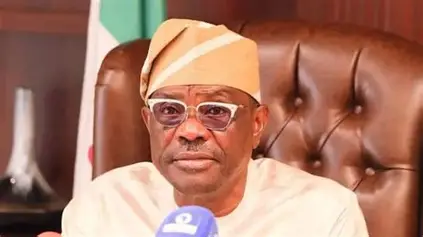
The Minister of the Federal Capital Territory, Nyesom Wike, has reiterated Nigeria’s commitment to strengthening its relationship with the European Union, while announcing steps to recover diplomatic lands in Abuja allegedly taken over by land grabbers.
Wike made this known on Thursday during a courtesy visit by the EU Ambassador to Nigeria and ECOWAS, Gautier Mignot, in Abuja.
“We will continue to engage EU member countries to further strengthen bilateral relations,” the minister said.
Addressing concerns over diplomatic land allocations, Wike disclosed that several plots originally designated for EU countries had been unlawfully occupied over the years. He noted that the FCT Administration has begun reclaiming such lands.
He added that the government would formally communicate with the affected countries to determine their continued interest in the properties and ensure rightful ownership is restored.
“We are writing to those countries. If they still intend to retain the lands, we are willing to return them. We will not allow land grabbers to take advantage,” Wike said.
The minister also commended the EU for its contributions to governance and justice sector reforms in the FCT, particularly in court digitalisation and improved justice delivery.
“I am aware of your support, especially in strengthening the administration and dispensation of justice. We will continue to partner with you to deepen these initiatives,” he added.
On requests for land allocation for local EU staff, Wike assured that applications would be considered based on due process, stressing that such processes must ultimately benefit the public.
He further addressed infrastructure concerns at the IBB Golf Club, confirming that a caretaker committee has been constituted, with rehabilitation works expected to commence soon.
In his remarks, Mignot described Nigeria as a key strategic partner for the EU, noting that both parties are entering a new phase of deeper engagement.
“The European Union remains one of Nigeria’s foremost trade and development partners. Our relationship is strong, mutually beneficial, and evolving into a more significant phase,” he said.
He highlighted ongoing EU-supported programmes in the FCT, including judicial reforms, court digitalisation, human rights initiatives, and support for victims of gender-based violence.
Mignot also invited the FCT minister to engage further with EU ambassadors to explore collaboration in areas such as waste management, urban planning, and water infrastructure.
Meanwhile, Wike recently ordered the demolition of buildings illegally constructed on land designated for foreign embassies in the diplomatic zone of Katampe Extension, Abuja.
He explained that the land, originally allocated on March 18, 2008, for residential use by diplomatic missions, was later encroached upon by an unauthorised developer who commenced construction without approval from the Federal Capital Development Authority.
The affected diplomatic missions include Thailand, Bulgaria, Syria, Somalia, Serbia and Montenegro, Japan, Austria, Switzerland, Senegal, and the Palestine Liberation Organisation.
-Leadership

Liquidity Pressure Persists As Banks Dump N30.6tr with CBN Over 5 Days

NFVCB Boss Urges Stronger Distribution Channels As Coal City Film Festival 2026 Opens In Enugu

Wike Reaffirms Nigeria–EU Ties, Moves To Reclaim Encroached Diplomatic Lands

5 Life Lessons from Manchester City EPL Current woes

Liverpool Announce Jürgen Klopp Return To The Club

MTN Teams Up With Meta To Boost WhatsApp Call Quality


-
 Health12 months ago
5 Life Lessons from Manchester City EPL Current woes
-
 Sports12 months ago
Liverpool Announce Jürgen Klopp Return To The Club
-
 Business12 months ago
MTN Teams Up With Meta To Boost WhatsApp Call Quality
-
 News12 months ago
Commonwealth Observers Prepare For Gabon Presidential Election
-

 Health12 months ago
Ponzi Scheme CEO Francis Uju Udoms of Addfx Case still Unresolved Despite SEC certification
-
 News12 months ago
Chibok Girls: 11 Years Of Anguish, Broken Promises
-

 News12 months ago
Wike’s Enviable Road Construction Method along Nyanya- Maraba Highway
-
 News10 months ago
NASRE Promises Support To Daily Times Group Business Editor, Oseni, Over Serious Road Accident