
Health
Abiodun Faleke and the Human Face of Politics

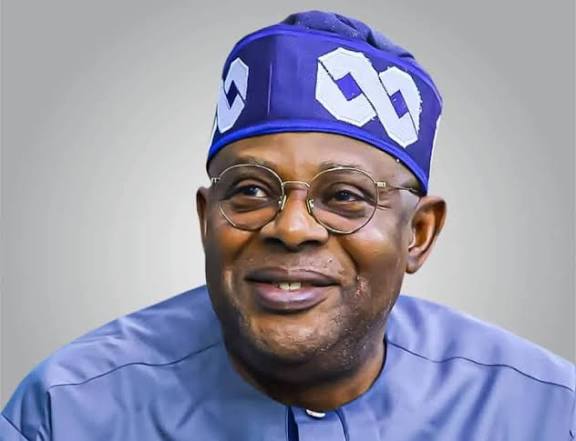
If politics were to be built up into flesh and bone, one that is fashioned into an individual who could speak, legislate, joke around, and empathise— it would be difficult not to imagine Rt. Hon. (Dr.) James Abiodun Faleke as the first thought of such personification. Different from the usual politics of personal enrichment, Faleke’s narrative reads instead as: managerial expertise brought to bear on the messy business of public life, a temperament that privileges service over spectacle, and a tangible imprint on both his immediate constituency and the broader national tableau.
Faleke’s career did not begin in the give-and-take of partisan politicking; it was forged in the precise world of logistics, procurement and management. His professional apprenticeship—from material management to senior commercial roles—translated into a technocratic poise that later marked his public service.
Faleke is a man who has served his people in multiple capacities: from the foundational level of local government in Lagos (where he was pioneer Executive Secretary and later chairman of Ojodu LCDA), to a sustained presence in the House of Representatives representing Ikeja Federal Constituency since 2011. Those biographical certainties matter because they frame Faleke’s politics as cumulative, in the sense of being a career of small, compounding interventions rather than headline-hungry theatrics.
As regards constituency projects in relation to the margins of governance, Faleke’s record, however, suggests his performances are more than just transactional favours to the people he swore to serve; for him they are instruments of empowerment and social calibration. The “Mega Empowerment” Constituency Outreaches of 2025 saw 240 young men and women from across Ikeja, Ojodu, and Onigbongbo local council areas each receive a ₦100,000 cash grant to support their small businesses and entrepreneurial ventures.
In addition to the cash support, over 400 constituents benefited from a wide range of empowerment tools including tricycles, dispatch motorcycles, freezers, generators, popcorn machines, clippers, grinding machines, and juice extractors. Also, 170 participants were selected to undergo business training sessions designed to equip them with the knowledge and skills necessary to sustain their ventures.
Upon completion, each trainee will also receive cash grants to launch or expand their businesses. This is undoubtedly a relentless poverty-alleviation and empowerment scheme reaching the grassroots. For Faleke, this isn’t just empowerment—it’s about economic freedom and dignity.
Beyond ephemeral gestures, Faleke has sponsored and championed legislative measures that carry direct benefits to citizens’ welfare. His sponsorship of amendments to the NYSC Act (advocating life-insurance protection for corps members) and motions to tackle security vulnerabilities via the closure of illegal border routes are examples of how constituency sensibilities (safety for families, dignity for young Nigerians) translate into national legislation. These are not merely symbolic acts; they are legislative inflections aimed at securing lives and livelihoods.
Faleke’s influence is not confined to photo-ops, which many of his colleagues are known for.
Within the legislative architecture he has occupied consequential roles, including chairmanships and committee memberships on finance, anti-corruption and public procurement, where technical competence matters. That Faleke has been entrusted with responsibilities like scrutinising budgets, policing procurement, and framing accountability frameworks therefore reflects both peer recognition and a rare confluence of subject-matter familiarity with public policy.
When a representative who understands supply chains and procurement leads oversight of public spending, the risk of waste diminishes and the prospect of more efficient, people-centred expenditure rises. Constituents in Ikeja who see roads repaired, markets supported and youths trained can therefore trace some of those gains to the steadier, often unseen, governance work Faleke performs in committee rooms. Truly, he is replicating the Renewed Hope agenda of President Tinubu well at the constituency level.
What makes Faleke especially compelling, and what has earned him plaudits even from unexpected quarters, is a demonstrated willingness to place principle above opportunism. Accounts of his political journey reveal moments where standing for institutional integrity cost political capital. The 2015 Kogi governorship episode—in which Faleke was Abubakar Audu’s running mate on a ticket that won the majority of votes before Audu’s untimely death and the subsequent legal wrangling—remains illustrative of a politician who is prepared to contest questionable internal party reassignments through judicial means rather than private compromise. That episode was more than a personal dispute; it was a public lesson about the sanctity of the popular mandate.
It is no surprise that the press and civic organisations alike have, in recent years, painted Faleke as a model of “selfless political doctrine”—not because he is immune to ambition, but because his ambition is often tethered to service.
Observers note a politician who cultivates friendships across aisles, who refuses to let parochialism overpower national interest, and who seeks to translate proximity to executive power into tangible benefits for ordinary citizens.
For the record, awards, honours and the soft currency of recognition have also accompanied Faleke’s career. They are not ends in themselves, but they matter in two ways: first, because they reward long-term investment in public service; second, because they amplify the moral narrative that a politician can be both effective and ethically consistent. Communities in Kogi (his state of origin) and Lagos (his political bedrock) have acknowledged his interventions—from infrastructural pledges to educational initiatives—which have cumulatively projected an image of representation that is distributed rather than hoarded for selfish exploits.
However, the exemplary life of Rt. Hon. Faleke has proven that the impact of a single conscientious legislator does not end at local boundaries; it radiates outward.
To be candid, Faleke is not the sort of politician to promise miraculous solutions. He does not traffic in utopian hyperbole; his is a methodical, iterative politics. Such pragmatic disposition is a virtue in a country that needs steady institutional repair rather than rhetorical bravado.
Evaluating his performance dispassionately yields a simple conclusion: Faleke has been effective within the scope of his mandate. He has delivered constituency projects that ease everyday burdens, sponsored laws that protect citizens, and occupied oversight roles that matter for national fiscal health. That combination of local relevance enjoined with national responsibility is the metric by which representative success ought to be judged.
After all, it is believed that politics is not only about statutes and budgets; it is equally an economy of hope. The emotional currency that Faleke pays converts into a form of legitimacy that technical accomplishments alone cannot buy. How does one downplay the effort of a man who is readily available to his constituents in town halls; a man who pushes so hard for the benefits of those even outside his constituency; a man who shows up in markets to connect with his constituency at the grassroots, listening to their needs, consistently drafting and executing plans to make his people’s lives better?
The loyalty from the tongues that shout Faleke’s name in his constituency isn’t one that was bought, but earned on merit, because constituents who feel seen and supported are likelier to trust institutions; when trust rises, social cooperation follows. In this sense, Faleke’s human face of politics is not mere optics; it is an authentic mechanism rebuilt from decades of misgovernance.
Rt. Hon. James Abiodun Faleke should not be mythologised. He is neither infallible nor omnipotent. But he does offer a valuable template: the professionalised politician who grounds legislative activism in managerial competence, who balances constituent intimacy with national duty, and who places principle above ephemeral convenience. In a nation starved for dependable public servants, his presence—the human face of politics—is a restorative sight.
If Nigerian politics is to evolve beyond bigotry, partisanship, and cyclical disappointment, it will require more practitioners like Faleke: men and women for whom patriotism is not a headline but a daily practice, for whom constituency projects are not charity but capacity-building, and for whom committees are laboratories of accountability rather than chambers of complacency. That is the promise, and the provocation, Abiodun Faleke holds up to a nation in search of steadier custodians of the public trust.
Hwande is writing from Ilorin, Kwara State.


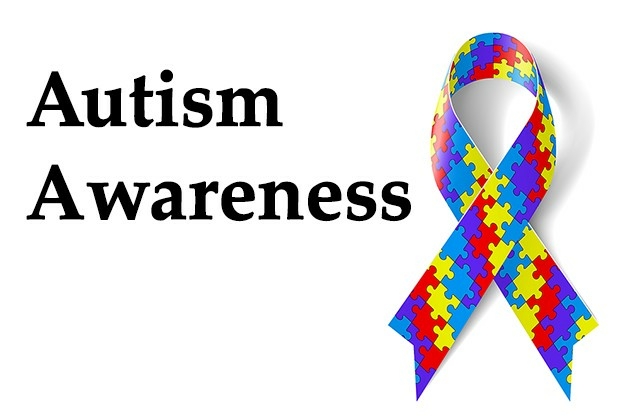
Indomie has said it is backing a cross-country cycling journey by 15-year-old autism advocate Kanyeyachukwu Tagbo, who is embarking on a Guinness World Record-bound ride from Enugu to Lagos to raise awareness about autism and promote inclusion.
Tagged ‘Journey of Possibility, #RideWithKanye’, the expedition will see the young cyclist travel across several Nigerian cities as he advocates for greater understanding and support for individuals living with Autism Spectrum Disorder and their families.
The initiative represents an official attempt to set a Guinness World Records milestone as the youngest autistic individual to complete a cross-country cycling journey. The ride is scheduled to conclude in Lagos on World Autism Awareness Day, reinforcing the global call for empathy, acceptance, and opportunity for people on the autism spectrum.
Speaking on the brand’s involvement, Group corporate communications and events manager of Dufil Prima Foods, Temitope Ashiwaju, said the initiative reflects Indomie’s enduring commitment to celebrating courageous Nigerian children and amplifying stories that inspire hope.
“At Indomie, we believe every child deserves the opportunity to dream boldly and achieve extraordinary things. Kanyeyachukwu’s journey is a powerful reminder that determination and talent can transcend limitations. We are proud to support his mission to inspire understanding, acceptance, and hope for individuals living with autism,” he said.
Indomie stated that “Kanyeyachukwu first captured national attention when he was recognised at the Indomie Heroes Awards, an initiative by Indomie that celebrates courageous Nigerian children who have demonstrated exceptional bravery, resilience, and impact in their communities.
“Since receiving the recognition, he has continued to use advocacy, creativity, and public engagement to reshape perceptions about autism and inspire conversations around inclusion.
“Through the ‘Journey of Possibility’, Kanyeyachukwu hopes to demonstrate that individuals on the autism spectrum possess extraordinary potential when given the opportunity and support to thrive.”
It added that “as a key supporter of the initiative, Indomie will provide branded cycling kits and support materials for cyclists accompanying him throughout the route, alongside financial support and brand activations at designated stops along the journey. These engagements will include community interactions aimed at educating the public, encouraging dialogue, and fostering broader participation in autism advocacy.”
Through initiatives like the Indomie Heroes Awards and its support for the ‘Journey of Possibility, #RideWithKanye’, Indomie continues to champion young Nigerians whose courage, determination, and achievements demonstrate the limitless possibilities that emerge when children are empowered to pursue their dreams.
-Leadership

Two persons suspected to be students of the Federal Polytechnic, Nekede, Owerri, the Imo State capital, have drowned in Otammiri River in Owerri.
The incident, according to a source, occurred last Saturday.
The source said one of the deceased, Chukwudi Okwuchukwu, was a year one National Diploma Computer Science student and Igwilo, a friend of another student, who joined the swimming expedition.
However, the school authorities have denied the allegation, saying they were not aware of the incident.
An eyewitness who pleaded anonymity said four male friends came to swim in the Otammiri River and snap pictures.
According to the source, a local warned the young men not to swim, saying it was getting dark, but they refused and continued swimming.
Further, he said the swimmers who were busy being snapped pictures by their friends swam to the deep side and drowned in the process.
The school’s public relations officer, Dr Ike Ibe, said the school was unaware of the incident.
He said, “No, the school management is not aware of such an incident.”
When contacted, the SUG president of polytechnic, Destiny Nwosu, confirmed that two people drowned in the river but maintained that they had yet to be identified as students of the school.
Nwosu said, “I heard that two people drowned at the Otammiri River, but we have yet to confirm that they are students of our school. I can’t confirm whether they were Nekede Polytechnic students or from the other schools in the state, and if they were even students anywhere else.”
The president of the National Association of Imo State Students (NAISS), Nekede Polytechnic chapter, Daniel Promise, said he saw the video on social media but maintained that they had not been identified as students of Nekede Polytechnic.
He said, “Up till now, no one has confirmed the victim to be their coursemate or anything like that. I can’t confirm that they were our fellow students,” Promise said.
Meanwhile, the two corpses have been deposited at a morgue.
-Leadership
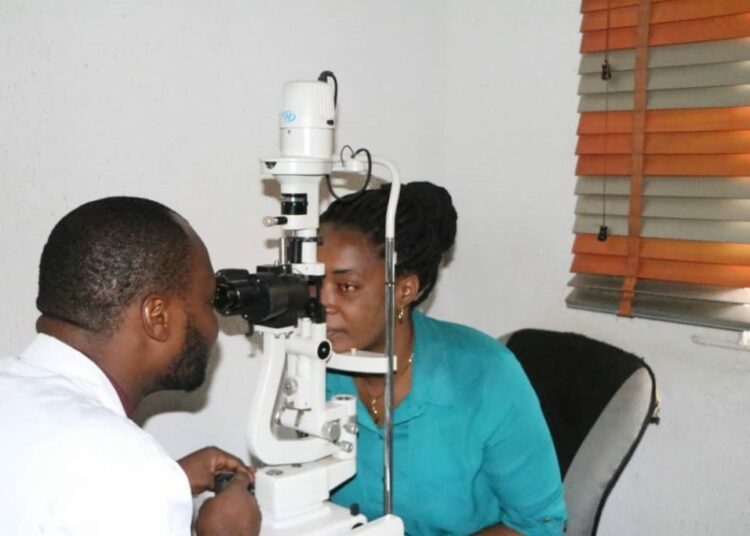
Plateau State commissioner for Health, Dr Nicolas Ba’amlong, has declared that glaucoma is the second leading cause of blindness after cataract in Nigeria.
He, therefore, called for a united push for regular eye checks, early diagnosis and affordable treatment.
The commissioner said Nigeria Blindness and Vision Impairment Survey, Prevalence of Glaucoma affects five percent of the population, adding that it accounts for 16.7 percent of blindness cases, while 5.6 percent of the affected individuals knew they had the disease and one in five persons were already blind at diagnosis.
He maintained that the 2023 Rapid Assessment of Avoidable Blindness (RAAB) survey in Plateau State reported prevalence of blindness to be 2.7 percent which is significantly higher than the national average of 0.7 percent stressing that glaucoma accounted for 17 percent of such blindness.
The theme for this year ” Uniting for Glaucoma Free World” emphasised the power of collective action in tackling one of the leading causes of irreversible blindness. It conveys both urgency and hope highlighting that while glaucoma cannot be cured, blindness from it can often be prevented through awareness, early detection and treatment.
Dr. Ba’amlong further explained that “Glaucoma Week reminds us that protecting visions is a shared responsibility because when we unite to promote awareness, early testing and accessible treatment, we move closer to the future where no one loses his sight to glaucoma.”
-Leadership

NFVCB Boss Urges Stronger Distribution Channels As Coal City Film Festival 2026 Opens In Enugu

Wike Reaffirms Nigeria–EU Ties, Moves To Reclaim Encroached Diplomatic Lands

Inspector-General Disu Submits 75-Page Framework On ‘State Police’ To Senate As Push Gains Momentum

5 Life Lessons from Manchester City EPL Current woes

Liverpool Announce Jürgen Klopp Return To The Club

MTN Teams Up With Meta To Boost WhatsApp Call Quality

-
 Health12 months ago
5 Life Lessons from Manchester City EPL Current woes
-
 Sports12 months ago
Liverpool Announce Jürgen Klopp Return To The Club
-
 Business12 months ago
MTN Teams Up With Meta To Boost WhatsApp Call Quality
-
 News12 months ago
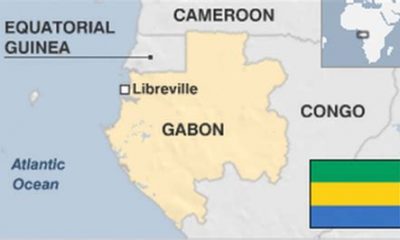
Commonwealth Observers Prepare For Gabon Presidential Election
-

 Health12 months ago
Ponzi Scheme CEO Francis Uju Udoms of Addfx Case still Unresolved Despite SEC certification
-
 News12 months ago
Chibok Girls: 11 Years Of Anguish, Broken Promises
-
 News12 months ago
Wike’s Enviable Road Construction Method along Nyanya- Maraba Highway
-
 News9 months ago
NASRE Promises Support To Daily Times Group Business Editor, Oseni, Over Serious Road Accident