
News
INEC reviews timetable, APC consolidates as 2027 race begins

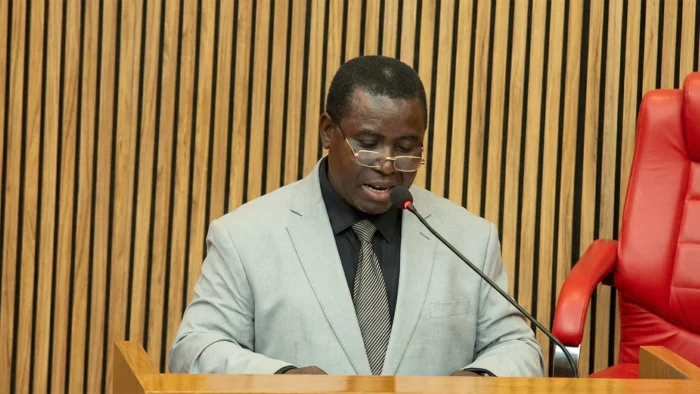
As manoeuvres ahead of the 2027 general elections gather momentum, the ruling APC has begun tightening its internal structures, while the Independent National Electoral Commission (INEC) moves to adjust the electoral timetable amid emerging succession calculations and mounting criticism of a fragmented opposition.
The party on Tuesday inaugurated its National Central Coordinating Committee for the 2026 National Convention, with sources indicating fresh calculations over the presidential ticket, even as the electoral commission signalled procedural adjustments under the amended Electoral Act 2026.
INEC Chairman Prof. Joash O Amupitan disclosed that the commission will issue a revised timetable for the 2027 general election following the enactment of the new Electoral Act 2026.
Amupitan made this known yesterday during a meeting with Resident Electoral Commissioners (RECs) and the swearing-in of Dr Chukwu Chukwu-Emeka Joseph as REC representing Abia State.
President Bola Ahmed Tinubu recently assented to the Electoral Act Amendment Bill 2026, barely 24 hours after it was controversially passed by the National Assembly.
Before this, INEC had announced that the presidential and National Assembly elections would take place on February 20, 2027, while the governorship and state Houses of Assembly polls were scheduled for March 6, 2027.
The timetable drew criticism from sections of the public, particularly Muslim groups, who argued that the proposed dates clashed with the holy month of Ramadan.
The amended Clause 28 now provides that INEC shall, not later than 300 days before the date fixed for the conduct of an election under the Act, publish a notice in each state of the Federation and the Federal Capital Territory.
Amupitan explained that although INEC had issued a Notice of Election on February 13, 2026, it was done under the provisions of the old Electoral Act, as the new law had not yet been enacted at the time.
“I must not fail to inform you that we now have a new Electoral Act, 2026. We had on February 13, 2026, issued a Notice of Election before the new Act was enacted. The Notice was issued under the old law. With the introduction of the new Electoral Act, we have to make some adjustments and issue a revised timetable for the 2027 general election,” Amupitan stated.
The INEC chairman noted that the development would require procedural adjustments to ensure full compliance with the new legal framework governing elections in the country.
He also disclosed that the commission would soon commence a comprehensive Voter Revalidation Exercise to further sanitise the national register ahead of the 2027 polls.
According to him, the clean-up exercise, which was extensively discussed during the commission’s retreat in Lagos in January, forms part of efforts to strengthen the integrity of the voter register and enhance public confidence in the electoral process.
Amupitan reminded the RECs that the second phase of the Continuous Voter Registration (CVR) exercise, which commenced on January 5, 2026, is ongoing and will run until April 17, 2026.
He added that the entire CVR cycle is scheduled to conclude on August 30, 2026.
The meeting came on the heels of the recently concluded Area Council elections in the Federal Capital Territory (FCT) and by-elections in select constituencies in Kano and Rivers states, which Amupitan described as largely peaceful and successfully concluded.
The INEC chairman also addressed operational issues observed during the FCT polls, including the delayed opening of polling units, which he described as unacceptable and damaging to public confidence.
He said staff and logistical lapses identified during the exercise would be investigated and, where necessary, sanctioned under commission regulations.
Amupitan praised the generally peaceful conduct of the elections but acknowledged “ugly incidents” at some collation centres, urging stronger coordination with security agencies to prevent a recurrence in future exercises.
He also highlighted improvements introduced into the commission’s result management system, noting that experience has shown that the most vulnerable stage of the electoral process is not voting at polling units but the collation of results at various levels.
To address this, he said additional safeguards have been integrated into the Bimodal Voter Accreditation System (BVAS) to prevent manipulation of results before transmission to the INEC Result Viewing Portal (IReV).
Under the strengthened procedure, he explained, the Presiding Officer is required to capture and upload an image of the completed Form EC8A to IReV and simultaneously enter the scores of each political party directly into the BVAS device.
According to him, the BVAS now performs internal validation checks to ensure that total votes entered do not exceed the number of accredited voters, that figures are mathematically consistent, and that any instance of over-voting is automatically flagged and cannot be finalised.
He said the enhanced system was tested during the FCT Area Council election and the Kano and Rivers constituency polls, where uploaded results were confirmed to be accurate, with about 97 per cent of FCT results already available on IReV.
APC sets stage for convention with inauguration of committee
SPEAKING at the inauguration of the National Central Coordinating Committee for its 2026 National Convention at the party’s National Secretariat in Abuja, APC Chairman, Prof Nentawe Yilwatda, described the event as a defining moment that underscored the party’s commitment to democratic values, internal democracy and organisational excellence.
“Today marks another moment in the progressive journey of our great party. A convention such as ours is not merely a gathering; it is an affirmation of our democratic ethos, a celebration of our internal democracy, and a clear demonstration to Nigerians that the APC remains the most organised, forward-looking, and viable political platform in the country,” Yilwatda said.
He highlighted the party’s recent electoral successes, citing victories in by-elections in the Federal Capital Territory, Kano State and Rivers State, which he said affirmed the APC’s dominance and countered opposition claims.
Yilwatda expressed confidence in the leadership of the committee, chaired by Aminu Bello Masari, former Governor of Katsina State. He described Masari as a statesman of exceptional pedigree whose acceptance of the assignment reflected selfless service to the party and the nation.
“To all members of this committee, you have been carefully selected because of your proven integrity, wealth of experience, and unwavering commitment to the ideals of our party. You have been entrusted with the responsibility to plan and deliver a convention that is transparent, inclusive, and credible, one befitting of a ruling party of the APC’s stature,” he added.
The chairman assured the committee of the full support of the National Working Committee and the party structure, stressing that necessary resources and cooperation would be provided.
“With these words, and on behalf of the National Working Committee of the All Progressives Congress, I hereby declare the APC National Convention 2026 process formally inaugurated,” he said.
Responding, Masari thanked the party’s leadership and Bola Ahmed Tinubu for the confidence reposed in the committee.
“We accept this responsibility with humility, a strong sense of duty, and firm commitment to the ideals and aspirations of our great party,” Masari said.
He acknowledged other members of the committee, including former Senate President Anyim Pius Anyim as Vice Chairman; Governor of Kwara State and Chairman of the Nigeria Governors’ Forum, AbdulRahman AbdulRazaq; Governor of Imo State and Secretary to the Progressive Governors’ Forum, Hope Uzodimma; former Governor of Borno State, Mai Mala Buni, who will serve as Secretary; and former National Chairman of the APC, Bisi Akande, as a member.
Masari said the national convention would provide an opportunity for reflection, consolidation and renewal.
“The task before us is clear: to coordinate all activities leading to a peaceful, credible, and successful 2026 National Convention. We will approach this assignment with maturity, fairness, and strict adherence to the APC Constitution and guidelines,” he said.
He added that the committee would work with relevant organs of the party to ensure inclusiveness, transparency and discipline, pledging impartiality and wide consultation.
“A successful convention will not only strengthen our internal cohesion but also reinforce public confidence in our party as a disciplined, democratic, and responsible platform capable of providing leadership for Nigeria,” Masari said.
The inauguration of the National Central Coordinating Committee formally sets the stage for the APC’s 2026 National Convention.
Agbakoba faults opposition, says parties lack ideas to challenge APC
HUMAN rights lawyer and Senior Advocate of Nigeria, Olisa Agbakoba, has criticised opposition parties in the country, describing them as weak and lacking the ideas required to effectively challenge the current administration ahead of the 2027 general elections.
Agbakoba, a former president of the Nigerian Bar Association, spoke yesterday in Lagos on the state of the nation’s politics. He argued that recent defections from opposition parties to the ruling All Progressives Congress (APC) reflect deeper structural failings within the opposition.
“It’s like me saying my wife is taking another man. Who do I hold responsible? It’s my wife. So if governors are leaving an opposition party and going to the APC, who is to be blamed? It’s the party they are leaving,” he said.
He maintained that opposition politics in Nigeria has failed to engage citizens on substantive policy alternatives capable of swaying public opinion.
“All I see opposition parties do is attend weddings and funerals. There are many serious issues in this country to talk about in order to win over Nigerians, but nobody is hitting the big issues,” he said.
Agbakoba lamented the absence of ideological clarity and issue-based campaigns, noting that successful political movements elsewhere were built on strong policy messaging. He cited former British Prime Minister Margaret Thatcher as an example of how clear and relatable economic messaging helped galvanise voters.
“Tell Nigerians what you will do differently. Engage them house to house. Connect your ideas to their daily struggles. That’s politics. That’s not happening here,” he said.
He argued that Nigeria’s numerous challenges — including insecurity, economic hardship and the plight of internally displaced persons — provide ample ground for robust opposition engagement.
“Nigerians are waiting for someone who can cure the situation. This is the easiest country to take if you know what to do. But you must be organised, and you must campaign on issues,” he added.
On security, Agbakoba questioned whether the country’s challenges stem from capacity gaps or from the absence of a modern security architecture, suggesting that the effective use of intelligence and technology could significantly curb terrorism and banditry.
He also linked weak political competition to flaws in the electoral process, reiterating his call for reforms, particularly statutory backing for the electronic transmission of results to enhance transparency and reduce post-election disputes.
According to him, until the electoral system becomes more credible and transparent, competent individuals will remain reluctant to participate in politics.
Calling for a shift ahead of 2027, Agbakoba urged opposition politicians to abandon what he described as “complaint-driven politics” and instead develop concrete, issue-based platforms that convince Nigerians they are prepared to govern.
“Campaign. Connect with the people. Raise the big issues. That is how you win power,” he said.
Catholic bishops warn against electoral manipulation
AHEAD of the 2027 general elections, the Catholic Bishops’ Conference of Nigeria (CBCN) has urged the government to resist any attempt to manipulate state institutions, including the Independent National Electoral Commission (INEC), security agencies and the judiciary, for partisan advantage.
In a communiqué issued yesterday at the end of their First Plenary Meeting in Abuja, the bishops lamented persistent electoral malpractice involving the electoral umpire, political parties, candidates and some voters. They said such irregularities have eroded public confidence in the democratic process and contributed to declining voter turnout.
The communiqué, signed by the outgoing CBCN President, Archbishop Lucius Iwejuru Ugorji, and the Secretary, Donatus Ogun Osaq, cited INEC data showing that only 23 per cent of registered voters participated in the 2023 general elections, a sharp drop from previous polls. They added that turnout in the recent Federal Capital Territory elections fell to seven per cent, which they described as evidence of growing voter apathy and a development that raises concerns about the legitimacy of elected officials.
The bishops attributed Nigeria’s challenges to poor leadership and a distorted understanding of politics, which they said is often reduced to rigging and the pursuit of personal gain. According to them, this has resulted in economic decline, widespread insecurity and deepening poverty despite the country’s abundant human and natural resources.
To strengthen democracy, they called for respect for the will of the people and the conduct of free, fair and credible elections. They urged the National Assembly to amend the Electoral Act to mandate the real-time transmission of results from the Bimodal Voter Accreditation System (BVAS) at polling units to the INEC Result Viewing Portal (IReV), warning that failure to do so would worsen voter apathy.
Tinubu moves to reshape 2027 ticket amid succession calculations
DONE with the issues surrounding the Electoral Act 2026, President Bola Ahmed Tinubu has begun focusing on shaping his second term, particularly the nature of the Presidency he envisions from May 29, 2027.
This comes as a source close to the Presidency disclosed that Tinubu has settled on the current Defence Minister, retired General Christopher Musa, as his potential running mate for the 2027 poll, in a move said to be aimed at countering the United States’ assertion of genocide in the country.
Recall that while appearing on the live television programme Politics Today on Channels Television, Musa deflected a question about his possible selection as Tinubu’s running mate in 2027, stating that he remained focused on his current responsibilities as Minister.
The source said that although the President has made up his mind on Musa, the decision would await formal adoption by consensus at the All Progressives Congress (APC) convention later in the year. The source added that indications suggest the current Vice President, Senator Kashim Shettima, may not be on the presidential ballot.
“What it means is that it has been agreed that the Vice President would not be running with President Tinubu. The Minister of Defence is likely to take his place, but Senator Shettima would be asked to nominate the Secretary to the Government of the Federation (SGF) and the National Security Adviser,” he stated.
On the fate of the current National Security Adviser, Nuhu Ribadu, in Tinubu’s second term, the source — described as a long-term ally of the President — said the arrangement being considered would see Ribadu revive his governorship ambition in Adamawa State, potentially positioning him for a presidential bid in 2031.
He disclosed that the President has begun reaching out to influential leaders in the North-West geopolitical zone to secure their support for the Musa project, adding that, as a goodwill gesture, the zone may be offered the position of Senate President in the 11th National Assembly.
While stating that Senator Barau Jibrin is expected to return to the Senate, the source explained that the Deputy Senate President and another ranking senator from Sokoto are being considered to succeed Senator Godswill Obot Akpabio. He added that an earlier plan had been for Senator Adams Oshiomhole to lead the 11th National Assembly.
“America’s designation of Nigeria as a country of particular concern is influencing several strategic decisions. The North-West has a predominantly Muslim population, but there is a need to accommodate a Christian Vice President to strike a religious balance and pave the way for a Muslim successor to President Tinubu in 2031.
“Ceding the Senate President position is intended to strengthen the zone’s stake in the Tinubu Presidency and maintain a steady course towards a favourable succession plan. The give-and-take arrangement in Kano State ensures that Governor Kabir Abba Yusuf secures a second-term ticket, while Barau returns to the Senate,” he explained.
The source further disclosed that President Tinubu is considering a more conciliatory Presidency in his second term. He hinted at plans to create a Research and Documentation Unit and said that Sunday Dare has been pencilled in to head the Presidency’s public communications.
-Guardian




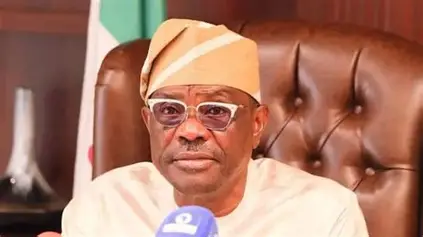
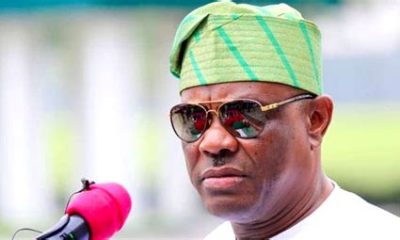
The Minister of the Federal Capital Territory, Nyesom Wike, has reiterated Nigeria’s commitment to strengthening its relationship with the European Union, while announcing steps to recover diplomatic lands in Abuja allegedly taken over by land grabbers.
Wike made this known on Thursday during a courtesy visit by the EU Ambassador to Nigeria and ECOWAS, Gautier Mignot, in Abuja.
“We will continue to engage EU member countries to further strengthen bilateral relations,” the minister said.
Addressing concerns over diplomatic land allocations, Wike disclosed that several plots originally designated for EU countries had been unlawfully occupied over the years. He noted that the FCT Administration has begun reclaiming such lands.
He added that the government would formally communicate with the affected countries to determine their continued interest in the properties and ensure rightful ownership is restored.
“We are writing to those countries. If they still intend to retain the lands, we are willing to return them. We will not allow land grabbers to take advantage,” Wike said.
The minister also commended the EU for its contributions to governance and justice sector reforms in the FCT, particularly in court digitalisation and improved justice delivery.
“I am aware of your support, especially in strengthening the administration and dispensation of justice. We will continue to partner with you to deepen these initiatives,” he added.
On requests for land allocation for local EU staff, Wike assured that applications would be considered based on due process, stressing that such processes must ultimately benefit the public.
He further addressed infrastructure concerns at the IBB Golf Club, confirming that a caretaker committee has been constituted, with rehabilitation works expected to commence soon.
In his remarks, Mignot described Nigeria as a key strategic partner for the EU, noting that both parties are entering a new phase of deeper engagement.
“The European Union remains one of Nigeria’s foremost trade and development partners. Our relationship is strong, mutually beneficial, and evolving into a more significant phase,” he said.
He highlighted ongoing EU-supported programmes in the FCT, including judicial reforms, court digitalisation, human rights initiatives, and support for victims of gender-based violence.
Mignot also invited the FCT minister to engage further with EU ambassadors to explore collaboration in areas such as waste management, urban planning, and water infrastructure.
Meanwhile, Wike recently ordered the demolition of buildings illegally constructed on land designated for foreign embassies in the diplomatic zone of Katampe Extension, Abuja.
He explained that the land, originally allocated on March 18, 2008, for residential use by diplomatic missions, was later encroached upon by an unauthorised developer who commenced construction without approval from the Federal Capital Development Authority.
The affected diplomatic missions include Thailand, Bulgaria, Syria, Somalia, Serbia and Montenegro, Japan, Austria, Switzerland, Senegal, and the Palestine Liberation Organisation.
-Leadership
News
Inspector-General Disu Submits 75-Page Framework On ‘State Police’ To Senate As Push Gains Momentum
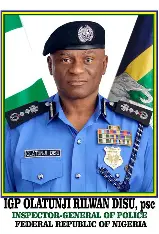
According to a statement issued on Thursday by Ismail Mudashir, Special Adviser on Media and Publicity to the Deputy Senate President, the document titled “A Comprehensive Framework for the Establishment, Governance and Coordination of Federal and State Police” was presented at Jibrin’s office within the National Assembly complex.
The Inspector-General of Police, Olatunji Disu, has submitted a 75-page framework on the establishment of State Police to the Deputy President of the Senate, Barau Jibrin, in a fresh move to advance decentralised policing in Nigeria.
According to a statement issued on Thursday by Ismail Mudashir, Special Adviser on Media and Publicity to the Deputy Senate President, the document titled “A Comprehensive Framework for the Establishment, Governance and Coordination of Federal and State Police” was presented at Jibrin’s office within the National Assembly complex.
The report was delivered on behalf of the IGP by Prof Olu Ogunsakin, who chairs the Nigeria Police Force committee set up to develop modalities for instituting State Police.
Disu said the document encapsulates the Force’s professional input following extensive consultations and a thorough evaluation of the legal, operational and administrative implications of decentralised policing.
“The report covers the considered views, professional insights and strategic recommendations of the Force, derived from extensive consultations and a careful assessment of the operational, legal and administrative implications of instituting State Police in Nigeria,” Disu said.
“It is our expectation that the contents of this report will meaningfully contribute to ongoing deliberations and assist in shaping informed, balanced, and pragmatic decisions on this critical aspect of national security architecture.”
The police chief noted that the framework has been formally submitted to the Senate Committee on the Review of the 1999 Constitution as the Nigeria Police Force’s official contribution to the ongoing constitutional amendment process.
Responding, Senator Jibrin commended the IGP for what he described as a proactive step aligned with the security agenda of Bola Ahmed Tinubu.
“The Deputy President of the Senate commended the IGP for his proactiveness on the establishment of State Police in line with President Bola Ahmed Tinubu’s agenda to fully secure the country,” the statement read.
He assured that the Senate Committee reviewing the Constitution would carefully examine the framework alongside other submissions as part of efforts to strengthen Nigeria’s legal foundation.
The proposed framework is expected to outline the operational structure, governance model, and coordination mechanisms between federal and state policing systems— marking a significant step in ongoing efforts to overhaul Nigeria’s security architecture.
SaharaReporters had earlier reported that Disu inaugurated an eight-member committee in March to drive the implementation of State Police, declaring that the reform was irreversible.
At the inauguration in Abuja, the IGP insisted that decentralised policing “has come to stay,” dismissing concerns that it could threaten the roles of existing police personnel.
“State Police has come to stay, and the police should be able to contribute their part in making it succeed. The police are not afraid, our jobs are not being taken,” he said.
He described the committee’s assignment as urgent and critical, giving members one month to submit their report amid rising security challenges across the country.
Disu stressed that the move towards State Police is aimed at strengthening internal security by bringing law enforcement closer to communities and enabling faster, more targeted responses to threats.
“Across the nation, we continue to confront evolving security challenges. These require innovative thinking, strategic collaboration, and the willingness to explore reforms,” he added.
The push for State Police has gained renewed momentum following President Tinubu’s assurance that the plan would not be shelved, urging stakeholders to support the initiative.
-Sahara
News
N1.54billion Settlement: Court Frees Ex-Minister Stella Oduah, Strikes Out Case Months After She Joined APC
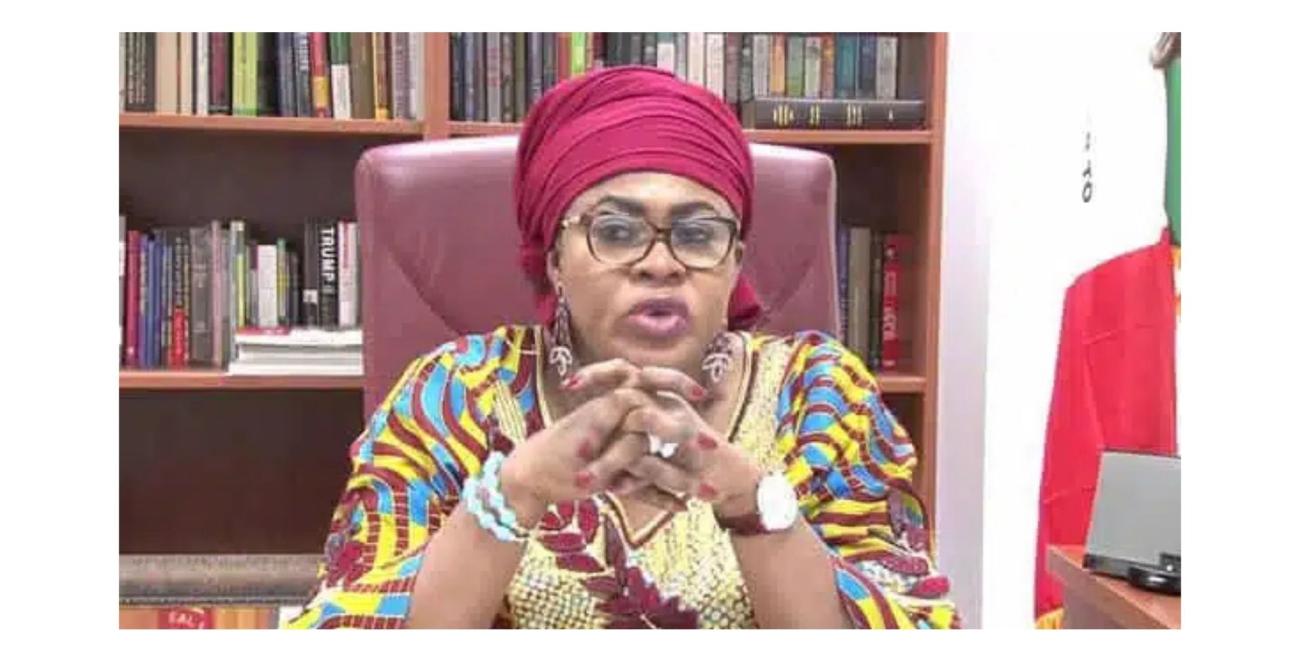
Justice Hamza Muazu struck out the case on Thursday after the prosecution informed the court that the value of the disputed funds had been returned.
Aformer Minister of Aviation, Stella Oduah, has been discharged by a Federal Capital Territory High Court in Abuja after the Nigerian government confirmed the recovery of funds linked to the fraud allegations against her, bringing an abrupt end to her prosecution.
Justice Hamza Muazu struck out the case on Thursday after the prosecution informed the court that the value of the disputed funds had been returned.
Oduah, who was standing trial alongside her former aide, Gloria Odita, had faced allegations tied to multi-billion naira transactions involving companies connected to the aviation ministry.
In his ruling, Justice Muazu declared, “The charge dated October 13, 2025, is hereby struck out, and the defendants are accordingly discharged.”
Earlier, the Director of Public Prosecution of the Federation, Rotimi Oyedepo (SAN), told the court he was acting on the directive of the Attorney-General of the Federation to confirm that the government had received restitution.
“I have the instruction of the Attorney-General of the Federation to inform your Lordship that the state confirms receipt of the value of the subject matter of this charge,” Oyedepo said.
Following the announcement, the prosecution amended the charge to retain only two companies, Sobora International Limited and Global Offshore Marine Limited, effectively removing Oduah and Odita as defendants.
The development comes amid earlier revelations by SaharaReporters that the resolution of the case may have been influenced by political considerations.
On March 8, 2026, SaharaReporters reported that the Tinubu Presidency allegedly “rewarded” Oduah’s defection to the ruling All Progressives Congress (APC) with a N1.54billion settlement arrangement in a broader N5billion fraud case, according to sources.
Oduah had entered into discussions with the Office of the Attorney-General of the Federation (AGF) over allegations involving the misappropriation of approximately N5billion in public funds.
She and Odita were initially arraigned on December 10, 2025, on a five-count charge filed by the AGF’s office over transactions that allegedly took place between January and February 2014 during her tenure as aviation minister under former President, Goodluck Jonathan.
The prosecution alleged that both defendants conspired to obtain about N2.46billion from the Federal Ministry of Aviation through companies, including Broad Waters Resource Nigeria Limited and Global Offshore Marine Limited, under the guise of providing technical supervision and security logistics services.
Specifically, prosecutors claimed that N839.7million was obtained through Broad Waters Resource Nigeria Limited, while N1.62billion was channelled through Global Offshore Marine Limited.
The funds were said to have been authorised under Oduah’s supervision, constituting offences punishable under the Advance Fee Fraud and Other Fraud-Related Offences Act 2006 and the Penal Code.
Sources had told SaharaReporters that the AGF, Lateef Fagbemi (SAN), proposed that Oduah pay N1.54 billion to resolve the matter—an arrangement described by insiders as politically motivated rather than a conventional plea bargain.
It was further alleged that the case was withdrawn from the Economic and Financial Crimes Commission (EFCC) to facilitate the process.
“In order to facilitate the fraudulent process, the AGF office took away the case from the EFCC,” a source privy to the matter said.
“The Tinubu Presidency decided to reward Stella Oduah for joining the APC. Contrary to reports in the media, the process is not a plea bargain, but a newly ready-made legal process designed to free politically connected individuals who are favoured by the President.”
Oduah had reportedly filed an application under Section 270 of the Administration of Criminal Justice Act (ACJA) 2015 to initiate plea discussions, prompting Justice Muazu to adjourn the matter to March 26, 2026, for a report on negotiations.
During earlier proceedings, Oyedepo had disclosed that the defendants were making efforts to refund the alleged proceeds.
“They have made moves to refund a certain amount of money into the government coffers,” Oyedepo told journalists. “What is left is the confirmation of receipt of the bank draft by the government.”
Her counsel, Onyechi Ikpeazu (SAN), and Odita’s lawyer had both confirmed that negotiations were ongoing at the time.
In June 2025, sources told SaharaReporters that the AGF had stalled the N5 billion case initially filed by the EFCC, allegedly due to Oduah’s political alignment with the ruling APC.
Oduah had defected from the Peoples Democratic Party (PDP) to the APC in August 2021 while representing Anambra North in the Senate.
Her tenure as aviation minister also drew criticism in 2013 after revelations that the Nigeria Civil Aviation Authority (NCAA) purchased two armoured BMW 760 Li vehicles for her at a cost exceeding N255million, despite funding constraints within the agency.
Officials had at the time raised concerns that critical aviation infrastructure and staff development were being neglected while funds were diverted for luxury acquisitions.
During the Thursday proceedings, Counsel to Oduah, Onyechi Ikpeazu (SAN), and Odita’s lawyer, Wale Balogun (SAN), urged the court to formally drop the charges against their clients, while the prosecution maintained they could still appear as representatives of the companies.
Justice Muazu clarified that no conviction would be recorded against the two women, noting that their roles were limited to representing the firms.
After a brief stand-down to resolve disagreements, both parties agreed that only the companies would remain as defendants.
The Nigerian government subsequently arraigned the firms on amended fraud charges.
According to the charge, Sobora International Limited allegedly held N838 million in 2015, funds suspected to have been illegally obtained from the Ministry of Aviation through ISEC Security Maintenance Limited.
Global Offshore Marine Limited was also accused of receiving N1.629 billion from the same source.
Oduah, appearing as a representative of the companies, pleaded guilty to the amended charges.
The court thereafter convicted the companies and ordered the restitution of N1.2 billion to the Nigerian Government, alongside the forfeiture of N780 million earlier recovered during investigations.
-Sahara

Wike Reaffirms Nigeria–EU Ties, Moves To Reclaim Encroached Diplomatic Lands

Inspector-General Disu Submits 75-Page Framework On ‘State Police’ To Senate As Push Gains Momentum

N1.54billion Settlement: Court Frees Ex-Minister Stella Oduah, Strikes Out Case Months After She Joined APC

5 Life Lessons from Manchester City EPL Current woes

Liverpool Announce Jürgen Klopp Return To The Club

MTN Teams Up With Meta To Boost WhatsApp Call Quality


-
 Health12 months ago
5 Life Lessons from Manchester City EPL Current woes
-
 Sports12 months ago
Liverpool Announce Jürgen Klopp Return To The Club
-
 Business12 months ago
MTN Teams Up With Meta To Boost WhatsApp Call Quality
-
 News12 months ago
Commonwealth Observers Prepare For Gabon Presidential Election
-

 Health12 months ago
Ponzi Scheme CEO Francis Uju Udoms of Addfx Case still Unresolved Despite SEC certification
-
 News12 months ago
Chibok Girls: 11 Years Of Anguish, Broken Promises
-
 News12 months ago
Wike’s Enviable Road Construction Method along Nyanya- Maraba Highway
-
 News9 months ago
NASRE Promises Support To Daily Times Group Business Editor, Oseni, Over Serious Road Accident