
News
Electoral Act: INEC insists on compliance as opposition jitters over mandatory e-register

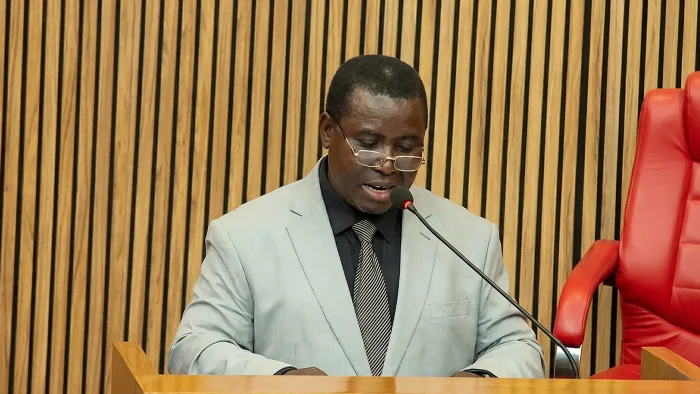
With less than three months to the May 30 deadline for the conduct of party primaries, including the resolution of disputes arising from primaries, the Independent National Electoral Commission (INEC) has warned political parties against conducting flawed primaries and allowing internal crises to fester, cautioning that such practices could jeopardise preparations for the 2027 General Election.
INEC Chairman, Prof. Joash Amupitan, gave the warning yesterday at the opening of a three-day Technical Review Workshop on the Regulations and Guidelines for Political Parties in Ikot Ekpene, Akwa Ibom State.
INEC further expressed commitment to ensuring its regulations and guidelines on political parties are enforced to the letter ahead of the party primaries, an exercise it noted comes with a deluge of intra-party fighting, crises, and the foisting of unpopular candidates, which it added result in either voter apathy or unnecessary litigations.
Amupitan said the 2026 guidelines will introduce stricter benchmarks for membership documentation, financial transparency, and the inclusion of women, youth, and persons with disabilities (PWDs).
He regretted that political parties, rather than being used as vehicles for national transformation, are currently witnessing a disturbing trend of leadership squabbles and infighting that threaten to turn them into theatres of permanent strife, saying the commission was ready to address the issues with the new guidelines.
He said a day spent defending these intra-party disputes in court “is a day diverted from the primary mandate of election planning.”
The workshop, supported by the Westminster Foundation for Democracy (WFD), is part of the Commission’s efforts to review and tighten its regulatory framework following the enactment of the Electoral Act 2026 and the release of the timetable for the 2027 polls. Primaries for the 2027 elections are scheduled to be held between April 23 and May 30, 2026, under the revised timetable.
“The quality of internal party democracy has a direct bearing on the credibility of the elections we conduct. Where candidates emerge through opaque processes, the consequences are voter disillusionment and an upsurge in pre-election court cases,” he said.
NNPP urges INEC to prioritise restoring public confidence over party disputes
THE National Working Committee (NWC) of the New Nigeria Peoples Party (NNPP) has said internal party disputes, while significant, are secondary to the larger crisis of public confidence in Nigeria’s electoral process. The party, while disagreeing with the INEC boss, urged the election body to focus on reforms that restore trust in the vote.
Speaking with journalists, NNPP National Publicity Secretary, Ladipo Johnson, acknowledged that legal battles arising from party infighting can strain INEC’s resources. However, he insisted that voter apathy driven by scepticism over electoral integrity poses a far greater threat to Nigerian democracy.
Johnson said: “While administrative hurdles are real, the greatest cause of voter apathy is not internal party friction; it is the widespread perception that INEC is complicit in subverting the will of the people. Until INEC demonstrates absolute transparency and proves it is an unbiased arbiter, no amount of internal party stability will bring Nigerians back to the polling units.”
Senator Victor Umeh of the Labour Party, representing Anambra Central, echoed the view, stressing that credible elections are essential to restoring citizens’ interest. “The Commission can only resurrect citizens’ interest in elections if it conducts credible elections. The public has lost confidence due to lack of transparency,” he said.
NNPP’s position underscores a growing concern among political stakeholders that strengthening internal party democracy, while important, must be complemented by transparent electoral processes to rebuild trust in Nigeria’s democracy.
Opposition in quandary over mandatory e-register
A week after INEC released the revised timetable for the 2027 general elections, opposition parties are racing against time over the mandatory electronic membership registration introduced under the Electoral Act 2026. This is just as the African Democratic Congress (ADC) warned that the new requirement could narrow the democratic space.
At the heart of the dispute is Section 77(4) and related provisions of the amended law, which mandate all registered political parties to submit their digital membership registers to INEC, not later than April 2, 2026, as a precondition for participating in the elections.
Under the law, political parties are required to maintain a digital register of members and submit it to INEC within a stipulated timeframe. Only individuals whose names appear in the submitted register can participate in party primaries, congresses or conventions.
Opposition leaders are now arguing that the timeline is too tight and the provisions too stringent, effectively placing hurdles before parties that may not have the same structural or financial capacity as the ruling party. ADC warned that with barely weeks to comply, the requirement risks shutting out smaller or less technologically prepared parties from the 2027 race.
Other opposition parties, including the Peoples Democratic Party (PDP) and the Labour Party (LP), have also expressed reservations over the implications of the new law.
Yesterday, the Inter-Party Advisory Council (IPAC), an umbrella body of political parties, convened a meeting to deliberate on the matter, amid growing anxiety across party lines. The outcome of the meeting was yet to be disclosed as of press time last night.
APC spokesman: Electoral Act was made by N’Assembly, not APC
BUT the ruling All Progressives Congress (APC) has urged opposition parties to stop attributing the provisions of the Electoral Act to the ruling party, insisting that the law is a national document created by a constitutionally recognised body, not a partisan tool.
Speaking during an interview on ARISE TV on Wednesday, the party’s National Publicity Secretary, Felix Morka, addressed what he described as the opposition’s “flawed” narrative.
Morka argued that the opposition’s habit of ascribing the actions of the National Assembly to the APC reveals a fundamental misunderstanding of how laws are made in a democratic setting. He emphasised that the legislative process is distinct from the party structure and that all political actors are bound by the same rules.
“The APC has no reason to intimidate anyone. The Electoral Act was promulgated by the NASS pursuant to its constitutional authority; the APC isn’t the National Assembly. We’re also affected by the Act’s mandatory e-register for parties. I don’t know where the opposition thinks we have an advantage or are skewing the process in our favour,” Morka stated.
The interview was prompted by recent complaints from opposition figures who have expressed concerns that the legislative majority held by the APC has resulted in a legal framework tilted against them. However, the APC spokesman dismissed these allegations, reiterating that his party is not the source of the legislation.
“We are not coercing, we are not intimidating, and we have no reason to coerce or intimidate anyone or any opposition party. Now, the Electoral Act was promulgated by the National Assembly, pursuant to its constitutional authority. The APC is not the National Assembly,” Morka said.
In a detailed defence of the legislative process, Morka explained that the National Assembly is a microcosm of the nation’s political diversity, housing representatives from various parties, adding that to claim that its output is solely the product of the APC is to ignore the reality of democratic representation.
Morka further challenged the opposition to specify where the alleged advantage lies, stressing that the APC is equally bound by the provisions of the Act, including those that may limit certain electoral options.
“The fact of the matter is that, you know, we, the APC, are affected like everyone else, all other political parties in the country. I don’t know where they think that the APC has an advantage or that the APC is doing something untoward to skew the process in its favour,” Morka said.
The party’s National Chairman, Nentawe Yilwatda, on the other hand, expressed satisfaction with the state of the opposition ahead of the 2027 elections, describing them as disorganised and unprepared.
Speaking on Wednesday at the national secretariat of the party in Abuja, Yilwatda welcomed the defection of Governor Fintiri of Adamawa State from the PDP to the APC. According to him, Fintiri’s experience and track record make him a valuable addition to the party.
On the opposition, he noted, “it is not our duty to organise the opposition. Their responsibility is to organise themselves. We are very happy if they can’t. Our duty is to ensure we win elections. APC has been winning across the country in by-elections and off-season elections. Nigerians love APC, and they love Mr President. We will continue to sustain the impact of the Renewal Agenda on the economy and people as we approach 2027.”
Regarding the visit of six ministers to the party secretariat on the same day, Yilwatda explained that it was aimed at ensuring synergy between the party and the executive.
Atiku engages South-East leaders ahead of ADC primaries
MEANWHILE, former Vice President Atiku Abubakar on Tuesday night held a closed-door meeting with key South-East political figures in Abuja, in what sources described as a strategic move to consolidate support ahead of the ADC presidential primaries.
The meeting, which combined an Iftar dinner with political consultations, signals Atiku’s early positioning within the party as it begins internal realignments ahead of the 2027 general elections. This is coming days after another chieftain of the party and former Minister of Transport, Rotimi Amaechi, was purportedly endorsed by the South-South leaders of the party.
Sources familiar with the discussions said talks centred on political collaboration, alliance-building and the South-East’s role in the ADC’s national strategy. Broader national issues, including unity, economic challenges and security concerns, were also reportedly discussed.
The gathering took place at the Abuja residence of Chikwe Udensi, an ADC chieftain and security expert, and attracted a cross-section of prominent Igbo political stakeholders.
Among those in attendance were Senator Augustine Akobundu, Chekwas Okorie, former Minister of State for Education, Emeka Nwajiuba; Dr Osita Oruche, Prof. Onyi Nwagbara, Uchenna Okogbuo, former ADC National Chairman, Ralph Nwosu; Uzoma Abonta, Uko Nkole, Etigwe Uwah (SAN); Dr Steve Nwadiuko, Dr Dave Eboh, Senator Frank Ibezim, and Morris Eboh, among others.
Atiku was accompanied by close associates, including Dr Kassim Ibrahim and Prof. Ahmadu Shehu, while some northern political figures were also said to have participated in the wider consultations. Party insiders described the engagement as crucial to shaping the ADC’s internal direction ahead of its primaries.
As of the time of filing this report, Atiku had not issued any public statement on the outcome of the meeting through his verified social media platforms.
-Guardian




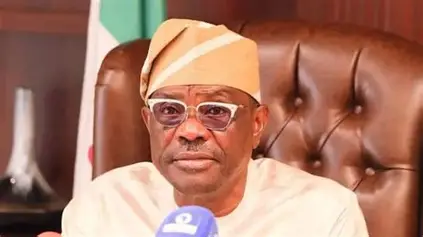
The Minister of the Federal Capital Territory, Nyesom Wike, has reiterated Nigeria’s commitment to strengthening its relationship with the European Union, while announcing steps to recover diplomatic lands in Abuja allegedly taken over by land grabbers.
Wike made this known on Thursday during a courtesy visit by the EU Ambassador to Nigeria and ECOWAS, Gautier Mignot, in Abuja.
“We will continue to engage EU member countries to further strengthen bilateral relations,” the minister said.
Addressing concerns over diplomatic land allocations, Wike disclosed that several plots originally designated for EU countries had been unlawfully occupied over the years. He noted that the FCT Administration has begun reclaiming such lands.
He added that the government would formally communicate with the affected countries to determine their continued interest in the properties and ensure rightful ownership is restored.
“We are writing to those countries. If they still intend to retain the lands, we are willing to return them. We will not allow land grabbers to take advantage,” Wike said.
The minister also commended the EU for its contributions to governance and justice sector reforms in the FCT, particularly in court digitalisation and improved justice delivery.
“I am aware of your support, especially in strengthening the administration and dispensation of justice. We will continue to partner with you to deepen these initiatives,” he added.
On requests for land allocation for local EU staff, Wike assured that applications would be considered based on due process, stressing that such processes must ultimately benefit the public.
He further addressed infrastructure concerns at the IBB Golf Club, confirming that a caretaker committee has been constituted, with rehabilitation works expected to commence soon.
In his remarks, Mignot described Nigeria as a key strategic partner for the EU, noting that both parties are entering a new phase of deeper engagement.
“The European Union remains one of Nigeria’s foremost trade and development partners. Our relationship is strong, mutually beneficial, and evolving into a more significant phase,” he said.
He highlighted ongoing EU-supported programmes in the FCT, including judicial reforms, court digitalisation, human rights initiatives, and support for victims of gender-based violence.
Mignot also invited the FCT minister to engage further with EU ambassadors to explore collaboration in areas such as waste management, urban planning, and water infrastructure.
Meanwhile, Wike recently ordered the demolition of buildings illegally constructed on land designated for foreign embassies in the diplomatic zone of Katampe Extension, Abuja.
He explained that the land, originally allocated on March 18, 2008, for residential use by diplomatic missions, was later encroached upon by an unauthorised developer who commenced construction without approval from the Federal Capital Development Authority.
The affected diplomatic missions include Thailand, Bulgaria, Syria, Somalia, Serbia and Montenegro, Japan, Austria, Switzerland, Senegal, and the Palestine Liberation Organisation.
-Leadership
News
Inspector-General Disu Submits 75-Page Framework On ‘State Police’ To Senate As Push Gains Momentum
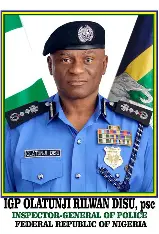
According to a statement issued on Thursday by Ismail Mudashir, Special Adviser on Media and Publicity to the Deputy Senate President, the document titled “A Comprehensive Framework for the Establishment, Governance and Coordination of Federal and State Police” was presented at Jibrin’s office within the National Assembly complex.
The Inspector-General of Police, Olatunji Disu, has submitted a 75-page framework on the establishment of State Police to the Deputy President of the Senate, Barau Jibrin, in a fresh move to advance decentralised policing in Nigeria.
According to a statement issued on Thursday by Ismail Mudashir, Special Adviser on Media and Publicity to the Deputy Senate President, the document titled “A Comprehensive Framework for the Establishment, Governance and Coordination of Federal and State Police” was presented at Jibrin’s office within the National Assembly complex.
The report was delivered on behalf of the IGP by Prof Olu Ogunsakin, who chairs the Nigeria Police Force committee set up to develop modalities for instituting State Police.
Disu said the document encapsulates the Force’s professional input following extensive consultations and a thorough evaluation of the legal, operational and administrative implications of decentralised policing.
“The report covers the considered views, professional insights and strategic recommendations of the Force, derived from extensive consultations and a careful assessment of the operational, legal and administrative implications of instituting State Police in Nigeria,” Disu said.
“It is our expectation that the contents of this report will meaningfully contribute to ongoing deliberations and assist in shaping informed, balanced, and pragmatic decisions on this critical aspect of national security architecture.”
The police chief noted that the framework has been formally submitted to the Senate Committee on the Review of the 1999 Constitution as the Nigeria Police Force’s official contribution to the ongoing constitutional amendment process.
Responding, Senator Jibrin commended the IGP for what he described as a proactive step aligned with the security agenda of Bola Ahmed Tinubu.
“The Deputy President of the Senate commended the IGP for his proactiveness on the establishment of State Police in line with President Bola Ahmed Tinubu’s agenda to fully secure the country,” the statement read.
He assured that the Senate Committee reviewing the Constitution would carefully examine the framework alongside other submissions as part of efforts to strengthen Nigeria’s legal foundation.
The proposed framework is expected to outline the operational structure, governance model, and coordination mechanisms between federal and state policing systems— marking a significant step in ongoing efforts to overhaul Nigeria’s security architecture.
SaharaReporters had earlier reported that Disu inaugurated an eight-member committee in March to drive the implementation of State Police, declaring that the reform was irreversible.
At the inauguration in Abuja, the IGP insisted that decentralised policing “has come to stay,” dismissing concerns that it could threaten the roles of existing police personnel.
“State Police has come to stay, and the police should be able to contribute their part in making it succeed. The police are not afraid, our jobs are not being taken,” he said.
He described the committee’s assignment as urgent and critical, giving members one month to submit their report amid rising security challenges across the country.
Disu stressed that the move towards State Police is aimed at strengthening internal security by bringing law enforcement closer to communities and enabling faster, more targeted responses to threats.
“Across the nation, we continue to confront evolving security challenges. These require innovative thinking, strategic collaboration, and the willingness to explore reforms,” he added.
The push for State Police has gained renewed momentum following President Tinubu’s assurance that the plan would not be shelved, urging stakeholders to support the initiative.
-Sahara
News
N1.54billion Settlement: Court Frees Ex-Minister Stella Oduah, Strikes Out Case Months After She Joined APC
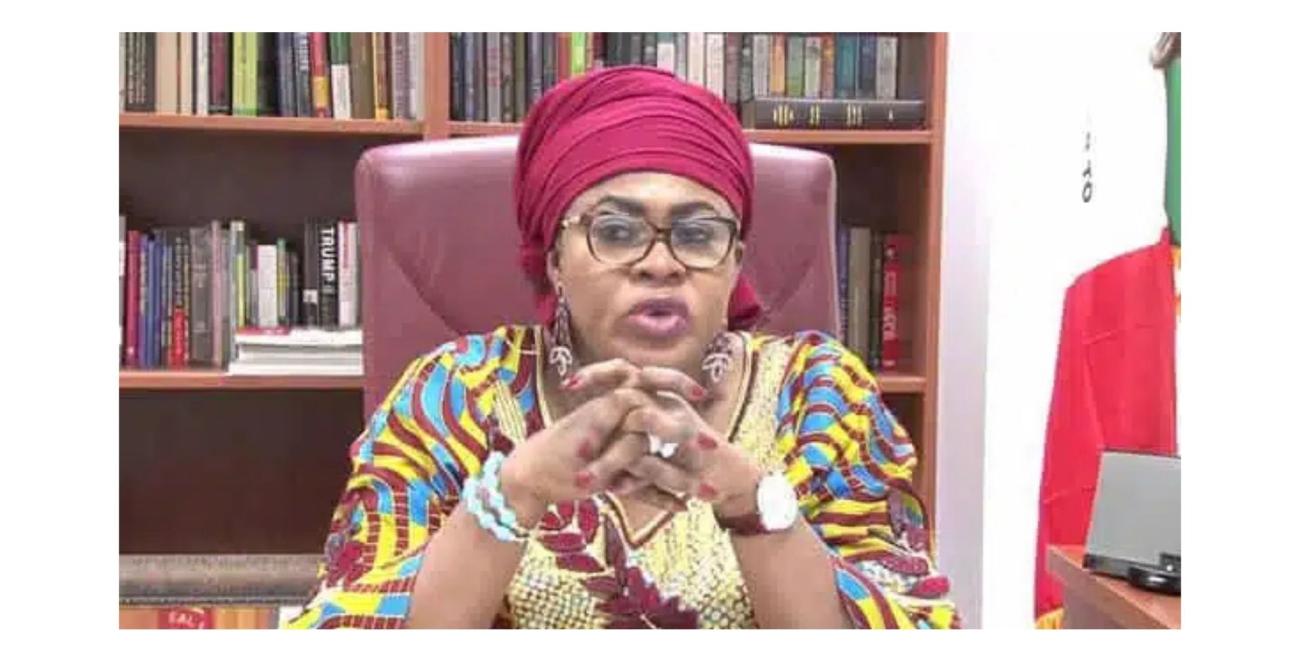
Justice Hamza Muazu struck out the case on Thursday after the prosecution informed the court that the value of the disputed funds had been returned.
Aformer Minister of Aviation, Stella Oduah, has been discharged by a Federal Capital Territory High Court in Abuja after the Nigerian government confirmed the recovery of funds linked to the fraud allegations against her, bringing an abrupt end to her prosecution.
Justice Hamza Muazu struck out the case on Thursday after the prosecution informed the court that the value of the disputed funds had been returned.
Oduah, who was standing trial alongside her former aide, Gloria Odita, had faced allegations tied to multi-billion naira transactions involving companies connected to the aviation ministry.
In his ruling, Justice Muazu declared, “The charge dated October 13, 2025, is hereby struck out, and the defendants are accordingly discharged.”
Earlier, the Director of Public Prosecution of the Federation, Rotimi Oyedepo (SAN), told the court he was acting on the directive of the Attorney-General of the Federation to confirm that the government had received restitution.
“I have the instruction of the Attorney-General of the Federation to inform your Lordship that the state confirms receipt of the value of the subject matter of this charge,” Oyedepo said.
Following the announcement, the prosecution amended the charge to retain only two companies, Sobora International Limited and Global Offshore Marine Limited, effectively removing Oduah and Odita as defendants.
The development comes amid earlier revelations by SaharaReporters that the resolution of the case may have been influenced by political considerations.
On March 8, 2026, SaharaReporters reported that the Tinubu Presidency allegedly “rewarded” Oduah’s defection to the ruling All Progressives Congress (APC) with a N1.54billion settlement arrangement in a broader N5billion fraud case, according to sources.
Oduah had entered into discussions with the Office of the Attorney-General of the Federation (AGF) over allegations involving the misappropriation of approximately N5billion in public funds.
She and Odita were initially arraigned on December 10, 2025, on a five-count charge filed by the AGF’s office over transactions that allegedly took place between January and February 2014 during her tenure as aviation minister under former President, Goodluck Jonathan.
The prosecution alleged that both defendants conspired to obtain about N2.46billion from the Federal Ministry of Aviation through companies, including Broad Waters Resource Nigeria Limited and Global Offshore Marine Limited, under the guise of providing technical supervision and security logistics services.
Specifically, prosecutors claimed that N839.7million was obtained through Broad Waters Resource Nigeria Limited, while N1.62billion was channelled through Global Offshore Marine Limited.
The funds were said to have been authorised under Oduah’s supervision, constituting offences punishable under the Advance Fee Fraud and Other Fraud-Related Offences Act 2006 and the Penal Code.
Sources had told SaharaReporters that the AGF, Lateef Fagbemi (SAN), proposed that Oduah pay N1.54 billion to resolve the matter—an arrangement described by insiders as politically motivated rather than a conventional plea bargain.
It was further alleged that the case was withdrawn from the Economic and Financial Crimes Commission (EFCC) to facilitate the process.
“In order to facilitate the fraudulent process, the AGF office took away the case from the EFCC,” a source privy to the matter said.
“The Tinubu Presidency decided to reward Stella Oduah for joining the APC. Contrary to reports in the media, the process is not a plea bargain, but a newly ready-made legal process designed to free politically connected individuals who are favoured by the President.”
Oduah had reportedly filed an application under Section 270 of the Administration of Criminal Justice Act (ACJA) 2015 to initiate plea discussions, prompting Justice Muazu to adjourn the matter to March 26, 2026, for a report on negotiations.
During earlier proceedings, Oyedepo had disclosed that the defendants were making efforts to refund the alleged proceeds.
“They have made moves to refund a certain amount of money into the government coffers,” Oyedepo told journalists. “What is left is the confirmation of receipt of the bank draft by the government.”
Her counsel, Onyechi Ikpeazu (SAN), and Odita’s lawyer had both confirmed that negotiations were ongoing at the time.
In June 2025, sources told SaharaReporters that the AGF had stalled the N5 billion case initially filed by the EFCC, allegedly due to Oduah’s political alignment with the ruling APC.
Oduah had defected from the Peoples Democratic Party (PDP) to the APC in August 2021 while representing Anambra North in the Senate.
Her tenure as aviation minister also drew criticism in 2013 after revelations that the Nigeria Civil Aviation Authority (NCAA) purchased two armoured BMW 760 Li vehicles for her at a cost exceeding N255million, despite funding constraints within the agency.
Officials had at the time raised concerns that critical aviation infrastructure and staff development were being neglected while funds were diverted for luxury acquisitions.
During the Thursday proceedings, Counsel to Oduah, Onyechi Ikpeazu (SAN), and Odita’s lawyer, Wale Balogun (SAN), urged the court to formally drop the charges against their clients, while the prosecution maintained they could still appear as representatives of the companies.
Justice Muazu clarified that no conviction would be recorded against the two women, noting that their roles were limited to representing the firms.
After a brief stand-down to resolve disagreements, both parties agreed that only the companies would remain as defendants.
The Nigerian government subsequently arraigned the firms on amended fraud charges.
According to the charge, Sobora International Limited allegedly held N838 million in 2015, funds suspected to have been illegally obtained from the Ministry of Aviation through ISEC Security Maintenance Limited.
Global Offshore Marine Limited was also accused of receiving N1.629 billion from the same source.
Oduah, appearing as a representative of the companies, pleaded guilty to the amended charges.
The court thereafter convicted the companies and ordered the restitution of N1.2 billion to the Nigerian Government, alongside the forfeiture of N780 million earlier recovered during investigations.
-Sahara

Wike Reaffirms Nigeria–EU Ties, Moves To Reclaim Encroached Diplomatic Lands

Inspector-General Disu Submits 75-Page Framework On ‘State Police’ To Senate As Push Gains Momentum

N1.54billion Settlement: Court Frees Ex-Minister Stella Oduah, Strikes Out Case Months After She Joined APC

5 Life Lessons from Manchester City EPL Current woes

Liverpool Announce Jürgen Klopp Return To The Club

MTN Teams Up With Meta To Boost WhatsApp Call Quality


-
 Health12 months ago
5 Life Lessons from Manchester City EPL Current woes
-
 Sports12 months ago
Liverpool Announce Jürgen Klopp Return To The Club
-
 Business12 months ago
MTN Teams Up With Meta To Boost WhatsApp Call Quality
-
 News12 months ago
Commonwealth Observers Prepare For Gabon Presidential Election
-

 Health12 months ago
Ponzi Scheme CEO Francis Uju Udoms of Addfx Case still Unresolved Despite SEC certification
-

 News12 months ago
Chibok Girls: 11 Years Of Anguish, Broken Promises
-
 News12 months ago
Wike’s Enviable Road Construction Method along Nyanya- Maraba Highway
-
 News9 months ago
NASRE Promises Support To Daily Times Group Business Editor, Oseni, Over Serious Road Accident