
News
State police committee resumes amid framework, abuse concerns

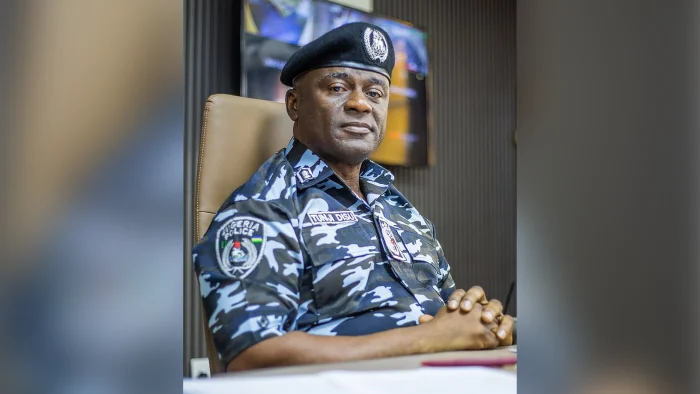
Amid worsening insecurity and growing elite consensus, Inspector-General of Police Olatunji Disu yesterday inaugurated a committee to examine the framework for state police, injecting fresh momentum into Nigeria’s long-delayed policing reform debate.
Despite mounting calls for decentralised policing, the push for state police has remained stalled for years, constrained by constitutional provisions that place policing exclusively under the Federal Government and by lingering fears that governors could abuse such powers for political ends.
However, Disu’s move has reopened the debate within the security establishment itself, even as stakeholders differ on whether the police should help shape the framework or leave the process entirely to constitutional amendment by the National Assembly and the states.
Speaking at the inauguration of the committee, Disu said Nigeria’s evolving security challenges require innovative thinking, strategic collaboration, and bold reforms to make policing more responsive to local realities while upholding the rule of law.
“It is my greatest privilege to formally inaugurate this Committee on State Policing. The task before this committee is both significant and timely, as it speaks directly to the demand to strengthen Nigeria’s internal security and ensure that policing remains responsive to the realities of our communities,” Disu said.
He stressed that the country’s security challenges require meaningful reforms to enhance operational capacity.
“Your work will help shape the framework through which state policing may operate in Nigeria in a manner that strengthens, rather than fragments, our national security system,” he added.
The IGP highlighted the potential benefits of decentralised policing if carefully designed and effectively implemented.
“By bringing law enforcement closer to the communities, state police institutions can deepen local knowledge of security dynamics and enable quicker and more targeted responses to emerging threats,” he said.
He noted that decentralising the police would enable state governments and local authorities to respond more efficiently to security challenges within their jurisdictions, while the Federal Government focuses on broader national security priorities.
Disu also reassured police personnel that the constitutional role of the Nigeria Police Force as the country’s primary national law enforcement institution would remain intact.
He said the federal police would increasingly focus on complex and transnational crimes such as terrorism, organised crime, cybercrime and trafficking networks that require national coordination and specialised capacity once state police structures become operational.
“The vision we seek is one of synergy, not competition; partnership, not duplication,” he said.
The IGP told the committee that Nigerians have high expectations regarding its assignment to develop a roadmap for the establishment of state police. He urged members to study how state policing operates in other countries in order to align the proposed framework with global best practices.
He also asked the committee to examine key issues such as funding sources for the proposed structure, as well as the professionalism, discipline and integrity required of the force.
Disu urged the members to approach their assignment with diligence, intellectual rigour and patriotism, noting that Nigerians are watching closely.
Also, speaking to State House correspondents after taking the oath of office as the 23rd IGP, Disu reaffirmed his support for the creation of state police, saying the policy “has come to stay”.
“We want to ensure that the best thing is done. State police has come to stay, and the police should be able to do their own part in making it succeed. The police are not afraid. Our jobs are not being taken. It’s just an issue of partnership,” he said.
Members of the committee include Commissioner of Police Bode Ojajuni (Secretary), Deputy Commissioner of Police Okebechi Agora, Deputy Commissioner of Police Suleiman Gulma, Assistant Commissioner of Police Ikechukwu Okafor, Chief Superintendent of Police Tolulope Ipinmisho, and retired Commissioner of Police Emmanuel Ojukwu, Provost of the Police Public Relations School.
THE clamour for state police had been caught between constitutional rigidity, political mistrust and fiscal concerns.
Under Section 214 of the 1999 Constitution, policing remains the exclusive preserve of the Federal Government through the Nigeria Police Force. The provision recognises only one police force for the federation, meaning any attempt to establish state-controlled police structures would require a constitutional amendment.
Such an amendment must secure two-thirds support in the National Assembly and approval from at least 24 state Houses of Assembly — a politically delicate threshold in a country sharply divided along regional and partisan lines.
Beyond the constitutional hurdles lies a deeper trust deficit. Opponents fear governors may weaponise state police against political rivals, particularly in states where democratic culture remains fragile. The experience of regional police formations during the First Republic, widely accused of partisanship, is frequently cited as a cautionary tale.
Funding is another sticking point. Several states are already burdened by salary arrears and pension liabilities. Critics question whether they can sustainably finance recruitment, training, equipment, forensic capacity and oversight frameworks without creating poorly resourced forces vulnerable to abuse.
However, the worsening security situation has strengthened the case for reform. Proponents argue that Nigeria’s centralised policing architecture is overstretched and too distant from local communities to gather actionable intelligence. They insist decentralisation would improve response times, strengthen community trust and enhance coordination with local vigilante groups.
OBSERVERS say the latest move by the IGP signals an institutional willingness within the policing hierarchy to engage with reform discussions rather than resist them outright.
However, the Yoruba socio-political group, Afenifere, expressed concern over whether the renewed push could be a ploy to gain cheap popularity and appeal to Nigerians desperate for reform.
Speaking with The Guardian yesterday, spokesman of Afenifere (the faction loyal to late Pa Ayo Adebanjo), Justice Faloye, said: “Let’s not be in a haste to dismiss the IGP’s committee, but at the same time, we hope it is not an election strategy.”
Faloye added that while Nigerians are yearning for state police, “let’s wait and see the draft the committee will come up with and pass through the IGP to Mr President for onward transmission to the National Assembly. I doubt if it is something that can be done in a hurry between now and 2027, considering the constitutional processes.”
While commending the IGP’s initiative, former Deputy National Chairman of the Peoples Democratic Party (PDP), Bode George, said: “For state police to materialise, the process must follow a structured path: constitutional amendment; clear delineation of federal and state policing powers; establishment of independent oversight commissions; guaranteed funding mechanisms insulated from political interference; and enforceable safeguards against abuse of power.
“President Bola Tinubu has indicated openness to restructuring discussions, but consensus across regions remains uneven, particularly among stakeholders wary of security fragmentation.
“Until constitutional amendments align with political trust, fiscal capacity and accountability safeguards, state police may remain more aspirational than operational. The newly inaugurated committee could mark a turning point, but only if it translates debate into actionable reform rather than another prolonged national conversation.”
The Nigeria Union of Journalists (NUJ) said the process is appropriate since state police would directly affect the existing police structure.
The National Secretary of the union, Achike Chude, said: “The IGP’s move is a natural response to public demand, and the existing police structure is required to make inputs if state police is to be achieved. I don’t see any politics in this.”
Questioning why the Federal Police is setting up a committee on state police, the Aare Ona Kakanfo of Yorubaland, Gani Adams, described the move as suspicious. He appealed to President Tinubu not to allow the central police to interfere in the creation of state police, warning that “else it will be counterproductive. I recall how, under the late General Sani Abacha’s military regime, attempts were made to bring the Federal Road Safety Corps (FRSC) under the central police, and that was what demystified the commission till today.”
He said the National Assembly should instead be allowed to perform its constitutional role of defining the responsibilities of federal and state police. Otherwise, if the central police assume that role, it could create confusion.
He, however, urged Nigerians to exercise patience and see what the committee will come up with.
Meanwhile, a lawyer and national security expert, Dr Charles Omole, said the confusion surrounding the eight-man committee set up by the IGP stemmed from the headline: “IGP Sets Up 8-Man Committee to Implement State Police.”
According to him, “No single police committee can implement state police in Nigeria. That is not possible.”
He explained that the IGP had merely constituted a committee to prepare a proposal on state police from the perspective of the Nigeria Police Force and submit it to him.
Omole recalled that several former IGPs, including the immediate past IGP, Kayode Egbetokun, had opposed the establishment of state police, arguing that Nigeria was not yet ready for it.
“To be frank, the eight-man committee cannot implement state police in Nigeria. However, whatever the committee comes up with will be a position paper, which the NPF will present during the all-inclusive government and stakeholders meeting to be led by the National Assembly,” he said.
He commended the IGP for taking a positive stance on state police, unlike his predecessors, who, according to him, did not consider it necessary.
For his part, Chief Jonathan Sunday Akuns, the Galadima of Daffo in Bokkos Local Council of Plateau State, argued that the issue of subnational security architecture is directly linked to provisions of the Constitution of the Federal Republic of Nigeria, which designate a state governor or council chairperson as the “chief security officer” (CSO) of a subnational jurisdiction.
He stated: “All that is required is to strengthen the constitutional provision by clearly defining the boundaries of what a CSO (Chief Security Officer) can do. It is up to the legislative branches of the subnational governments to enact jurisdiction-specific laws, not for any committee of the IGP to issue guidelines.
“Thus, the process should be a bottom-top approach that will trigger a reconciliation of criminal jurisdiction between the federal police service and those of the subnationals. While an amendment of the Constitution can be undertaken at any time, the current approach runs the risk of a soft abuse of parliamentary majority. The time frame for public submission of memoranda to the National Assembly for a review of the Constitution has elapsed. A central command approach to this matter is also a negation of true federalism.”
-Guardian








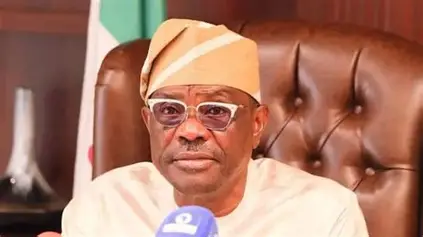
The Minister of the Federal Capital Territory, Nyesom Wike, has reiterated Nigeria’s commitment to strengthening its relationship with the European Union, while announcing steps to recover diplomatic lands in Abuja allegedly taken over by land grabbers.
Wike made this known on Thursday during a courtesy visit by the EU Ambassador to Nigeria and ECOWAS, Gautier Mignot, in Abuja.
“We will continue to engage EU member countries to further strengthen bilateral relations,” the minister said.
Addressing concerns over diplomatic land allocations, Wike disclosed that several plots originally designated for EU countries had been unlawfully occupied over the years. He noted that the FCT Administration has begun reclaiming such lands.
He added that the government would formally communicate with the affected countries to determine their continued interest in the properties and ensure rightful ownership is restored.
“We are writing to those countries. If they still intend to retain the lands, we are willing to return them. We will not allow land grabbers to take advantage,” Wike said.
The minister also commended the EU for its contributions to governance and justice sector reforms in the FCT, particularly in court digitalisation and improved justice delivery.
“I am aware of your support, especially in strengthening the administration and dispensation of justice. We will continue to partner with you to deepen these initiatives,” he added.
On requests for land allocation for local EU staff, Wike assured that applications would be considered based on due process, stressing that such processes must ultimately benefit the public.
He further addressed infrastructure concerns at the IBB Golf Club, confirming that a caretaker committee has been constituted, with rehabilitation works expected to commence soon.
In his remarks, Mignot described Nigeria as a key strategic partner for the EU, noting that both parties are entering a new phase of deeper engagement.
“The European Union remains one of Nigeria’s foremost trade and development partners. Our relationship is strong, mutually beneficial, and evolving into a more significant phase,” he said.
He highlighted ongoing EU-supported programmes in the FCT, including judicial reforms, court digitalisation, human rights initiatives, and support for victims of gender-based violence.
Mignot also invited the FCT minister to engage further with EU ambassadors to explore collaboration in areas such as waste management, urban planning, and water infrastructure.
Meanwhile, Wike recently ordered the demolition of buildings illegally constructed on land designated for foreign embassies in the diplomatic zone of Katampe Extension, Abuja.
He explained that the land, originally allocated on March 18, 2008, for residential use by diplomatic missions, was later encroached upon by an unauthorised developer who commenced construction without approval from the Federal Capital Development Authority.
The affected diplomatic missions include Thailand, Bulgaria, Syria, Somalia, Serbia and Montenegro, Japan, Austria, Switzerland, Senegal, and the Palestine Liberation Organisation.
-Leadership
News
Inspector-General Disu Submits 75-Page Framework On ‘State Police’ To Senate As Push Gains Momentum
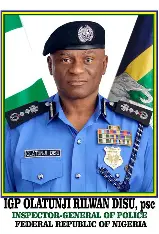
According to a statement issued on Thursday by Ismail Mudashir, Special Adviser on Media and Publicity to the Deputy Senate President, the document titled “A Comprehensive Framework for the Establishment, Governance and Coordination of Federal and State Police” was presented at Jibrin’s office within the National Assembly complex.
The Inspector-General of Police, Olatunji Disu, has submitted a 75-page framework on the establishment of State Police to the Deputy President of the Senate, Barau Jibrin, in a fresh move to advance decentralised policing in Nigeria.
According to a statement issued on Thursday by Ismail Mudashir, Special Adviser on Media and Publicity to the Deputy Senate President, the document titled “A Comprehensive Framework for the Establishment, Governance and Coordination of Federal and State Police” was presented at Jibrin’s office within the National Assembly complex.
The report was delivered on behalf of the IGP by Prof Olu Ogunsakin, who chairs the Nigeria Police Force committee set up to develop modalities for instituting State Police.
Disu said the document encapsulates the Force’s professional input following extensive consultations and a thorough evaluation of the legal, operational and administrative implications of decentralised policing.
“The report covers the considered views, professional insights and strategic recommendations of the Force, derived from extensive consultations and a careful assessment of the operational, legal and administrative implications of instituting State Police in Nigeria,” Disu said.
“It is our expectation that the contents of this report will meaningfully contribute to ongoing deliberations and assist in shaping informed, balanced, and pragmatic decisions on this critical aspect of national security architecture.”
The police chief noted that the framework has been formally submitted to the Senate Committee on the Review of the 1999 Constitution as the Nigeria Police Force’s official contribution to the ongoing constitutional amendment process.
Responding, Senator Jibrin commended the IGP for what he described as a proactive step aligned with the security agenda of Bola Ahmed Tinubu.
“The Deputy President of the Senate commended the IGP for his proactiveness on the establishment of State Police in line with President Bola Ahmed Tinubu’s agenda to fully secure the country,” the statement read.
He assured that the Senate Committee reviewing the Constitution would carefully examine the framework alongside other submissions as part of efforts to strengthen Nigeria’s legal foundation.
The proposed framework is expected to outline the operational structure, governance model, and coordination mechanisms between federal and state policing systems— marking a significant step in ongoing efforts to overhaul Nigeria’s security architecture.
SaharaReporters had earlier reported that Disu inaugurated an eight-member committee in March to drive the implementation of State Police, declaring that the reform was irreversible.
At the inauguration in Abuja, the IGP insisted that decentralised policing “has come to stay,” dismissing concerns that it could threaten the roles of existing police personnel.
“State Police has come to stay, and the police should be able to contribute their part in making it succeed. The police are not afraid, our jobs are not being taken,” he said.
He described the committee’s assignment as urgent and critical, giving members one month to submit their report amid rising security challenges across the country.
Disu stressed that the move towards State Police is aimed at strengthening internal security by bringing law enforcement closer to communities and enabling faster, more targeted responses to threats.
“Across the nation, we continue to confront evolving security challenges. These require innovative thinking, strategic collaboration, and the willingness to explore reforms,” he added.
The push for State Police has gained renewed momentum following President Tinubu’s assurance that the plan would not be shelved, urging stakeholders to support the initiative.
-Sahara
News
N1.54billion Settlement: Court Frees Ex-Minister Stella Oduah, Strikes Out Case Months After She Joined APC
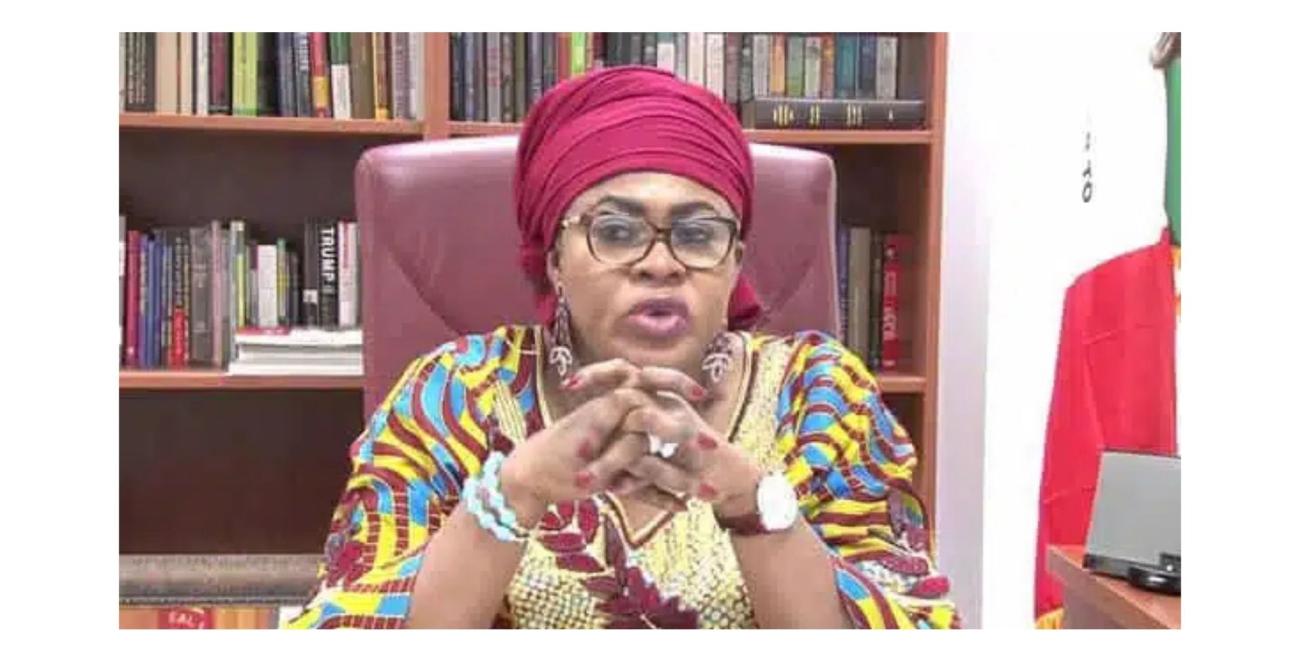
Justice Hamza Muazu struck out the case on Thursday after the prosecution informed the court that the value of the disputed funds had been returned.
Aformer Minister of Aviation, Stella Oduah, has been discharged by a Federal Capital Territory High Court in Abuja after the Nigerian government confirmed the recovery of funds linked to the fraud allegations against her, bringing an abrupt end to her prosecution.
Justice Hamza Muazu struck out the case on Thursday after the prosecution informed the court that the value of the disputed funds had been returned.
Oduah, who was standing trial alongside her former aide, Gloria Odita, had faced allegations tied to multi-billion naira transactions involving companies connected to the aviation ministry.
In his ruling, Justice Muazu declared, “The charge dated October 13, 2025, is hereby struck out, and the defendants are accordingly discharged.”
Earlier, the Director of Public Prosecution of the Federation, Rotimi Oyedepo (SAN), told the court he was acting on the directive of the Attorney-General of the Federation to confirm that the government had received restitution.
“I have the instruction of the Attorney-General of the Federation to inform your Lordship that the state confirms receipt of the value of the subject matter of this charge,” Oyedepo said.
Following the announcement, the prosecution amended the charge to retain only two companies, Sobora International Limited and Global Offshore Marine Limited, effectively removing Oduah and Odita as defendants.
The development comes amid earlier revelations by SaharaReporters that the resolution of the case may have been influenced by political considerations.
On March 8, 2026, SaharaReporters reported that the Tinubu Presidency allegedly “rewarded” Oduah’s defection to the ruling All Progressives Congress (APC) with a N1.54billion settlement arrangement in a broader N5billion fraud case, according to sources.
Oduah had entered into discussions with the Office of the Attorney-General of the Federation (AGF) over allegations involving the misappropriation of approximately N5billion in public funds.
She and Odita were initially arraigned on December 10, 2025, on a five-count charge filed by the AGF’s office over transactions that allegedly took place between January and February 2014 during her tenure as aviation minister under former President, Goodluck Jonathan.
The prosecution alleged that both defendants conspired to obtain about N2.46billion from the Federal Ministry of Aviation through companies, including Broad Waters Resource Nigeria Limited and Global Offshore Marine Limited, under the guise of providing technical supervision and security logistics services.
Specifically, prosecutors claimed that N839.7million was obtained through Broad Waters Resource Nigeria Limited, while N1.62billion was channelled through Global Offshore Marine Limited.
The funds were said to have been authorised under Oduah’s supervision, constituting offences punishable under the Advance Fee Fraud and Other Fraud-Related Offences Act 2006 and the Penal Code.
Sources had told SaharaReporters that the AGF, Lateef Fagbemi (SAN), proposed that Oduah pay N1.54 billion to resolve the matter—an arrangement described by insiders as politically motivated rather than a conventional plea bargain.
It was further alleged that the case was withdrawn from the Economic and Financial Crimes Commission (EFCC) to facilitate the process.
“In order to facilitate the fraudulent process, the AGF office took away the case from the EFCC,” a source privy to the matter said.
“The Tinubu Presidency decided to reward Stella Oduah for joining the APC. Contrary to reports in the media, the process is not a plea bargain, but a newly ready-made legal process designed to free politically connected individuals who are favoured by the President.”
Oduah had reportedly filed an application under Section 270 of the Administration of Criminal Justice Act (ACJA) 2015 to initiate plea discussions, prompting Justice Muazu to adjourn the matter to March 26, 2026, for a report on negotiations.
During earlier proceedings, Oyedepo had disclosed that the defendants were making efforts to refund the alleged proceeds.
“They have made moves to refund a certain amount of money into the government coffers,” Oyedepo told journalists. “What is left is the confirmation of receipt of the bank draft by the government.”
Her counsel, Onyechi Ikpeazu (SAN), and Odita’s lawyer had both confirmed that negotiations were ongoing at the time.
In June 2025, sources told SaharaReporters that the AGF had stalled the N5 billion case initially filed by the EFCC, allegedly due to Oduah’s political alignment with the ruling APC.
Oduah had defected from the Peoples Democratic Party (PDP) to the APC in August 2021 while representing Anambra North in the Senate.
Her tenure as aviation minister also drew criticism in 2013 after revelations that the Nigeria Civil Aviation Authority (NCAA) purchased two armoured BMW 760 Li vehicles for her at a cost exceeding N255million, despite funding constraints within the agency.
Officials had at the time raised concerns that critical aviation infrastructure and staff development were being neglected while funds were diverted for luxury acquisitions.
During the Thursday proceedings, Counsel to Oduah, Onyechi Ikpeazu (SAN), and Odita’s lawyer, Wale Balogun (SAN), urged the court to formally drop the charges against their clients, while the prosecution maintained they could still appear as representatives of the companies.
Justice Muazu clarified that no conviction would be recorded against the two women, noting that their roles were limited to representing the firms.
After a brief stand-down to resolve disagreements, both parties agreed that only the companies would remain as defendants.
The Nigerian government subsequently arraigned the firms on amended fraud charges.
According to the charge, Sobora International Limited allegedly held N838 million in 2015, funds suspected to have been illegally obtained from the Ministry of Aviation through ISEC Security Maintenance Limited.
Global Offshore Marine Limited was also accused of receiving N1.629 billion from the same source.
Oduah, appearing as a representative of the companies, pleaded guilty to the amended charges.
The court thereafter convicted the companies and ordered the restitution of N1.2 billion to the Nigerian Government, alongside the forfeiture of N780 million earlier recovered during investigations.
-Sahara

Wike Reaffirms Nigeria–EU Ties, Moves To Reclaim Encroached Diplomatic Lands

Inspector-General Disu Submits 75-Page Framework On ‘State Police’ To Senate As Push Gains Momentum

N1.54billion Settlement: Court Frees Ex-Minister Stella Oduah, Strikes Out Case Months After She Joined APC

5 Life Lessons from Manchester City EPL Current woes

Liverpool Announce Jürgen Klopp Return To The Club

MTN Teams Up With Meta To Boost WhatsApp Call Quality


-
 Health12 months ago
5 Life Lessons from Manchester City EPL Current woes
-
 Sports12 months ago
Liverpool Announce Jürgen Klopp Return To The Club
-
 Business12 months ago
MTN Teams Up With Meta To Boost WhatsApp Call Quality
-
 News12 months ago
Commonwealth Observers Prepare For Gabon Presidential Election
-

 Health12 months ago
Ponzi Scheme CEO Francis Uju Udoms of Addfx Case still Unresolved Despite SEC certification
-

 News12 months ago
Chibok Girls: 11 Years Of Anguish, Broken Promises
-
 News12 months ago
Wike’s Enviable Road Construction Method along Nyanya- Maraba Highway
-
 News9 months ago
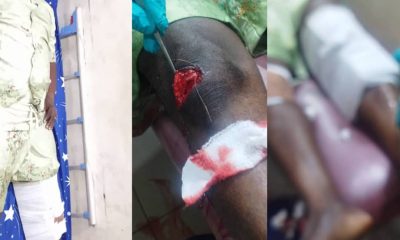
NASRE Promises Support To Daily Times Group Business Editor, Oseni, Over Serious Road Accident