
Education
Fed Govt Introduces N20m National Laureate Prize For Best Nigerian Theses

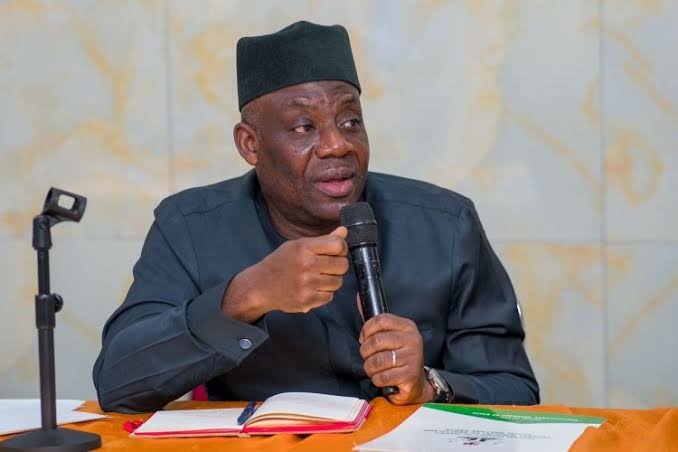
The federal government has introduced a National Laureate Prize with a top reward of N20 million for the best academic theses produced by Nigerian students.
The minister of Education, Dr Tunji Alausa, announced the initiative yesterday during the 2026 National Capacity Building Programme on the Implementation and Enforcement of the Nigeria Education Repository and Databank (NERD) Policy.
The programme was organised under the theme “Strengthening Institutional Compliance and Academic Records Integrity.”
Alausa said the new prize would recognise outstanding undergraduate, master’s and doctoral theses from Nigerian tertiary institutions, with awards ranging from N5 million to N20 million.
He disclosed that the maiden edition of the awards would be held in November 2026.
The minister explained that the initiative was part of the government’s broader efforts to promote academic excellence while strengthening the integrity of Nigeria’s education records through the NERD platform.
“To further promote academic excellence, I have approved the establishment of the NERD Annual National Laureate Prize and Awards Programme, which will reward outstanding Undergraduate, Master’s, and Doctoral theses with prizes ranging from N5 million to 20 million.
“The maiden edition will hold in November 2026,” he said.
The minister noted that NERD represents a strategic national infrastructure designed to secure, standardise, digitise and authenticate academic records across post-secondary and tertiary institutions in the country.
“With the approval of the Federal Executive Council, NERD was established as the digitisation vehicle of Nigeria’s education sector,” he said.
Alausa revealed that within four months of enforcement, the platform has already preserved nearly 100,000 digital student submissions that might otherwise have been lost.
He added that more than 350 universities, polytechnics, monotechnics and colleges of education have been onboarded for real-time credential verification, while over 133,000 students and more than 6,800 lecturers have enrolled on the platform.
The minister further disclosed that the initiative has also created economic opportunities through partnerships with Nigerian digital entrepreneurs.
According to him, NERD has established 1,060 digital service centres across the country, generating more than 3,000 direct jobs within four months.
Earlier, the Chief Executive Officer of the Nigeria Education Repository and Databank, Engr Olatunji Ariyomo, emphasised the critical role of data in governance and national development.
He said data remains the lifeblood of effective governance because it enables governments to understand challenges, design solutions and evaluate progress.
Ariyomo noted that countries that have preserved their educational and historical data over centuries have been able to build strong knowledge systems and national development strategies.
According to him, the NERD initiative places Nigeria firmly on the path of building a transparent, credible and globally respected academic record system.
He urged institutions, regulators and ICT leaders across the education sector to support the implementation of the platform, noting that its success depends on collective commitment.
-Leadership

The Academic Staff Union of Universities (ASUU) has issued a four-day ultimatum to the Federal Government, demanding the immediate implementation of a newly approved salary structure for university lecturers nationwide.
ASUU President, Christopher Piwuna, made this known on Thursday while delivering a speech at a public lecture held at Sa’adu Zungur University, Yuli Campus, in Bauchi.
“We have issued a four-day ultimatum from today to the Federal Government to begin the payment of the newly approved salary structure. Failure to comply will attract a strong response from the union,” he said.
The ASUU president noted that the demand forms part of broader efforts to improve the welfare of university lecturers and address long-standing concerns about poor remuneration, which he said has contributed to brain drain and declining standards in Nigeria’s higher education sector.

Analysts at Afrinvest West Africa have warned that Nigeria’s inflation trajectory may reverse its recent disinflation trend, with headline inflation projected to climb to about 16 per cent in the near term, driven by the ripple effects of the escalating Middle East crisis on energy and domestic prices.
This is as they stressed that without swift policy responses, rising energy costs could deepen cost-of-living pressures and erode recent gains in price stability.
However, the analysts noted that the decline was weaker than expected, largely due to a resurgence in food inflation, which rose by 3.2 percentage points year-on-year to 12.1 per cent, offsetting gains in core inflation, which declined by 1.8 percentage points to 15.9 per cent.
On a month-on-month basis, inflationary pressures showed renewed volatility, with headline inflation rising by 2.0 per cent in February, a sharp reversal from the deflationary reading of negative 2.9 per cent recorded in January.
Despite this, analysts cautioned that underlying price pressures remain elevated, particularly from persistently high food costs and structural bottlenecks across the economy.
Looking ahead, Afrinvest highlighted that developments in the Middle East pose significant upside risks to inflation. According to the firm, crude oil prices have surged to about $105 per barrel from $72.69 at the end of February, triggering a sharp increase in domestic energy costs.
The report noted that the spike has already translated into higher retail prices of petroleum products, with petrol rising to about N1,350 per litre, diesel to N1,650 per litre, and cooking gas to N1,400 per kilogram in several states.
“These increases are expected to cascade across transportation, logistics, healthcare and food prices,” the analysts said, adding that existing structural challenges such as inadequate power supply, poor road infrastructure and insecurity could further amplify inflationary pressures.
In its baseline scenario, Afrinvest projected that the pass-through effect of the energy shock could drive headline inflation up by about 150 basis points to 16.6 per cent year-on-year, while month-on-month inflation could spike to 5.2 per cent.
The firm warned that a prolonged crisis could derail the Federal Government’s target of reducing average inflation to 16.5 per cent in 2026 from 23.3 per cent recorded in 2025.
To mitigate the impact on households, Afrinvest urged the government to implement targeted interventions, including the rollout of affordable mass transit systems, healthcare subsidies for low-income earners, and the temporary suspension of tariffs and related charges on food imports and other essential commodities.
-Leadership
Stakeholders in Nigeria’s aviation sector have renewed calls for relocating the Boeing 737 Next Generation (B737NG) flight simulator currently housed at the Nigerian College of Aviation Technology (NCAT), Zaria, to Lagos.
They argued that the move would improve accessibility, reduce operational costs, and enhance the facility’s commercial viability.
In an interview , aviation expert, Engr. Frank Oruye said situating the simulator in Lagos, Nigeria’s busiest aviation hub, would significantly reduce the time pilots and engineers spend away from duty during mandatory simulator training.
According to him, global best practice dictates that commercial flight simulators are located close to major international airport hubs where airlines and aviation personnel can easily access them.
“The B737NG simulator is not commercially viable in its current location at NCAT, Zaria,” Oruye said. He continued, “Best practice globally is to site commercial flight simulators near international aviation hubs to attract more clients and maximise utilisation.”
He explained that relocating the simulator to Lagos would reduce travel logistics for airlines and aviation personnel, enabling them to complete required training with minimal disruption to flight operations.
“This minimises the duration of absence for simulator training and helps airlines cut costs associated with travel, accommodation and time away from operations,” he said.
“Running a Flight Simulator Centre is a highly competitive business and operators must ensure maximum patronage to remain viable.”
Oruye further noted that the use of flight simulators is not optional but a regulatory requirement designed to ensure that pilots and engineers maintain high levels of competence and safety.
“The service provided by the simulator is to meet statutory requirements in the training and competence testing of pilots and engineers,” he explained.
“The capital outlay for acquiring and maintaining a modern flight simulator is extremely high, which is why operators typically run them 24 hours a day to maximise returns on investment.”
He added that airlines usually book simulator slots months in advance and arrange the travel schedules of their crew members to attend training at specific times.
However, Oruye noted that the NCAT simulator’s location in Zaria poses logistical challenges, as the aerodrome is not connected to major commercial flight routes.
“Airlines have to secure training slots in advance and facilitate the movement of their crew to attend on schedule.
Unfortunately, Zaria Aerodrome is an off-line location with limited commercial flight connectivity, making it difficult and costly for clients to access the facility,” he said.
Industry analysts say relocating the simulator to Lagos could also position Nigeria as a regional training hub for West and Central African airlines, many of which currently send their pilots abroad for recurrent simulator training at significant cost.
They noted that improved utilisation of the simulator facility would not only generate revenue for NCAT but also help reduce the outflow of foreign exchange spent on overseas aviation training.
-Leadership

Wike Reaffirms Nigeria–EU Ties, Moves To Reclaim Encroached Diplomatic Lands

Inspector-General Disu Submits 75-Page Framework On ‘State Police’ To Senate As Push Gains Momentum

N1.54billion Settlement: Court Frees Ex-Minister Stella Oduah, Strikes Out Case Months After She Joined APC

5 Life Lessons from Manchester City EPL Current woes

Liverpool Announce Jürgen Klopp Return To The Club

MTN Teams Up With Meta To Boost WhatsApp Call Quality


-
 Health12 months ago
5 Life Lessons from Manchester City EPL Current woes
-
 Sports12 months ago
Liverpool Announce Jürgen Klopp Return To The Club
-
 Business12 months ago
MTN Teams Up With Meta To Boost WhatsApp Call Quality
-

 News12 months ago
Commonwealth Observers Prepare For Gabon Presidential Election
-

 Health12 months ago
Ponzi Scheme CEO Francis Uju Udoms of Addfx Case still Unresolved Despite SEC certification
-

 News12 months ago
Chibok Girls: 11 Years Of Anguish, Broken Promises
-

 News12 months ago
Wike’s Enviable Road Construction Method along Nyanya- Maraba Highway
-

 News9 months ago
NASRE Promises Support To Daily Times Group Business Editor, Oseni, Over Serious Road Accident