
News
US-ISRAEL WAR WITH IRAN: Motorists, Commuters Lament As Petrol Price Hits N1,250/Litre

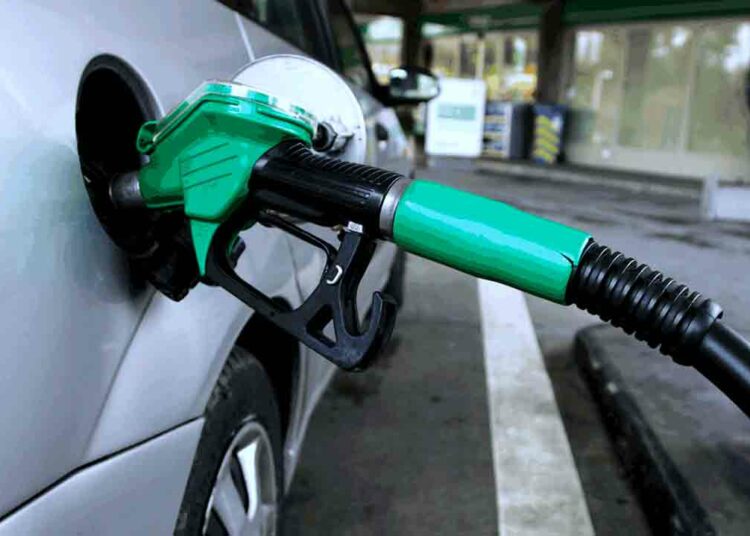
Petrol prices reached N1,250 per litre in Lagos on Monday, driven by supply issues arising from the Middle East conflict, prompting complaints from motorists and commuters.
The price increase at filling stations followed the Dangote Petroleum Refinery again increasing the price of petrol, the third upward adjustment within a week.
Dangote Refinery announced the price hike to marketers on Monday, raising the gantry price of Premium Motor Spirit (PMS), also called petrol, to N1,175 per litre from N995 per litre announced on Friday.
This represents an increase of N180, or about 18.1 per cent, within three days.
The refinery equally revised the gantry price of Automotive Gas Oil (AGO), commonly known as diesel, to N1,620 per litre.
Brent crude hit $98.96 per barrel, while the naira traded at N1,650 to the dollar.
Nigeria imports much of its refined fuel despite Dangote Refinery’s output. A refinery spokesperson attributed the adjustment to higher feedstock and logistics costs.
Recently, the refinery increased its PMS price to N995 per litre, up from N874 at the weekend, a hike that has pushed fuel pump prices above N1,000 per litre nationwide.
The adjustment has raised transportation fares in parts of the country.
In Nigeria, the development has triggered an immediate rise in petrol prices, with PMS now selling for about N1,175 per litre at Dangote Refinery, while Pinnacle reportedly sells at about N1,200 per litre.
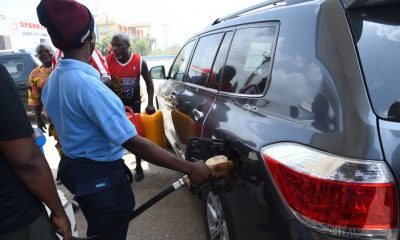
Following the increment, petrol prices at filling stations have climbed to between N1,200 and N1,250 per litre depending on location.
MRS sells at about N1,250 per litre, Matrix Petroleum at N1,250 per litre, while AP sells at around N1,200 per litre.
In Abuja, LEADERSHIP’s checks showed that the ex-depot price increase was yet to reflect in pump prices at the time of filing this report.
For instance, at the NNPC Limited station at Aleta, opposite Shoprite along Airport Road in Lugbe, petrol was selling at N1,081 per litre, with no queue observed at the time of the visit.
Another NNPC station in Kubwa, Abuja, also confirmed that petrol was sold at N1,081 per litre.
At the TotalEnergies filling station located inside the Federal Housing Authority Estate in Lugbe, petrol was sold at N1,075 per litre. However, a normal queue of vehicles was observed at the station.
Meanwhile, the MRS Oil Nigeria Plc station in Lugbe was not dispensing fuel at the time of the visit.
Attendants said the station had earlier sold petrol at about N1,100 per litre in the afternoon, but sales had stopped for the day.
The price adjustments coincided with a rally in international crude oil benchmarks. As of 1:00 pm WAT, Brent crude was trading at about $102.8 per barrel, up 10.9 per cent, while West Texas Intermediate crude stood at around $101.0 per barrel, up 11.1 per cent.
Market participants said pricing decisions by the Dangote refinery often set the tone for depot prices across major fuel distribution hubs in Nigeria.
Marketers are therefore expected to adjust their pricing strategies in response to the new gantry rates.
Analysts warned that the development could trigger a ripple effect across the downstream sector, as depot operators and fuel marketers recalibrate supply costs in line with the revised prices announced by the country’s largest refining facility.
The latest increase has pushed transportation costs up by about 20 per cent in parts of Lagos and Ogun States.
For instance, transport fare from Oju-Ore in Ota, Ogun State, to Agege in Lagos has increased from N1,000 to N1,200, while the fare from Ikeja to Oshodi has risen from N300 to N500.
Commuters have expressed frustration over the fare hikes, noting that the increase has forced them to spend more on daily transportation as motorists adjust prices.
Speaking, a commuter on the Oju-Ore to Agege route, Idris Akanni, complained that he might be forced to walk to his destination as the sudden increment caught him unaware.
According to Akanni, his return fare has increased by over 20 per cent even though his income has remained the same.
“I am currently stranded and do not know how I will get to my destination. I have spent over 20 per cent above my daily transport fare. I just hope transportation to my house will not be like what I experienced in Lagos.”
Also speaking, a teacher in a government-owned secondary school in Lagos, Akinlabi Olajide, called for the reintroduction of subsidy by the government.
He argued that since the government is earning more revenue from crude oil sales, it should subsidise petroleum products to cushion the effect on Nigerians and help curb inflation.
“Now, government has so much money from crude sales; they should subsidise that by creating buffers for the citizens,” he stated.
FG Weighing Policy Options—Edun
The Federal Government has said it is closely monitoring the impact of the escalating crisis in the Middle East on Nigeria’s economy, particularly the rising cost of petrol in the domestic market.
The media aide to the Minister of Finance and Coordinating Minister of the Economy, Mr Wale Edun, Dr Ogho Okiti, disclosed this in response to enquiries by LEADERSHIP on the policy options being considered by the government as global oil market tensions intensify.
Okiti said the government was carefully studying developments in the region and their possible implications for Nigeria’s energy prices and broader economic stability.
“As a responsible government, we continue to monitor the impact of the growing crisis in the Middle East on the Nigerian economy and Nigerians,” he said.
Global oil prices have been under pressure in recent weeks following heightened geopolitical tensions in the region, particularly the ongoing war involving Iran, which has raised concerns about possible disruptions to crude supply and shipping routes.
The development has contributed to volatility in international crude markets and has also pushed up the cost of refined petroleum products in several countries, including Nigeria, which relies heavily on imported fuel despite being a major crude oil producer.
Okiti noted that the Federal Government was examining a range of policy responses that could help cushion the impact of the external shock on Nigerians.
“This means that the government is looking at different policy options. We will be able to share them when we have a firm direction,” he added.
His remarks suggest that economic managers are evaluating possible interventions to address the pressure on fuel prices while balancing fiscal realities following the removal of petrol subsidy in 2023.
The Federal Government has repeatedly emphasised the need to strengthen domestic refining capacity and diversify energy sources as part of efforts to reduce vulnerability to external shocks in the global oil market.
Petrol May Hit N2,000 per Litre Amid Refinery Price Hike, PETROAN Warns
The Petroleum Products Retail Outlets Owners Association of Nigeria (PETROAN) has warned that petrol prices could surge to nearly N2,000 per litre if current trends persist.
This follows Dangote Refinery and Petrochemicals’ hike in the price of Premium Motor Spirit (PMS) to N1,175 per litre from N995 on Monday.
PETROAN urged the Nigerian National Petroleum Company Limited (NNPC Ltd) to urgently boost domestic refining capacity to insulate Nigeria from global petroleum market shocks.
PETROAN president, Dr Billy Gillis-Harry, said: “PMS could rise close to N2,000 per litre while AGO may approach N3,000 per litre if the situation persists.”
PETROAN specifically called on NNPC Group CEO Engr Bayo Ojulari to restart production at local refineries, including the Area 5 Plant at Port Harcourt and the Warri Refinery, which operated briefly before shutting down for profitability assessments.
Dr Harry linked the volatility to the Israel-US-Iran conflict, with drone and missile attacks disrupting oil routes and supply chains. Before the crisis, he noted, petrol sold at N774 per litre (now over N1,000, up 30 per cent) and diesel (AGO) at N950 (now N1,400+, up 49 per cent).
He stressed the need to rehabilitate government refineries to leverage Nigeria’s crude reserves under NNPC custody, making them less vulnerable than import-reliant private ones.
Continued hikes, he warned, would fuel inflation, job losses, economic hardship, higher transport costs and pricier goods—PMS powers daily mobility, while AGO powers industry.
Dr Harry lauded President Bola Ahmed Tinubu’s oil and gas reforms, urging him to order immediate refinery restarts for citizen relief and economic stimulus.
However, analysts have warned that while Nigeria may benefit from higher crude oil prices in the short term, the domestic economy—particularly the manufacturing sector—could face severe cost pressures driven by expensive energy.
The analysts noted that the unfolding geopolitical crisis could add another layer of pressure to an already fragile production environment.
They argued that Nigerian manufacturers are already grappling with rising fuel and logistics costs.
Speaking to LEADERSHIP, the chief executive officer of the Centre for the Promotion of Private Enterprise (CPPE) warned that geopolitical tensions in the Middle East typically trigger volatility in global oil prices, especially because the Strait of Hormuz handles about 20 per cent of global crude oil shipments daily.
According to Yusuf, any disruption or perceived risk to the strategic shipping corridor immediately pushes up oil prices, shipping costs and insurance premiums globally.
While higher oil prices could boost Nigeria’s export earnings and government revenues, manufacturers at home are already grappling with the downside of the energy shock.
“Nigeria operates a deregulated downstream petroleum regime. Higher international crude prices feed directly into higher petrol, diesel and aviation fuel costs,” Yusuf said.
For manufacturers, the implication is immediate and severe. Most factories rely heavily on diesel to power production due to persistent electricity supply challenges. As diesel prices rise in response to global oil market volatility, production costs increase sharply.
Industry operators say energy already accounts for a significant share of manufacturing costs in Nigeria, sometimes exceeding 30 to 40 per cent for energy-intensive industries such as cement, food processing, plastics, steel and chemicals.
The CPPE warned that higher energy prices will trigger a chain reaction across the economy.
Rising diesel and petrol prices will increase transportation and logistics costs, pushing up the cost of moving raw materials to factories and finished goods to markets. Food distribution expenses are also expected to climb, further worsening inflationary pressures.
As manufacturers absorb higher energy and logistics costs, profit margins are likely to shrink, forcing many firms to increase product prices or scale down production. Yusuf noted that sectors such as manufacturing, aviation, logistics and consumer goods could face margin compression as operating expenses escalate.
“With purchasing power already fragile, sustained increases in fuel prices could intensify cost-of-living pressures and deepen poverty levels,” he warned.
The situation presents a paradox for Nigeria. While higher crude oil prices may increase foreign exchange inflows, strengthen external reserves and boost government revenues, the same development could worsen inflation and erode household welfare.
CPPE also pointed out that Nigeria may not fully maximise the revenue gains from higher oil prices due to production constraints. The country’s crude output currently fluctuates between about 1.4 million and 1.6 million barrels per day—below installed capacity—largely due to oil theft, pipeline vandalism and underinvestment in upstream infrastructure.
Beyond the energy cost shock, the conflict could also trigger broader global economic risks, including rising shipping insurance premiums, supply chain disruptions and capital flight from emerging markets.
To mitigate the economic impact, CPPE called on the government to strengthen oil production capacity, build fiscal buffers from any windfall revenue and accelerate domestic refining capacity to reduce reliance on imported petroleum products.
The organisation also urged authorities to sustain reforms in the foreign exchange market, implement targeted social protection for vulnerable households and fast-track economic diversification.
“The Iran-U.S.-Israel conflict represents a classic double-edged shock for Nigeria..
“Higher oil prices may strengthen fiscal balances in the short term, but inflationary pressures and rising production costs pose significant risks to businesses and household welfare,” Yusuf said.
-Leadership

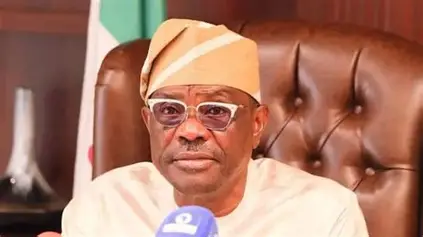
The Minister of the Federal Capital Territory, Nyesom Wike, has reiterated Nigeria’s commitment to strengthening its relationship with the European Union, while announcing steps to recover diplomatic lands in Abuja allegedly taken over by land grabbers.
Wike made this known on Thursday during a courtesy visit by the EU Ambassador to Nigeria and ECOWAS, Gautier Mignot, in Abuja.
“We will continue to engage EU member countries to further strengthen bilateral relations,” the minister said.
Addressing concerns over diplomatic land allocations, Wike disclosed that several plots originally designated for EU countries had been unlawfully occupied over the years. He noted that the FCT Administration has begun reclaiming such lands.
He added that the government would formally communicate with the affected countries to determine their continued interest in the properties and ensure rightful ownership is restored.
“We are writing to those countries. If they still intend to retain the lands, we are willing to return them. We will not allow land grabbers to take advantage,” Wike said.
The minister also commended the EU for its contributions to governance and justice sector reforms in the FCT, particularly in court digitalisation and improved justice delivery.
“I am aware of your support, especially in strengthening the administration and dispensation of justice. We will continue to partner with you to deepen these initiatives,” he added.
On requests for land allocation for local EU staff, Wike assured that applications would be considered based on due process, stressing that such processes must ultimately benefit the public.
He further addressed infrastructure concerns at the IBB Golf Club, confirming that a caretaker committee has been constituted, with rehabilitation works expected to commence soon.
In his remarks, Mignot described Nigeria as a key strategic partner for the EU, noting that both parties are entering a new phase of deeper engagement.
“The European Union remains one of Nigeria’s foremost trade and development partners. Our relationship is strong, mutually beneficial, and evolving into a more significant phase,” he said.
He highlighted ongoing EU-supported programmes in the FCT, including judicial reforms, court digitalisation, human rights initiatives, and support for victims of gender-based violence.
Mignot also invited the FCT minister to engage further with EU ambassadors to explore collaboration in areas such as waste management, urban planning, and water infrastructure.
Meanwhile, Wike recently ordered the demolition of buildings illegally constructed on land designated for foreign embassies in the diplomatic zone of Katampe Extension, Abuja.
He explained that the land, originally allocated on March 18, 2008, for residential use by diplomatic missions, was later encroached upon by an unauthorised developer who commenced construction without approval from the Federal Capital Development Authority.
The affected diplomatic missions include Thailand, Bulgaria, Syria, Somalia, Serbia and Montenegro, Japan, Austria, Switzerland, Senegal, and the Palestine Liberation Organisation.
-Leadership
News
Inspector-General Disu Submits 75-Page Framework On ‘State Police’ To Senate As Push Gains Momentum
According to a statement issued on Thursday by Ismail Mudashir, Special Adviser on Media and Publicity to the Deputy Senate President, the document titled “A Comprehensive Framework for the Establishment, Governance and Coordination of Federal and State Police” was presented at Jibrin’s office within the National Assembly complex.
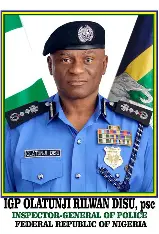
The Inspector-General of Police, Olatunji Disu, has submitted a 75-page framework on the establishment of State Police to the Deputy President of the Senate, Barau Jibrin, in a fresh move to advance decentralised policing in Nigeria.
According to a statement issued on Thursday by Ismail Mudashir, Special Adviser on Media and Publicity to the Deputy Senate President, the document titled “A Comprehensive Framework for the Establishment, Governance and Coordination of Federal and State Police” was presented at Jibrin’s office within the National Assembly complex.
The report was delivered on behalf of the IGP by Prof Olu Ogunsakin, who chairs the Nigeria Police Force committee set up to develop modalities for instituting State Police.
Disu said the document encapsulates the Force’s professional input following extensive consultations and a thorough evaluation of the legal, operational and administrative implications of decentralised policing.
“The report covers the considered views, professional insights and strategic recommendations of the Force, derived from extensive consultations and a careful assessment of the operational, legal and administrative implications of instituting State Police in Nigeria,” Disu said.
“It is our expectation that the contents of this report will meaningfully contribute to ongoing deliberations and assist in shaping informed, balanced, and pragmatic decisions on this critical aspect of national security architecture.”
The police chief noted that the framework has been formally submitted to the Senate Committee on the Review of the 1999 Constitution as the Nigeria Police Force’s official contribution to the ongoing constitutional amendment process.
Responding, Senator Jibrin commended the IGP for what he described as a proactive step aligned with the security agenda of Bola Ahmed Tinubu.
“The Deputy President of the Senate commended the IGP for his proactiveness on the establishment of State Police in line with President Bola Ahmed Tinubu’s agenda to fully secure the country,” the statement read.
He assured that the Senate Committee reviewing the Constitution would carefully examine the framework alongside other submissions as part of efforts to strengthen Nigeria’s legal foundation.
The proposed framework is expected to outline the operational structure, governance model, and coordination mechanisms between federal and state policing systems— marking a significant step in ongoing efforts to overhaul Nigeria’s security architecture.
SaharaReporters had earlier reported that Disu inaugurated an eight-member committee in March to drive the implementation of State Police, declaring that the reform was irreversible.
At the inauguration in Abuja, the IGP insisted that decentralised policing “has come to stay,” dismissing concerns that it could threaten the roles of existing police personnel.
“State Police has come to stay, and the police should be able to contribute their part in making it succeed. The police are not afraid, our jobs are not being taken,” he said.
He described the committee’s assignment as urgent and critical, giving members one month to submit their report amid rising security challenges across the country.
Disu stressed that the move towards State Police is aimed at strengthening internal security by bringing law enforcement closer to communities and enabling faster, more targeted responses to threats.
“Across the nation, we continue to confront evolving security challenges. These require innovative thinking, strategic collaboration, and the willingness to explore reforms,” he added.
The push for State Police has gained renewed momentum following President Tinubu’s assurance that the plan would not be shelved, urging stakeholders to support the initiative.
-Sahara
News
N1.54billion Settlement: Court Frees Ex-Minister Stella Oduah, Strikes Out Case Months After She Joined APC
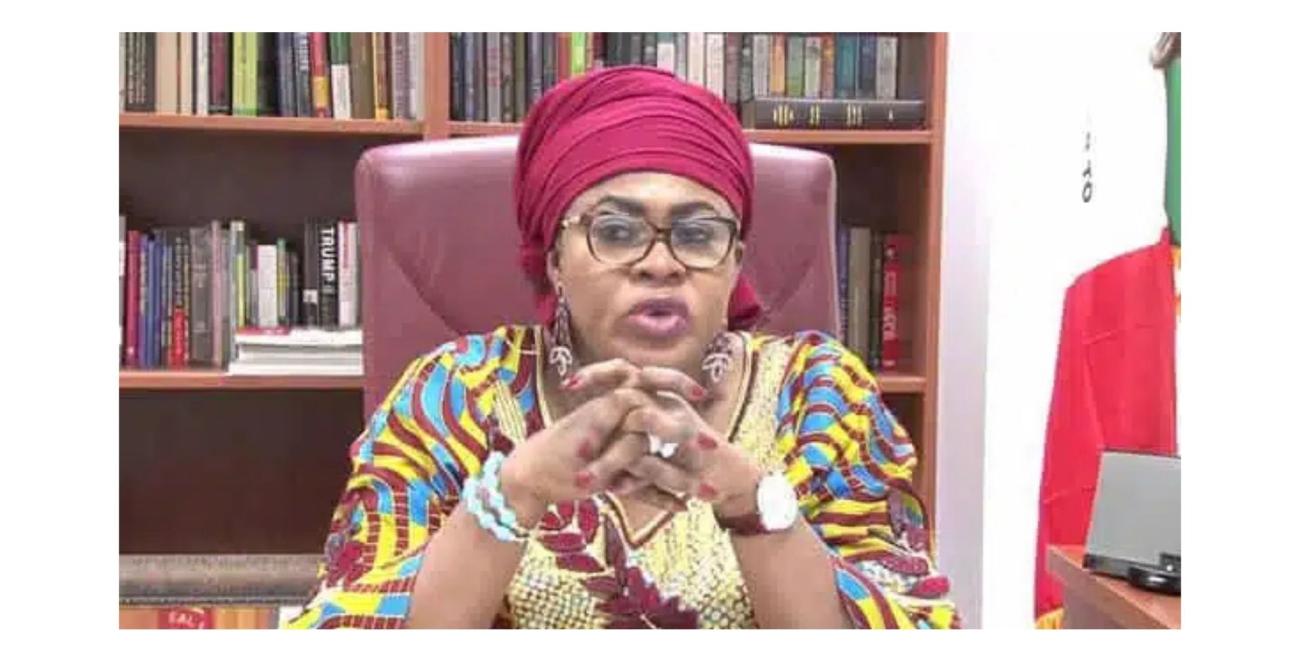
Justice Hamza Muazu struck out the case on Thursday after the prosecution informed the court that the value of the disputed funds had been returned.
Aformer Minister of Aviation, Stella Oduah, has been discharged by a Federal Capital Territory High Court in Abuja after the Nigerian government confirmed the recovery of funds linked to the fraud allegations against her, bringing an abrupt end to her prosecution.
Justice Hamza Muazu struck out the case on Thursday after the prosecution informed the court that the value of the disputed funds had been returned.
Oduah, who was standing trial alongside her former aide, Gloria Odita, had faced allegations tied to multi-billion naira transactions involving companies connected to the aviation ministry.
In his ruling, Justice Muazu declared, “The charge dated October 13, 2025, is hereby struck out, and the defendants are accordingly discharged.”
Earlier, the Director of Public Prosecution of the Federation, Rotimi Oyedepo (SAN), told the court he was acting on the directive of the Attorney-General of the Federation to confirm that the government had received restitution.
“I have the instruction of the Attorney-General of the Federation to inform your Lordship that the state confirms receipt of the value of the subject matter of this charge,” Oyedepo said.
Following the announcement, the prosecution amended the charge to retain only two companies, Sobora International Limited and Global Offshore Marine Limited, effectively removing Oduah and Odita as defendants.
The development comes amid earlier revelations by SaharaReporters that the resolution of the case may have been influenced by political considerations.
On March 8, 2026, SaharaReporters reported that the Tinubu Presidency allegedly “rewarded” Oduah’s defection to the ruling All Progressives Congress (APC) with a N1.54billion settlement arrangement in a broader N5billion fraud case, according to sources.
Oduah had entered into discussions with the Office of the Attorney-General of the Federation (AGF) over allegations involving the misappropriation of approximately N5billion in public funds.
She and Odita were initially arraigned on December 10, 2025, on a five-count charge filed by the AGF’s office over transactions that allegedly took place between January and February 2014 during her tenure as aviation minister under former President, Goodluck Jonathan.
The prosecution alleged that both defendants conspired to obtain about N2.46billion from the Federal Ministry of Aviation through companies, including Broad Waters Resource Nigeria Limited and Global Offshore Marine Limited, under the guise of providing technical supervision and security logistics services.
Specifically, prosecutors claimed that N839.7million was obtained through Broad Waters Resource Nigeria Limited, while N1.62billion was channelled through Global Offshore Marine Limited.
The funds were said to have been authorised under Oduah’s supervision, constituting offences punishable under the Advance Fee Fraud and Other Fraud-Related Offences Act 2006 and the Penal Code.
Sources had told SaharaReporters that the AGF, Lateef Fagbemi (SAN), proposed that Oduah pay N1.54 billion to resolve the matter—an arrangement described by insiders as politically motivated rather than a conventional plea bargain.
It was further alleged that the case was withdrawn from the Economic and Financial Crimes Commission (EFCC) to facilitate the process.
“In order to facilitate the fraudulent process, the AGF office took away the case from the EFCC,” a source privy to the matter said.
“The Tinubu Presidency decided to reward Stella Oduah for joining the APC. Contrary to reports in the media, the process is not a plea bargain, but a newly ready-made legal process designed to free politically connected individuals who are favoured by the President.”
Oduah had reportedly filed an application under Section 270 of the Administration of Criminal Justice Act (ACJA) 2015 to initiate plea discussions, prompting Justice Muazu to adjourn the matter to March 26, 2026, for a report on negotiations.
During earlier proceedings, Oyedepo had disclosed that the defendants were making efforts to refund the alleged proceeds.
“They have made moves to refund a certain amount of money into the government coffers,” Oyedepo told journalists. “What is left is the confirmation of receipt of the bank draft by the government.”
Her counsel, Onyechi Ikpeazu (SAN), and Odita’s lawyer had both confirmed that negotiations were ongoing at the time.
In June 2025, sources told SaharaReporters that the AGF had stalled the N5 billion case initially filed by the EFCC, allegedly due to Oduah’s political alignment with the ruling APC.
Oduah had defected from the Peoples Democratic Party (PDP) to the APC in August 2021 while representing Anambra North in the Senate.
Her tenure as aviation minister also drew criticism in 2013 after revelations that the Nigeria Civil Aviation Authority (NCAA) purchased two armoured BMW 760 Li vehicles for her at a cost exceeding N255million, despite funding constraints within the agency.
Officials had at the time raised concerns that critical aviation infrastructure and staff development were being neglected while funds were diverted for luxury acquisitions.
During the Thursday proceedings, Counsel to Oduah, Onyechi Ikpeazu (SAN), and Odita’s lawyer, Wale Balogun (SAN), urged the court to formally drop the charges against their clients, while the prosecution maintained they could still appear as representatives of the companies.
Justice Muazu clarified that no conviction would be recorded against the two women, noting that their roles were limited to representing the firms.
After a brief stand-down to resolve disagreements, both parties agreed that only the companies would remain as defendants.
The Nigerian government subsequently arraigned the firms on amended fraud charges.
According to the charge, Sobora International Limited allegedly held N838 million in 2015, funds suspected to have been illegally obtained from the Ministry of Aviation through ISEC Security Maintenance Limited.
Global Offshore Marine Limited was also accused of receiving N1.629 billion from the same source.
Oduah, appearing as a representative of the companies, pleaded guilty to the amended charges.
The court thereafter convicted the companies and ordered the restitution of N1.2 billion to the Nigerian Government, alongside the forfeiture of N780 million earlier recovered during investigations.
-Sahara

Wike Reaffirms Nigeria–EU Ties, Moves To Reclaim Encroached Diplomatic Lands

Inspector-General Disu Submits 75-Page Framework On ‘State Police’ To Senate As Push Gains Momentum

N1.54billion Settlement: Court Frees Ex-Minister Stella Oduah, Strikes Out Case Months After She Joined APC

5 Life Lessons from Manchester City EPL Current woes

Liverpool Announce Jürgen Klopp Return To The Club

MTN Teams Up With Meta To Boost WhatsApp Call Quality


-
 Health12 months ago
5 Life Lessons from Manchester City EPL Current woes
-
 Sports12 months ago
Liverpool Announce Jürgen Klopp Return To The Club
-
 Business12 months ago
MTN Teams Up With Meta To Boost WhatsApp Call Quality
-
 News12 months ago
Commonwealth Observers Prepare For Gabon Presidential Election
-

 Health12 months ago
Ponzi Scheme CEO Francis Uju Udoms of Addfx Case still Unresolved Despite SEC certification
-
 News12 months ago
Chibok Girls: 11 Years Of Anguish, Broken Promises
-
 News12 months ago
Wike’s Enviable Road Construction Method along Nyanya- Maraba Highway
-
 News9 months ago
NASRE Promises Support To Daily Times Group Business Editor, Oseni, Over Serious Road Accident