
News
2027 credibility battle shifts to INEC as Tinubu signs amended Electoral Act

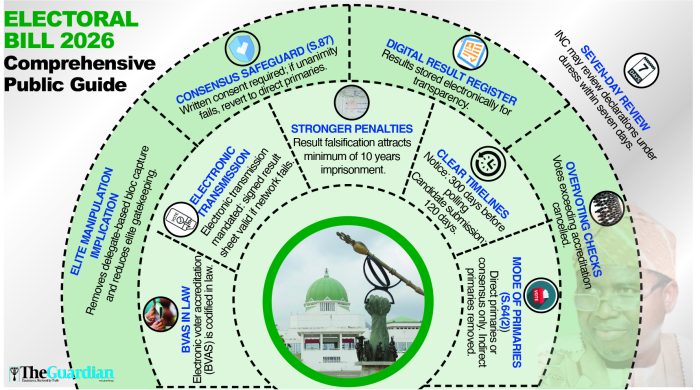
PRESIDENT Bola Tinubu’s signing of the Electoral Act amendment yesterday closed the legislative chapter on contentious electoral reforms but ushered in fresh uncertainty ahead of the 2027 general elections, placing the burden squarely on the Independent National Electoral Commission (INEC) to implement disputed transmission provisions amid threats of legal and civic resistance.
The development formally establishes the legal framework for the conduct of the general elections, just days after INEC released the official election timetable.
The signing ceremony, which took place at the State House, Abuja, at about 5:00 pm, was attended by principal officers of the National Assembly and senior government officials, marking the culmination of weeks of legislative deliberations, consultations and public debate on proposed electoral reforms.
Speaking shortly after assenting to the bill, President Tinubu commended the National Assembly for what he described as a rigorous and patriotic process, stressing that the reforms aim to safeguard democratic stability and prevent voter disenfranchisement.
“I followed keenly what you were doing. The essence of democracy is to have very solid brainstorming discussions committed to national development and nation-building and the stability of the nation,” Tinubu said.
“What is crucial is that you manage the process to the extent that there will be no confusion and no disenfranchisement of Nigerians, and we are all going to see democracy flourish.”
The President emphasised that while technology remains important, elections ultimately depend on human management and public trust.
According to him, manual voting and counting remain central to Nigeria’s electoral system, with electronic transmission serving as a support mechanism rather than a replacement.
“No matter how good a system is, it is managed by people, promoted by people and finalised by people. You are not going to be talking to a computer; you are going to be talking to human beings who announce the results,” he stated.
“Essentially, what we are looking at is the transmission of manual results, and we must avoid glitches. Nigeria will flourish and continue to nurture this democracy for prosperity and stability.”
However, several political stakeholders and civil society voices yesterday criticised President Tinubu for assenting to the Electoral Act (Amendment) Bill 2026 less than 48 hours after the National Assembly passed it, despite lingering controversy over the electronic transmission of election results.
Opponents of the amendment described the President’s swift assent as “shocking”, “a sad day for democracy”, and, in some quarters, “a dangerous signal” ahead of 2027. Some alleged that the law could create loopholes capable of undermining electoral transparency.PDP labels amendment betrayal, faults removal of mandatory e-transmission
THE Peoples Democratic Party yesterday accused the National Assembly of betraying Nigerians over the amendment of the Electoral Act 2022, particularly the removal of mandatory electronic transmission of election results from polling units.
In a statement signed by the party’s National Publicity Secretary, Ini Ememobong, the opposition party described the Senate’s stance and what it called the “sudden somersault” by the House of Representatives as anti-democratic, alleging that the move undermines the electorate’s demand for electronic transmission of results.
The party said the decision strikes at the heart of democracy and electoral integrity, arguing that lawmakers’ handling of the amendment showed disregard for Nigerians.
According to the PDP, “The anti-democratic stance of the Senate and the sudden somersault by the House of Representatives on the amendment of the Electoral Act 2022, specifically on the mandatory electronic transmission of election results from the polling units, is an act of treachery against the Nigerian electorate.”
The party described the reasons advanced for the amendment as weak and illogical, contending that any attempt to dilute transparency mechanisms ahead of elections could create room for manipulation.
It further alleged that by the action, the National Assembly had failed in its responsibility to reflect the wishes of the majority of its constituents.
On party primaries, the PDP faulted the restriction of nomination processes to Direct and Consensus methods, describing it as an intrusion into the internal affairs of political parties. It argued that the Supreme Court had affirmed the autonomy of parties in managing their internal processes, adding that the provision was ultra vires.
The party also criticised the ruling party for supporting the amendment, claiming that it had previously advocated electronic voting in 2015 but was now resisting electronic transmission of results.
The PDP called on Nigerians, organised labour and Civil Society Organisations to use lawful means to express their displeasure over what it termed anti-democratic actions by the National Assembly and urged lawmakers to reconsider their position.
LP caucus faults Tinubu’s ‘hurried’ assent to Electoral Act amendment
THE Labour Party caucus in the House of Representatives has condemned what it described as the hurried assent granted to the Electoral Act (Amendment) Bill 2026 by President Bola Tinubu yesterday.
Reacting to the development, the caucus leader, Mr Afam Ogene, questioned why the President signed the bill “at the speed of light”.
In a statement issued yesterday, the Anambra lawmaker said, “It is quite interesting that, even before the ink with which the parliament crossed the t’s and dotted the i’s on the clean copies of the bill dried up, the President has gleefully put his imprimatur on the bill, leaving Nigerians to wonder if, indeed, the executive had ample time to look through the document.
“Gone with the signing are the genuine concerns of apprehensive Nigerians regarding what the new Act portends to the integrity of the country’s future elections.
“In fact, Nigerians and indeed the world must now begin to see the clear difference between campaign promises and actual motives of political players. While it is convenient outside the confines of power to oppose incremental increases in the price of petroleum products, it is convenient to pronounce ‘subsidy gone’ when they have the opportunity.”
He continued, “While it was right to advocate electronic voting in 2013, it has become obtuse, 13 years after, to even canvass a fragment of it: electronic transmission of results.
“While it was convenient to ask a sitting administration to quit on account of an alleged inability to halt the spread of insecurity, today, under their watch and allure of office, insecurity in various forms has become an insistent byword.
“For emphasis, on January 13, 2013, the National Publicity Secretary of the defunct Action Congress of Nigeria (ACN), Alhaji Lai Mohammed, had in a statement said, ‘We assure INEC of our full support towards using electronic voting in 2015. We also appeal to all other political parties, civil society organisations and indeed all Nigerians to join us in pushing for a system that will eliminate the role of thugs and sideline vote thieves during our elections, in addition to making our elections free, fair and credible.’”
Ogene noted that Mohammed later became Nigeria’s Minister of Information and Culture for eight years, adding that neither he nor “his principal, who is now our country’s current leader”, appears supportive of electronic transmission of results.
“Now that they have had their way, we call upon Nigerians not to despair. On the contrary, the battle for our country’s redemption has only just begun,” he said.
The caucus pledged its readiness to mobilise Nigerians to reject any compromise of the electoral system.
“As an opposition bloc, we certainly have our job cut out: the mobilisation of fellow Nigerians to reject, at the polls, those who specialise in asking them to do only as they say, instead of living by their own creed,” he added.
SDP chieftain Adebayo alleges ‘hatchet job’, signals constitutional challenge
ALSO, the 2023 presidential candidate of the Social Democratic Party (SDP), Adewole Adebayo, strongly condemned the President’s action, describing it as a “planned hatchet job” against Nigeria’s democracy.
Speaking with The Guardian, Adebayo accused Tinubu of prioritising personal political interests over the national interest.
“When it suits him and his interests, President Tinubu can have fast fingers. But when it is time to do his duty in the interest of the Republic, it can take years,” he said.
He described the amended law as “atrocious” and not in the interest of democracy or the Nigerian public, arguing that the speed with which it was signed reinforced suspicions about its intent.
“The rush with which the President assented to it shows to everyone who may have been in doubt that this is a planned hatchet job to foist a problematic and doomed electoral act on the 2027 election,” he stated.
Adebayo further alleged that the process of passage in the National Assembly reflected what he termed “one of the worst legislative abuses ever witnessed on television”, criticising both chambers for adopting the bill in its current form without incorporating stronger safeguards for the electronic transmission of results.
Invoking moral and historical considerations, the SDP chieftain warned that no public office holder could escape “the judgment of history” or the “collective will of the Nigerian people”, insisting that political authority ultimately derives from the people.
In the context of Ramadan, he urged the President to reflect on justice, fairness, and accountability in leadership.
“If the idea is to put an end to the demand for free, fair and credible elections, it has just made it nuclear now,” Adebayo said, calling on Nigerians to remain resolute in demanding transparent electoral processes.
While acknowledging that the bill has now become law, he maintained that democratic forces would continue to explore constitutional and civic avenues to challenge what he described as attempts to weaken electoral credibility ahead of 2027.
A chieftain of the Lagos State chapter of the Peoples Democratic Party (PDP), Adetokunbo Pearse, also criticised the development, warning that Tinubu and Senate President Godswill Akpabio would bear responsibility should the controversies surrounding electronic transmission deepen public distrust in the Fourth Republic.
According to him, “President Tinubu, in collaboration with Akpabio and some lawmakers, is trying to deregulate and manipulate the 2027 elections, which Nigerians will resist.”
Pearse argued that while aggrieved stakeholders could challenge the law in court, civic vigilance would be equally critical. He urged Nigerians to mobilise, participate actively in elections, monitor their votes and insist on transparency throughout the electoral process.
Afenifere, Ohanaeze raise fears over 2027 integrity
THE National Publicity Secretary of Afenifere, Prince Justice Faloye, described the President’s assent as a premeditated agenda to rig the 2027 elections, warning that the move could heighten political tension if not urgently reviewed.
Meanwhile, a chieftain of the apex Igbo socio-cultural organisation, Ohanaeze Ndigbo, Goddy Uwazuruike, expressed shock at what he described as the administration’s disregard for public opinion on the contentious issue of electronic transmission.
The group said the controversy surrounding the amendment could further erode trust in the electoral system unless clear operational guidelines are issued to guarantee transparency and technological integrity.
Political analysts note that the debate over electronic transmission has remained contentious since the 2023 general elections, with civil society organisations repeatedly calling for reforms to eliminate ambiguities in the law. Only last week, protesters gathered at the National Assembly complex in Abuja, urging lawmakers to include explicit provisions mandating real-time electronic transmission of results.
With the 2027 elections still months away, the renewed dispute signals that electoral reform will remain at the centre of Nigeria’s political discourse. Whether the amendment strengthens or weakens public confidence in the democratic process may ultimately depend on how its provisions are implemented by INEC and interpreted by the courts.
Group rejects Reps’ stance on e-transmission, warns of nationwide resistance
THE Movement for Credible Elections (MCE) rejected the decision of the House of Representatives to align with the Senate on amendments it said weaken the framework for electronic transmission of election results.
In a statement issued and signed yesterday by the head of its secretariat, Comrade Olawale Okunniyi, the group accused the legislature of diluting safeguards designed to ensure credible electronic transmission of results.
The MCE faulted the removal of explicit “real-time” transmission language from the law and the inclusion of what it described as an undefined “failure” clause that could permit a return to manual processes.
“By stripping ‘real-time’ from the law and embedding an escape clause that reverts to manual primacy, the National Assembly has preserved the grey zones that have historically undermined electoral credibility,” the statement said.
The group warned that altering key electoral safeguards amid reported chaos during plenary, including shouting matches, voice votes and walkouts, risks eroding confidence in the 2027 elections “before the first ballot is even cast”.
It maintained that sovereignty belongs to the people and argued that electoral laws must contain clear, mandatory and enforceable safeguards to protect votes.
The MCE demanded what it called an immediate and transparent investigation into police action against protesters, public clarification from the National Assembly on its commitment to mandatory real-time electronic transmission safeguards, and an open engagement process with civil society and citizens on electoral reform provisions.
The group said it would mobilise nationwide resistance against any electoral framework that fails to guarantee mandatory real-time electronic transmission of results from polling units.
“We are determined more than ever to resist an imposed electoral law until the will of the people is respected,” the statement added.
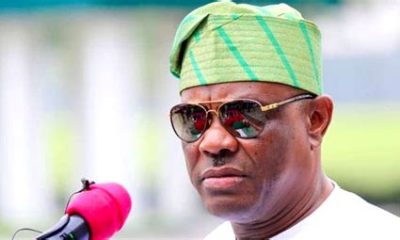
Wike commends Tinubu, N’Assembly over Electoral Act amendment
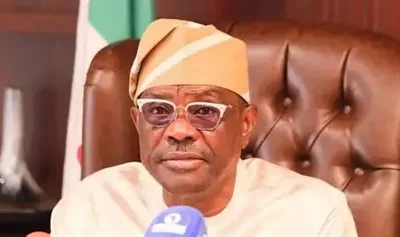
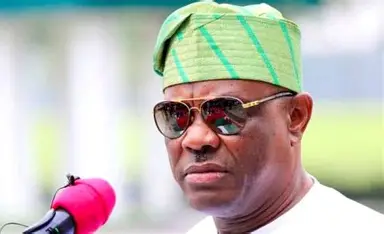
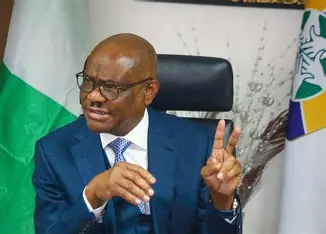
MINISTER of the Federal Capital Territory, Nyesom Wike, praised the National Assembly and President Bola Tinubu for what he described as decisive and courageous leadership in assenting to the Electoral Act amendment.
In a statement issued by his Senior Special Assistant on Public Communications and Social Media, Lere Olayinka, the minister said the prompt presidential assent demonstrated Tinubu’s commitment to strengthening democratic governance.
Wike dismissed criticisms of the amendment as politically motivated, insisting that democracy is a continuous process that requires periodic legal reforms.
He said a regular review of the electoral framework was essential for institutional growth and the long-term credibility of the electoral system, and expressed confidence that the amendment would ultimately enhance Nigeria’s democratic architecture.
Electoral Act 2026: Progress made, but loopholes remain, says civic advocate
A CIVIC advocate, Mr Akindeji Aromaye, has warned that Nigeria’s Electoral Act 2026, though containing notable reforms, retains significant loopholes that could undermine transparency and electoral integrity ahead of the 2027 general election.
In an analysis titled “Nigeria’s Electoral Bill 2026: What Really Changed, and What Didn’t,” Aromaye, a Senior Media Associate at Enough is Enough Nigeria (EiE Nigeria), recalled that the bill’s passage followed protests outside the National Assembly, a disputed voice vote in the House of Representatives and the adoption by a joint conference committee of what he termed the weaker position on key provisions. He noted that the President had the constitutional power to return the bill but chose to assent to it.
He said it would be “dishonest to describe this law as entirely without merit,” pointing to provisions that allow voters to download their Permanent Voter Card from the website of the Independent National Electoral Commission (INEC). According to him, the measure could address the challenge of uncollected PVCs recorded in 2023 due to logistical difficulties.
However, he criticised the reduction of the timeline for releasing election funds to INEC from 12 months to six months, arguing that it weakens the commission’s planning capacity and financial leverage. He compared Nigeria’s framework unfavourably with those of Kenya and South Africa, which operate dedicated electoral funds with multi-year planning horizons.
On voter registration, Aromaye faulted the removal of the National ID Card and Driver’s Licence from the list of accepted documents, noting that no official justification was provided. He warned that the change could narrow access, particularly for older, rural and working-class Nigerians, and called for an independent impact assessment.
The EiE associate described the electronic transmission clause as the most consequential weakness of the new law. While acknowledging that electronic transmission to INEC’s Result Viewing Portal (IReV) is now compulsory, he noted that the Act provides that where transmission “fails”, physical Form EC8A will prevail.
He argued that the law does not define what constitutes failure, who certifies it independently, or what consequences exist for officials who declare it. Citing the 2023 general election, he said delays and discrepancies between polling unit records and collation centre figures were not adequately explained, adding that the Supreme Court had clarified that IReV is a viewing portal without legal supremacy over manually collated results.
Aromaye urged INEC to publish binding internal protocols defining transmission failure and specifying who may invoke the fallback to manual results. He also called on voters to remain vigilant beyond polling units and advised that legal preparations for potential post-election challenges should begin early.
-Guardian







Education
NFVCB Boss Urges Stronger Distribution Channels As Coal City Film Festival 2026 Opens In Enugu
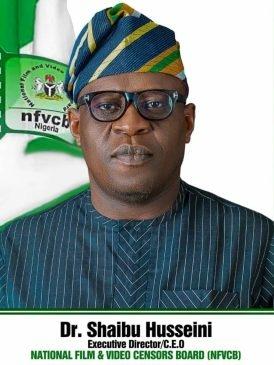
The Executive Director/Chief Executive Officer of the National Film and Video Censors Board (NFVCB), Dr Shaibu Husseini, has called for stronger distribution frameworks within Nigeria’s film industry to ensure that locally produced content achieves global visibility.
Dr Husseini made this call while delivering the keynote address at the opening ceremony of the 2026 edition of the Coal City Film Festival, held in Enugu.
Welcoming participants to the festival, Dr Husseini expressed his personal delight at hosting the event in Enugu, his birth state, noting the city’s rich cultural heritage and longstanding contributions to Nigeria’s creative landscape.
He commended the festival organisers, particularly the Festival Director, Uche Agbo, for their resilience and commitment in sustaining the initiative.
According to him, the Coal City Film Festival has grown into a significant cultural platform and a must-attend cinematic event in South East Nigeria.
Speaking on the festival’s theme, “Local Stories, Global Screens,” Dr Husseini emphasised the importance of authenticity in storytelling. He noted that films rooted in local realities, languages, and cultural truths often resonate more strongly with global audiences.
He cited notable Nigerian productions such as “King of Boys” by Kemi Adetiba, “The Wedding Party” by Mo Abudu, “Anikulapo” by Kunle Afolayan, “Black Book” by Editi Effiong, and “Lionheart” by Genevieve Nnaji as examples of culturally grounded stories that have gained international recognition on platforms such as Netflix and at global film festivals.
While acknowledging the growth in film production across Nigeria, the NFVCB boss identified distribution as a major bottleneck in the industry. He observed that many high-quality films struggle to reach audiences both locally and internationally due to limited distribution channels.
Dr. Husseini therefore urged film festivals across the country to evolve beyond networking platforms into active marketplaces where filmmakers can secure distribution deals. He stressed that festivals must attract distributors, exhibitors, streaming platforms, and marketers to create tangible opportunities for filmmakers.
“Film festivals must become gateways to distribution where filmmakers leave not just with applause, but with real opportunities,” he said.
Reaffirming the Board’s commitment to industry development, Dr. Husseini stated that the NFVCB has continued to reposition itself as a partner in progress by engaging stakeholders, improving classification processes, and promoting a balance between creative freedom and social responsibility.
However, he raised concerns over increasing non-compliance with regulatory requirements, noting that some filmmakers bypass the Board by releasing unclassified films or operating without proper licensing.
He reiterated that all films and video works must be submitted to the NFVCB for classification and registration before being released on any platform, including digital platforms such as YouTube.
“This is a legal obligation, and the Board will not hesitate to take decisive action against defaulters,” he warned, adding that regulation is essential for protecting the industry, audiences, and national values.
Looking ahead, Dr. Husseini assured stakeholders of the Board’s continued collaboration with filmmakers and festival organisers to build a structured, sustainable, and globally competitive Nigerian film industry.
He concluded by commending the organisers of the Coal City Film Festival for their vision and contribution to Nigeria’s cultural economy, urging filmmakers to continue telling authentic stories that can resonate across global screens.
-Leadership
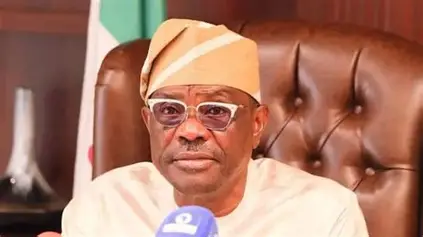
The Minister of the Federal Capital Territory, Nyesom Wike, has reiterated Nigeria’s commitment to strengthening its relationship with the European Union, while announcing steps to recover diplomatic lands in Abuja allegedly taken over by land grabbers.
Wike made this known on Thursday during a courtesy visit by the EU Ambassador to Nigeria and ECOWAS, Gautier Mignot, in Abuja.
“We will continue to engage EU member countries to further strengthen bilateral relations,” the minister said.
Addressing concerns over diplomatic land allocations, Wike disclosed that several plots originally designated for EU countries had been unlawfully occupied over the years. He noted that the FCT Administration has begun reclaiming such lands.
He added that the government would formally communicate with the affected countries to determine their continued interest in the properties and ensure rightful ownership is restored.
“We are writing to those countries. If they still intend to retain the lands, we are willing to return them. We will not allow land grabbers to take advantage,” Wike said.
The minister also commended the EU for its contributions to governance and justice sector reforms in the FCT, particularly in court digitalisation and improved justice delivery.
“I am aware of your support, especially in strengthening the administration and dispensation of justice. We will continue to partner with you to deepen these initiatives,” he added.
On requests for land allocation for local EU staff, Wike assured that applications would be considered based on due process, stressing that such processes must ultimately benefit the public.
He further addressed infrastructure concerns at the IBB Golf Club, confirming that a caretaker committee has been constituted, with rehabilitation works expected to commence soon.
In his remarks, Mignot described Nigeria as a key strategic partner for the EU, noting that both parties are entering a new phase of deeper engagement.
“The European Union remains one of Nigeria’s foremost trade and development partners. Our relationship is strong, mutually beneficial, and evolving into a more significant phase,” he said.
He highlighted ongoing EU-supported programmes in the FCT, including judicial reforms, court digitalisation, human rights initiatives, and support for victims of gender-based violence.
Mignot also invited the FCT minister to engage further with EU ambassadors to explore collaboration in areas such as waste management, urban planning, and water infrastructure.
Meanwhile, Wike recently ordered the demolition of buildings illegally constructed on land designated for foreign embassies in the diplomatic zone of Katampe Extension, Abuja.
He explained that the land, originally allocated on March 18, 2008, for residential use by diplomatic missions, was later encroached upon by an unauthorised developer who commenced construction without approval from the Federal Capital Development Authority.
The affected diplomatic missions include Thailand, Bulgaria, Syria, Somalia, Serbia and Montenegro, Japan, Austria, Switzerland, Senegal, and the Palestine Liberation Organisation.
-Leadership
News
Inspector-General Disu Submits 75-Page Framework On ‘State Police’ To Senate As Push Gains Momentum
According to a statement issued on Thursday by Ismail Mudashir, Special Adviser on Media and Publicity to the Deputy Senate President, the document titled “A Comprehensive Framework for the Establishment, Governance and Coordination of Federal and State Police” was presented at Jibrin’s office within the National Assembly complex.
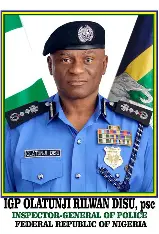
The Inspector-General of Police, Olatunji Disu, has submitted a 75-page framework on the establishment of State Police to the Deputy President of the Senate, Barau Jibrin, in a fresh move to advance decentralised policing in Nigeria.
According to a statement issued on Thursday by Ismail Mudashir, Special Adviser on Media and Publicity to the Deputy Senate President, the document titled “A Comprehensive Framework for the Establishment, Governance and Coordination of Federal and State Police” was presented at Jibrin’s office within the National Assembly complex.
The report was delivered on behalf of the IGP by Prof Olu Ogunsakin, who chairs the Nigeria Police Force committee set up to develop modalities for instituting State Police.
Disu said the document encapsulates the Force’s professional input following extensive consultations and a thorough evaluation of the legal, operational and administrative implications of decentralised policing.
“The report covers the considered views, professional insights and strategic recommendations of the Force, derived from extensive consultations and a careful assessment of the operational, legal and administrative implications of instituting State Police in Nigeria,” Disu said.
“It is our expectation that the contents of this report will meaningfully contribute to ongoing deliberations and assist in shaping informed, balanced, and pragmatic decisions on this critical aspect of national security architecture.”
The police chief noted that the framework has been formally submitted to the Senate Committee on the Review of the 1999 Constitution as the Nigeria Police Force’s official contribution to the ongoing constitutional amendment process.
Responding, Senator Jibrin commended the IGP for what he described as a proactive step aligned with the security agenda of Bola Ahmed Tinubu.
“The Deputy President of the Senate commended the IGP for his proactiveness on the establishment of State Police in line with President Bola Ahmed Tinubu’s agenda to fully secure the country,” the statement read.
He assured that the Senate Committee reviewing the Constitution would carefully examine the framework alongside other submissions as part of efforts to strengthen Nigeria’s legal foundation.
The proposed framework is expected to outline the operational structure, governance model, and coordination mechanisms between federal and state policing systems— marking a significant step in ongoing efforts to overhaul Nigeria’s security architecture.
SaharaReporters had earlier reported that Disu inaugurated an eight-member committee in March to drive the implementation of State Police, declaring that the reform was irreversible.
At the inauguration in Abuja, the IGP insisted that decentralised policing “has come to stay,” dismissing concerns that it could threaten the roles of existing police personnel.
“State Police has come to stay, and the police should be able to contribute their part in making it succeed. The police are not afraid, our jobs are not being taken,” he said.
He described the committee’s assignment as urgent and critical, giving members one month to submit their report amid rising security challenges across the country.
Disu stressed that the move towards State Police is aimed at strengthening internal security by bringing law enforcement closer to communities and enabling faster, more targeted responses to threats.
“Across the nation, we continue to confront evolving security challenges. These require innovative thinking, strategic collaboration, and the willingness to explore reforms,” he added.
The push for State Police has gained renewed momentum following President Tinubu’s assurance that the plan would not be shelved, urging stakeholders to support the initiative.
-Sahara

NFVCB Boss Urges Stronger Distribution Channels As Coal City Film Festival 2026 Opens In Enugu

Wike Reaffirms Nigeria–EU Ties, Moves To Reclaim Encroached Diplomatic Lands

Inspector-General Disu Submits 75-Page Framework On ‘State Police’ To Senate As Push Gains Momentum

5 Life Lessons from Manchester City EPL Current woes

Liverpool Announce Jürgen Klopp Return To The Club

MTN Teams Up With Meta To Boost WhatsApp Call Quality


-
 Health12 months ago
5 Life Lessons from Manchester City EPL Current woes
-
 Sports12 months ago
Liverpool Announce Jürgen Klopp Return To The Club
-
 Business12 months ago
MTN Teams Up With Meta To Boost WhatsApp Call Quality
-

 News12 months ago
Commonwealth Observers Prepare For Gabon Presidential Election
-

 Health12 months ago
Ponzi Scheme CEO Francis Uju Udoms of Addfx Case still Unresolved Despite SEC certification
-

 News12 months ago
Chibok Girls: 11 Years Of Anguish, Broken Promises
-
 News12 months ago
Wike’s Enviable Road Construction Method along Nyanya- Maraba Highway
-

 News9 months ago
NASRE Promises Support To Daily Times Group Business Editor, Oseni, Over Serious Road Accident