
Jobs
Job Title: Customer Care Representative


📍Location: Berger, Ogba, Olowora (Lagos)
Salary: ₦120,000/month
👉Work Schedule: Monday – Saturday, 8AM – 6PM
Requirements:
• Must be outspoken, smart, and organized
• Able to work with little or no supervision
• Experience in sales, upselling, and cross-selling
• Knowledge of hair products is an advantage
• Willing to commit for at least one year
• Must be punctual and reliable
• Must live within proximity to the listed locations
To Apply:
Send your CV to [email protected].
-Jobberrecruit




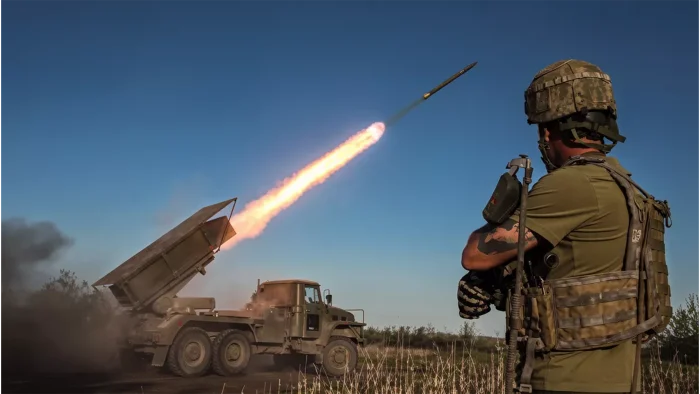
Growing desperation among young Africans seeking opportunities abroad is fueling a dangerous cycle that leaves many vulnerable to exploitation, including alleged recruitment into foreign military conflicts, foreign policy and security experts have warned.
Professor of International Relations, Femi Otubanjo, said the unfolding reports of Africans, including Nigerians, ending up in military camps in Russia reflect a complex global pattern driven by economic hardship and long-standing international recruitment practices.
“It takes two to tango. So, you have to have a partnership for certain things to be achieved,” Otubanjo said, noting that stories of foreign job seekers being redirected into military service are not entirely new in global conflict dynamics.
He explained that while allegations of false recruitment persist, the underlying driver remains economic desperation, particularly across Africa where youth unemployment remains high.
“The reality is that we have to admit it too, there are a lot of Africans who are desperate to go anywhere,” he said.
According to him, with between 50 and 60 per cent of Africa’s population made up of young people, the lack of jobs continues to push many to take extreme risks in search of economic survival. He added that high exchange rates and the lure of earning foreign currency further encourage risky migration decisions.
Otubanjo also noted that the use of foreign fighters is historically embedded in global conflicts, even though countries rarely admit it publicly.
“No country wants to admit that it is using mercenaries because it wants to claim it has the capacity from its own citizenry,” he said.
Similarly, Senior Research Fellow at the Nigerian Institute of International Affairs (NIIA), Dr Nicholas Erameh, said claims of forced conscription require careful verification, stressing that the context of each case must be thoroughly investigated.
“It is difficult to say Russians came into Nigeria to pick people and forcefully conscript them into their armies,” Erameh said.
He explained that some individuals may have voluntarily entered agreements without fully understanding the implications, while others may have been misled through employment promises abroad.
Erameh said the Federal Government should consider establishing a fact-finding mission to determine the accuracy of the allegations and clarify whether Nigerians were truly coerced into military service or entered agreements knowingly.
“The best way is for the government to establish a fact-finding mission to test the veracity of the claims and counterclaims,” he said.
Concerns intensified following reports of Nigerians allegedly lured to Russia under false job promises before being forced into military service.
One of such cases involves Nigerian citizen, Abubakar Adamu, who has appealed to the Nigerian government for urgent repatriation after claiming he was deceived into joining the Russian military.
Adamu reportedly travelled to Moscow in late 2025 on a tourist visa issued by the Russian Embassy in Abuja, believing he had secured a civilian job as a security guard. However, upon arrival, his travel documents were allegedly confiscated and he was forced to sign enlistment papers written in Russian without translation or interpretation.
He later discovered the documents had enlisted him into the Russian Armed Forces. Currently held in a Russian military camp, Adamu has reportedly refused deployment to combat zones in Ukraine, leaving him stranded in what sources described as a coercive and dangerous situation.
The case is part of a broader pattern involving African nationals from Nigeria, Ghana, Kenya and Uganda, who have allegedly been lured abroad with promises of employment or education, only to be redirected into military service.
An investigative report by All Eyes on Wagner indicated that fewer than 36 Nigerians were reportedly recruited to fight in Russia’s war against Ukraine, with at least five confirmed dead.
The report, which analysed a database of 1,417 African recruits between 2023 and mid-2025, suggested that some foreign fighters were deployed in high-risk assault operations described as “cannon fodder.”
Further concerns emerged after Ukraine’s Defence Ministry on February 12, 2026 released photographs of two Nigerians, Hamzat Kazeem Kolawole and Mbah Stephen Udoka, who were reported to have died while fighting for Russia in Luhansk.
Kolawole reportedly signed a contract with the Russian military in August 2025, while Udoka enlisted in September the same year.
Both were said to have had no prior military training and died during an attempted assault on Ukrainian positions.
Meanwhile, the Russian Ambassador to Nigeria, Andrey Podyolyshev, last week denied claims that Moscow is recruiting Nigerians to fight in the conflict.
Speaking in Abuja, he said he was unaware of any government-backed programme targeting Nigerians and added that any verified cases would be investigated by Russian law enforcement authorities.
A Twitter user, now X, Kelechi Amasike, blamed poor governance and corruption for pushing young Nigerians to seek risky opportunities abroad.
“If only this country’s politicians weren’t stealing and looting the citizens blind why would a young man like Adamu with a potential bright future journey to Ukraine or Russia for work. Do you see anyone from UAE, Saudi Arabia, China or Singapore or Taiwan in Russia or Ukraine,” he tweeted?
-Guardian

Nairagram, a leading pan-African payments and financial infrastructure company, has successfully completed its N10 billion Commercial Paper issuance, fully subscribed within 48 hours of going to market.
The company, which made this known in Abuja on Monday, said that the Commercial Paper programme received final regulatory approval from the Central Bank of Nigeria (CBN) on January 26, 2026.
According to it, following the completion of market preparations on Monday, February 3, 2026, Nairagram officially launched the issuance.
By Wednesday, February 4, the entire N10 billion offer had been fully subscribed, with completion finalised on Thursday, February 5, 2026 — underscoring strong investor confidence in the company’s strategy, governance, and growth trajectory.
Building on this momentum, Nairagram disclosed plans to raise up to N50 billion in 2026 through a combination of capital market instruments to further strengthen its balance sheet, expand product capabilities, and scale its pan-African payments infrastructure.
Speaking on the significance of this milestone, president and co-founder of Nairagram, Idris Ibrahim, said:
“This successful Commercial Paper issuance is a strong validation of Nairagram’s vision and execution. The speed and scale of the subscription reflect institutional confidence not only in our business, but in the broader opportunity to build resilient, African-owned financial infrastructure that supports trade, remittances, and economic growth across the continent.”
Also speaking on the transaction, co-founder of Nairagram, Gbolahan Obanikoro, stated: “As global financial infrastructure continues to evolve, there is a clear opportunity to build scalable pan-African payment platforms capable of operating at both continental and international scale. This transaction demonstrates how local capital, sound regulation, and strong governance can support the development of sustainable indigenous infrastructure for Africa and the world.”
With operations spanning 37 African countries, Nairagram processes over US$2 billion in payments annually, reflecting the scale, reliability, and operational depth of its infrastructure as a trusted partner for financial institutions, fintechs, and enterprise clients seeking efficient access to African payment corridors.
-Leadership
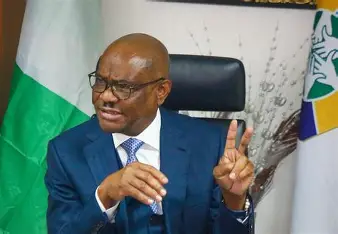
The Organised Labour and the Minister of the Federal Capital Territory (FCT), Nyesom Wike, have reached an agreement to end the strike action involving workers in the FCT Administration, paving the way for an immediate resumption of work from this Tuesday.
The agreement was reached after a conciliatory meeting between labour leaders and the FCT minister, convened at the instance of the Chairman of the Senate Committee on the FCT, Senator Mohammed Bomoi.
The all-night meeting, according to labour sources, began late on Monday night at 11:45 p.m. and stretched into the early hours of Tuesday, ending at 3:51 a.m. after prolonged and frank deliberations.
The outcome of the talks was formally communicated to union members in a joint circular issued by the Trade Union Congress of Nigeria (TUC) and the Nigeria Labour Congress (NLC) on behalf of the Joint Union Action Committee (JUAC).
The circular was signed by the Secretary General of the TUC, Comrade General N.A. Toro, and the Acting General Secretary of the NLC, Comrade Benson Upah.
Labour said all grievances that triggered the industrial action were tabled and addressed during the meeting.
The unions also said the FCT minister gave assurances of improved labour, management relations, anchored on mutual respect and continuous engagement with workers and their representatives.
As part of the resolutions, both parties agreed that no worker would be victimised for participating in the strike action. In addition, all cases arising from the dispute and currently before the National Industrial Court (NIC) were to be withdrawn immediately, clearing the legal bottlenecks associated with the action.
The circular read, “All complaints presented by JUAC members were taken one after the other and fully addressed. The Honourable Minister assured Organised Labour of mutual respect and sustained engagement going forward.
“It was agreed that, arising from the strike action, no worker shall be victimised in any manner.Consequently, all JUAC members and all affiliates of the TUC and NLC working in the Ministry of the FCT are hereby directed to resume work immediately”.
Following the agreement, JUAC members and all affiliates of the TUC and NLC working under the ministry of the Federal Capital Territory were directed to resume work immediately.
Labour leaders urged strict compliance with the directive, stressing the need to restore normal services and sustain industrial peace in the nation’s capital.
-Leadership

NFVCB Boss Urges Stronger Distribution Channels As Coal City Film Festival 2026 Opens In Enugu

Wike Reaffirms Nigeria–EU Ties, Moves To Reclaim Encroached Diplomatic Lands

Inspector-General Disu Submits 75-Page Framework On ‘State Police’ To Senate As Push Gains Momentum

5 Life Lessons from Manchester City EPL Current woes

Liverpool Announce Jürgen Klopp Return To The Club

MTN Teams Up With Meta To Boost WhatsApp Call Quality


-
 Health12 months ago
5 Life Lessons from Manchester City EPL Current woes
-
 Sports12 months ago
Liverpool Announce Jürgen Klopp Return To The Club
-
 Business12 months ago
MTN Teams Up With Meta To Boost WhatsApp Call Quality
-
 News12 months ago
Commonwealth Observers Prepare For Gabon Presidential Election
-

 Health12 months ago
Ponzi Scheme CEO Francis Uju Udoms of Addfx Case still Unresolved Despite SEC certification
-
 News12 months ago
Chibok Girls: 11 Years Of Anguish, Broken Promises
-

 News12 months ago
Wike’s Enviable Road Construction Method along Nyanya- Maraba Highway
-
 News9 months ago
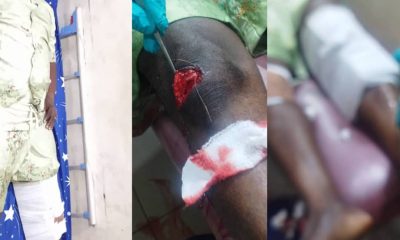
NASRE Promises Support To Daily Times Group Business Editor, Oseni, Over Serious Road Accident