
Health
YAZID DANFULANI: THE NEW SHERIFF AT NAIC


A seasoned corporate administrator and banker, with high proficiency in computing and banking operations, Yazid Danfulani came fully to the limelight of public service as the Commissioner for Commerce and Industry in Zamfara State, under Governor Bello Matawalle, but not before serving in 2013 at the Central Bank of Nigeria (CBN), therefrom gaining profound experiences in banking operations.
Born on 15th April 1986, in Gusau, Zamfara State, Danfulani attended Dan Turai Primary School and Therbow Secondary School, from where he later obtained a degree in Business Administration and a Master’s degree in Arts and Management from the University of Hertfordshire, UK.
On May 21, 2025, Danfulani was appointed as Managing Director and Chief Executive Officer of the Nigerian Agricultural Insurance Corporation (NAIC) for an initial term of four years by President Bola Ahmed Tinubu.
Before this prestigious and well-deserved appointment, Danfulani founded and served as president of the Arewa Development and Empowerment Foundation (ADEF), an organization that caters to and supports orphans and less privileged individuals in society.
Over the years, the expectations of Nigerians have been very high for the Nigerian Agricultural Insurance Company (NAIC), deriving benefits from the development of robust insurance products that will cater to the needs of Nigerian farmers, particularly smallholder farmers, women-led agribusinesses, and youth cooperatives on a sustainable basis.
Nigerians also expect an agricultural insurance agency that is efficient and that will make prompt payments of claims to farmers affected by natural disasters, pests, and diseases, and that can expand coverage to deserving but neglected farming communities.
However, part of the identified constraints that had affected the agency and limited its operational efficiency are: irregular interactions with stakeholders, associations, and other farmers so as to understand their needs and develop tailored solutions, and sustained efforts at collaborating with the Federal Government to develop policies and allocate resources that support the growth and development of the agricultural sector.
Others include a sustained developmental innovative framework that will enhance the growth of various insurance products and services aimed at addressing the unique challenges faced by Nigerian farmers, such as climate change and pest infestations, and strategically designed insurance packages that are affordable and accessible to smallholder and medium-scale farmers, while effectively embarking on grassroots mobilization of farmers and communities for enhanced awareness and uptake of agricultural insurance.
Upon assumption of office, Danfulani did not fail Nigerians, as he geared towards ensuring he delivers on their expectations, prioritizing the digitization and streamlining of NAIC’s services, including policy enrolment, claims processing, and farmer outreach, through digital platforms aimed at improving efficiency and transparency, and the strengthening of effective and efficient governance structures, and human capacity development through enhanced institutional reforms, accountability measures, and targeted staff training, which has brought about effective systematic positivity and positive changes into the internal workings of the agency.
Danfulani’s fresh perspective, strong leadership, and absolute commitment to driving positive change in the organization, enhanced by his diverse experiences, has brought new vigor and strategic direction to NAIC, focusing on strengthening agricultural insurance frameworks, expanding access to insurance for farmers, and ensuring the agency plays a key role in Nigeria’s food security strategy.
An objective administrator with immense track records of established metrics and benchmarks of measured progressive and regular assessment, Danfulani adopted strategies of formidable and time-proven results.
His intentional willingness to pivot and adjust course when circumstances change or new opportunities arise has also led to the prioritization of workers’ welfare, taking a holistic view of the physical, emotional, and mental well-being of employees, and recognizing that a happy and healthy workforce is more productive and engaged.
By implementing these strategies, Danfulani has been able to bring in fresh perspectives, strong leadership, and a commitment to driving positive change, ultimately achieving the goals of the renewed hope agenda and making a meaningful impact.
Danfulani’s turnkey multidisciplinary approach to the development of NAIC includes the reengineering of access to agricultural insurance, particularly in rural and underserved communities, to protect farmers against natural disasters, pests, and diseases, and the introduction of up-to-date insurance products and services tailored to the needs of Nigerian farmers, promoting agricultural growth and food security.
Within a very short time of assumption, he has fostered partnerships with government agencies, private entities, and international development bodies to enhance NAIC’s impact and effectiveness, enabling reforms to improve NAIC’s efficiency and customer satisfaction, ensuring the agency plays critical roles in Nigeria’s agricultural transformation agenda, focused on rural development and agricultural growth, and aligning with President Bola Tinubu’s Renewed Hope agenda and the nation’s food security strategy.
Indeed, Danfulani’s appointment has been widely applauded, with stakeholders, such as the Nigeria Youth for Good Governance Forum and other bodies, expressing confidence in his leadership qualities, technical expertise, and commitment to national development and describing it as timely and strategic.
An administrator with demonstrable insight into the workings of the agency, Danfulani brought in individuals with diverse backgrounds, experiences, and perspectives to foster innovation and creativity, making up a multidisciplinary workforce of employees with the autonomy to make decisions and take ownership of their work, promoting a sense of accountability and motivation, and fostering a consistent culture of continuous training, mentorship, and knowledge-sharing to stay ahead of the curve and adapt to changing circumstances, with a clear vision, mission, and set of objectives, ensuring everyone is aligned and working towards the same outcomes in an ambience of shared value.
As part of the prompt reforms, Danfulani has established strong collaboration and partnerships with government agencies, private entities, and international development bodies to enhance NAIC’s impact and effectiveness, driving and establishing reforms aimed at improving NAIC’s efficiency and customer satisfaction, thereby fostering stronger national cohesion and alignment with the national policy framework for a synergistic effect.
Indeed, his deliberate focus on rural development and agricultural growth, aligning with the various reforms of the federal government, has started yielding results, positively affecting food production, food security, and national security.
Indeed, as Danfulani embarks on this critical mission and crucial national assignment, we wish him success in his endeavors to transform NAIC and contribute to the growth and development of Nigeria’s agricultural sector.
We are confident that with his tested and proven transformational leadership style, we can expect rapid change, a brighter future for farmers in Nigeria, and more specifically a more innovative and digitally driven agricultural industry with a holistic positive impact.
Danfulani is the new sheriff in town and has come with assurance and compelling track records of performance, engineering radical reforms.
Yazid Danfulani is the undertaker who has refused to take the agency to the grave, proving rather that Lazarus is having a date with destiny; coming back alive with a positive Midas touch, and certainly the agency is coming back to life again.
*Onwe is an investment banker writing from Abuja
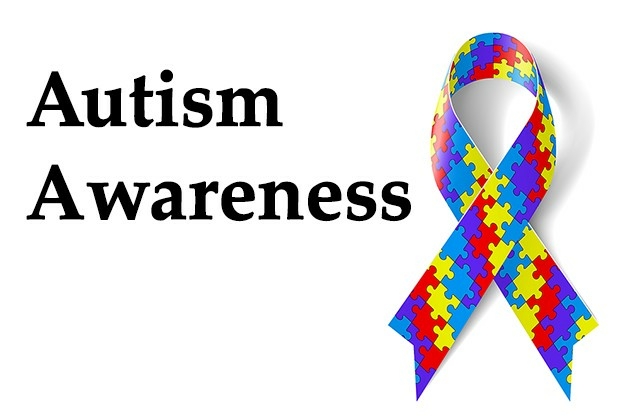
Indomie has said it is backing a cross-country cycling journey by 15-year-old autism advocate Kanyeyachukwu Tagbo, who is embarking on a Guinness World Record-bound ride from Enugu to Lagos to raise awareness about autism and promote inclusion.
Tagged ‘Journey of Possibility, #RideWithKanye’, the expedition will see the young cyclist travel across several Nigerian cities as he advocates for greater understanding and support for individuals living with Autism Spectrum Disorder and their families.
The initiative represents an official attempt to set a Guinness World Records milestone as the youngest autistic individual to complete a cross-country cycling journey. The ride is scheduled to conclude in Lagos on World Autism Awareness Day, reinforcing the global call for empathy, acceptance, and opportunity for people on the autism spectrum.
Speaking on the brand’s involvement, Group corporate communications and events manager of Dufil Prima Foods, Temitope Ashiwaju, said the initiative reflects Indomie’s enduring commitment to celebrating courageous Nigerian children and amplifying stories that inspire hope.
“At Indomie, we believe every child deserves the opportunity to dream boldly and achieve extraordinary things. Kanyeyachukwu’s journey is a powerful reminder that determination and talent can transcend limitations. We are proud to support his mission to inspire understanding, acceptance, and hope for individuals living with autism,” he said.
Indomie stated that “Kanyeyachukwu first captured national attention when he was recognised at the Indomie Heroes Awards, an initiative by Indomie that celebrates courageous Nigerian children who have demonstrated exceptional bravery, resilience, and impact in their communities.
“Since receiving the recognition, he has continued to use advocacy, creativity, and public engagement to reshape perceptions about autism and inspire conversations around inclusion.
“Through the ‘Journey of Possibility’, Kanyeyachukwu hopes to demonstrate that individuals on the autism spectrum possess extraordinary potential when given the opportunity and support to thrive.”
It added that “as a key supporter of the initiative, Indomie will provide branded cycling kits and support materials for cyclists accompanying him throughout the route, alongside financial support and brand activations at designated stops along the journey. These engagements will include community interactions aimed at educating the public, encouraging dialogue, and fostering broader participation in autism advocacy.”
Through initiatives like the Indomie Heroes Awards and its support for the ‘Journey of Possibility, #RideWithKanye’, Indomie continues to champion young Nigerians whose courage, determination, and achievements demonstrate the limitless possibilities that emerge when children are empowered to pursue their dreams.
-Leadership

Two persons suspected to be students of the Federal Polytechnic, Nekede, Owerri, the Imo State capital, have drowned in Otammiri River in Owerri.
The incident, according to a source, occurred last Saturday.
The source said one of the deceased, Chukwudi Okwuchukwu, was a year one National Diploma Computer Science student and Igwilo, a friend of another student, who joined the swimming expedition.
However, the school authorities have denied the allegation, saying they were not aware of the incident.
An eyewitness who pleaded anonymity said four male friends came to swim in the Otammiri River and snap pictures.
According to the source, a local warned the young men not to swim, saying it was getting dark, but they refused and continued swimming.
Further, he said the swimmers who were busy being snapped pictures by their friends swam to the deep side and drowned in the process.
The school’s public relations officer, Dr Ike Ibe, said the school was unaware of the incident.
He said, “No, the school management is not aware of such an incident.”
When contacted, the SUG president of polytechnic, Destiny Nwosu, confirmed that two people drowned in the river but maintained that they had yet to be identified as students of the school.
Nwosu said, “I heard that two people drowned at the Otammiri River, but we have yet to confirm that they are students of our school. I can’t confirm whether they were Nekede Polytechnic students or from the other schools in the state, and if they were even students anywhere else.”
The president of the National Association of Imo State Students (NAISS), Nekede Polytechnic chapter, Daniel Promise, said he saw the video on social media but maintained that they had not been identified as students of Nekede Polytechnic.
He said, “Up till now, no one has confirmed the victim to be their coursemate or anything like that. I can’t confirm that they were our fellow students,” Promise said.
Meanwhile, the two corpses have been deposited at a morgue.
-Leadership
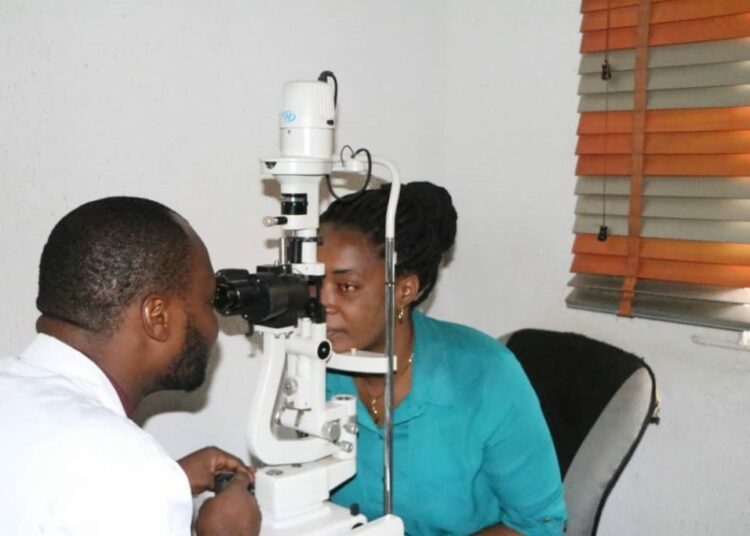
Plateau State commissioner for Health, Dr Nicolas Ba’amlong, has declared that glaucoma is the second leading cause of blindness after cataract in Nigeria.
He, therefore, called for a united push for regular eye checks, early diagnosis and affordable treatment.
The commissioner said Nigeria Blindness and Vision Impairment Survey, Prevalence of Glaucoma affects five percent of the population, adding that it accounts for 16.7 percent of blindness cases, while 5.6 percent of the affected individuals knew they had the disease and one in five persons were already blind at diagnosis.
He maintained that the 2023 Rapid Assessment of Avoidable Blindness (RAAB) survey in Plateau State reported prevalence of blindness to be 2.7 percent which is significantly higher than the national average of 0.7 percent stressing that glaucoma accounted for 17 percent of such blindness.
The theme for this year ” Uniting for Glaucoma Free World” emphasised the power of collective action in tackling one of the leading causes of irreversible blindness. It conveys both urgency and hope highlighting that while glaucoma cannot be cured, blindness from it can often be prevented through awareness, early detection and treatment.
Dr. Ba’amlong further explained that “Glaucoma Week reminds us that protecting visions is a shared responsibility because when we unite to promote awareness, early testing and accessible treatment, we move closer to the future where no one loses his sight to glaucoma.”
-Leadership

NFVCB Boss Urges Stronger Distribution Channels As Coal City Film Festival 2026 Opens In Enugu

Wike Reaffirms Nigeria–EU Ties, Moves To Reclaim Encroached Diplomatic Lands

Inspector-General Disu Submits 75-Page Framework On ‘State Police’ To Senate As Push Gains Momentum

5 Life Lessons from Manchester City EPL Current woes

Liverpool Announce Jürgen Klopp Return To The Club

MTN Teams Up With Meta To Boost WhatsApp Call Quality


-
 Health12 months ago
5 Life Lessons from Manchester City EPL Current woes
-
 Sports12 months ago
Liverpool Announce Jürgen Klopp Return To The Club
-
 Business12 months ago
MTN Teams Up With Meta To Boost WhatsApp Call Quality
-

 News12 months ago
Commonwealth Observers Prepare For Gabon Presidential Election
-

 Health12 months ago
Ponzi Scheme CEO Francis Uju Udoms of Addfx Case still Unresolved Despite SEC certification
-

 News12 months ago
Chibok Girls: 11 Years Of Anguish, Broken Promises
-

 News12 months ago
Wike’s Enviable Road Construction Method along Nyanya- Maraba Highway
-
 News9 months ago
NASRE Promises Support To Daily Times Group Business Editor, Oseni, Over Serious Road Accident