
Technology
Tech Leaders To Discuss $180bn African Digital Economy

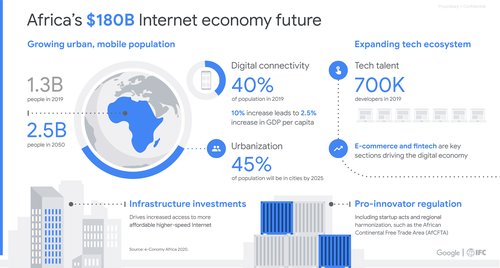
The African Digital Economy & Inclusivity Conference (AFDEIC 2025) has been announced and is set to be held in Abuja, Nigeria, from August 12 to 14, 2025.
The event is expected to bring together government officials, policymakers, business leaders, tech innovators, academics, and development partners to discuss Africa’s digital economy and the role of artificial intelligence in fostering inclusive growth.
Organisers, in a statement on Sunday, said the conference, themed: “AI and Africa’s Digital Economy: Leaving No One Behind”, would focus on financial inclusion, digital infrastructure expansion, AI adoption, data governance, and cybersecurity.
They said discussions would explore strategies to bridge Africa’s digital divide, strengthen fintech ecosystems, and drive broadband expansion amid the projection that the digital economy will contribute $180 billion to Africa’s GDP by 2025 and exceed $712 billion by 2050.
Despite rapid growth in fintech, e-commerce, and AI-driven solutions, a 2022 report by the International Telecommunications Union found that 73% of rural Africans lack internet access, limiting their ability to benefit from digital financial services and e-learning platforms.
Nigeria is making significant progress in developing its digital economy through government initiatives like the National Digital Economy Policy, which focuses on expanding broadband access, promoting e-commerce, and fostering digital financial services.
The country also has a growing tech ecosystem, with thriving fintech companies driving financial inclusion.
Though increasing internet penetration strengthens Nigeria’s position as a leading digital hub in Africa, a 2024 study by GSMA also reported that 61% of rural Nigerians remain disconnected from mobile internet.
AFDEIC, the pan-African digital economy conference, is not just a dialogue but a gathering where stakeholders will develop actionable solutions that address Africa’s digital challenges and unlock the continent’s potential for socio-economic achievement through inclusive policies, ensuring that no one is left behind in digital transformation.
Discussions will cover AI and big data for economic growth, digital identity systems for cross-border trade, and gender and youth inclusion in the digital workforce.
Other sessions will focus on cybersecurity threats, regulatory challenges, and strategies for expanding broadband and mobile internet access in underserved regions.
The event will feature high-level keynote sessions, panel discussions, and workshops on AI ethics, blockchain applications, cybersecurity best practices, and digital entrepreneurship.
Investment and networking forums will provide opportunities for startups, tech firms, and policymakers to connect with investors and development partners. A technology exhibition will also showcase innovations from African startups, research institutions, and global tech companies.
Speakers are expected to include top government officials, executives from major technology firms and fintech startups, representatives from international development organisations, and thought leaders in digital innovation and policy.
Commenting on the conference, Team Lead, AFDIEC Organising Committee, Adedayo Oketola, said, “Despite rapid fintech, e-commerce, and AI-driven advancements, Africa still faces significant digital infrastructure gaps. Many rural Africans lack internet access, with millions still unable to benefit from digital financial services and e-learning platforms. This disparity hinders the equitable distribution of opportunities associated with the digital economy and draws attention to the urgency for targeted interventions.
“AFDEIC 2025 would be a defining moment for Africa’s digital economy, offering stakeholders an opportunity to engage with policymakers, explore AI’s role in economic inclusion, and forge strategic partnerships that could drive investments in digital infrastructure, cybersecurity, and fintech.”
The inclusion of AI in Africa’s digital strategy has the potential to revolutionise various sectors, from healthcare to agriculture, education, and governance. AI applications, combined with big data, can provide unprecedented insights and drive evidence-based decision-making. For instance, AI-powered solutions can optimise agricultural productivity, improve public health responses, and enhance financial services.
However, the adoption of AI in Africa is not without challenges. Limited access to advanced computing resources, concerns about data privacy, and the risk of exacerbating existing inequalities are critical issues that require attention.
“AFDEIC 2025 will explore how AI can be harnessed responsibly and equitably to accelerate development across the continent,” Oketola added.
Another critical focus area of AFDEIC is cybersecurity, an increasingly pressing concern in the digital age. As Africa’s digital economy grows, so do the risks of cyberattacks, data breaches, and financial fraud.
“Addressing these threats requires comprehensive strategies that include robust legal frameworks, capacity building for cybersecurity professionals, and fostering a culture of digital security awareness. AFDEIC 2025 will provide a platform for stakeholders to share best practices and innovative solutions to enhance Africa’s resilience against cyber threats,” says Oketola
According to the Marketing Lead, AFDEIC, Adetoun Tade, governments, private sector leaders, development organisations, and investors have been invited to participate as partners, exhibitors, and sponsors.
She said, “The African digital landscape is evolving rapidly, with AI, mobile payments, and blockchain technology reshaping industries from banking to healthcare. AFDEIC is where to stay ahead of digital trends that will define Africa’s economic future. Businesses interested in showcasing innovations, hosting workshops, or exploring investment opportunities in Africa’s digital economy are encouraged to take part.”
-Leadership





A leading fintech company, OPay Digital Services Limited, has dismissed reports circulating on social media claiming that its offices in Lagos and Abuja were sealed by the Nigeria Revenue Service over alleged tax non-compliance.
The digital firm clarified that its offices across the country remain open and fully operational, stressing that it continues to serve customers, partners and merchants without disruption.
“Our offices across Nigeria, including Lagos and Abuja, remain open and fully operational, and we continue to serve our customers, partners, and merchants without disruption,” the firm said.
OPay further maintained that it has consistently complied with all statutory tax requirements and regulatory obligations governing financial technology operators in the country.
“As a responsible financial technology company operating in Nigeria, we are compliant with all applicable tax obligations and regulatory requirements. We work closely and transparently with all relevant government agencies and regulatory authorities to ensure that our operations consistently meet statutory standards,” the statement added.
According to the company, the notice referenced in the online reports arose from a recent directive issued to payment platforms across the industry by the tax authority.
The digital payment firm noted that the directive requested operators to distinctly separate certain statutory charges on their applications to make reconciliation and transparency easier.
“The notice referenced in the reports arose from a recent industry-wide directive by the Nigeria Revenue Service requesting payment platforms to distinctly separate certain statutory charges on their applications for easier reconciliation and transparency,” the company averred.
Similarly, It further stressed that the directive affects several operators within the payment ecosystem and should not be interpreted as an indication that OPay failed to meet its tax obligations.
“This administrative clarification affects multiple operators across the industry, not OPay alone. The suggestion that the notice indicates non-payment of taxes is therefore factually incorrect and misleading,” the statement said.
Meanwhile, the company expressed concern over what it described as the deliberate singling out of OPay in reports about the directive.
“Equally troubling is the selective and deliberate singling out of OPay in a matter that concerns the wider industry. Such reporting not only distorts the facts but also appears calculated to undermine the reputation of a company that has consistently demonstrated strong compliance, transparency and cooperation with regulators”
Hence, the management urged the public to disregard claims circulating online suggesting that the fintech firm is shutting down or that its offices have been sealed.
“For the avoidance of doubt, the information currently circulating online suggesting that OPay is shutting down or our offices have been shut down should be disregarded, as it does not reflect the true s ituation,” it said.
The Fintech firm reaffirmed its commitment to supporting Nigeria’s digital economy by providing secure, reliable and inclusive financial services to millions of users across the country.
-Regards,

The vice chancellor of the University of Ilorin, Prof. Wahab Egbewole (SAN), has highlighted the vital role of the media in sustaining the institution’s growth and reputation.
He urged continued collaboration between the university and journalists.
He commended journalists for their consistent support and constructive engagement with the university, describing the media as indispensable partners in the institution’s progress.
“Our relationship with the media has continued to grow stronger over time. Members of the press remain critical stakeholders whose contributions have helped to sustain the reputation and development of the University of Ilorin,” he said.
He described iftar as a moment of unity, reflection and gratitude during Ramadan, expressing optimism that the annual engagement would continue to deepen mutual understanding and cooperation among stakeholders within the university community.
In a sermon, the deputy chief Imam of the University of Ilorin, Prof. Musa Abdullahi, reminded Muslims of the spiritual purpose of fasting, urging the faithful to use the sacred period to strengthen their relationship with Allah.
He explained that fasting was ordained by Allah to nurture piety and deepen faith among believers.
“Ramadan is not just about abstaining from food and drink. It is a time for self-discipline, increased prayers, recitation of the Holy Qur’an and seeking forgiveness from Allah,” he said.
He encouraged Muslims to reflect on their spiritual progress during the fasting period and to assess whether their devotion and faith had grown through acts of worship.
Abdullahi also urged the faithful to take advantage of the last 10 days of Ramadan by increasing supplications and engaging more in night prayers.
He advised Muslims to devote more time to spiritual activities and reduce distractions, particularly from social media, in order to fully benefit from the blessings of the holy month.
Special prayers were offered during the event for Nigeria, Kwara State and the University of Ilorin, with participants seeking peace, progress and prosperity for the nation and the institution.
-Leadership

Nigeria’s First Lady, Senator Remi Tinubu, will lead a nationwide campaign to promote local inventions under a programme of the Federal Ministry of Innovation, Science and Technology tagged “Energise Commercialisation.”
The minister of Innovation, Science and Technology, Dr Kingsley Tochukwu Udeh, disclosed this during a visit to the first lady at the State House, Abuja.
He explained that the initiative aims to move Nigeria from a technology-importing nation to a technology-innovating nation.
According to the minister, the programme will strengthen the capabilities of youths, particularly those who have commercially viable inventions and innovations.
He added that the ministry plans to reach people across different segments of society in order to identify innovative ideas and inventions.
“Nigeria cannot be left out of the world technology revolution.”
The minister noted that the meeting with the First Lady, held behind closed doors, signals the imminent commencement of the Ministry of Innovation, Science and Technology’s Energise Commercialisation programme, with youths and women predominantly targeted.
-Leadership

NFVCB Boss Urges Stronger Distribution Channels As Coal City Film Festival 2026 Opens In Enugu

Wike Reaffirms Nigeria–EU Ties, Moves To Reclaim Encroached Diplomatic Lands

Inspector-General Disu Submits 75-Page Framework On ‘State Police’ To Senate As Push Gains Momentum

5 Life Lessons from Manchester City EPL Current woes

Liverpool Announce Jürgen Klopp Return To The Club

MTN Teams Up With Meta To Boost WhatsApp Call Quality


-
 Health12 months ago
5 Life Lessons from Manchester City EPL Current woes
-
 Sports12 months ago
Liverpool Announce Jürgen Klopp Return To The Club
-
 Business12 months ago
MTN Teams Up With Meta To Boost WhatsApp Call Quality
-

 News12 months ago
Commonwealth Observers Prepare For Gabon Presidential Election
-

 Health12 months ago
Ponzi Scheme CEO Francis Uju Udoms of Addfx Case still Unresolved Despite SEC certification
-

 News12 months ago
Chibok Girls: 11 Years Of Anguish, Broken Promises
-

 News12 months ago
Wike’s Enviable Road Construction Method along Nyanya- Maraba Highway
-

 News9 months ago
NASRE Promises Support To Daily Times Group Business Editor, Oseni, Over Serious Road Accident